Aquarium vs Terrarium: Complete Guide to Choosing Right
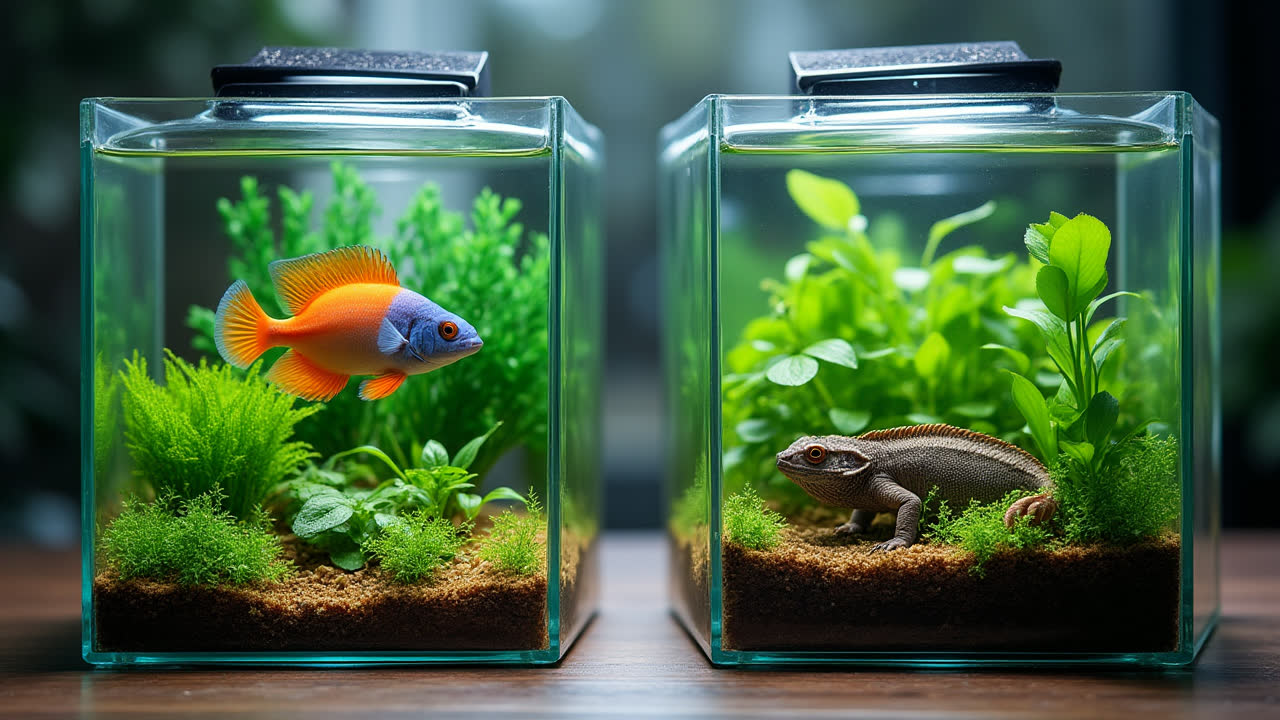
When I first got into creating miniature ecosystems for my home, I was completely confused about aquarium vs terrarium. Honestly, I thought they were pretty much the same thing! But after years of keeping both types of vivaria, I've learned there are crucial differences that affect everything from cost to daily maintenance. Let me share what I've discovered about these fascinating container environments.
Whether you're a complete beginner or thinking about expanding your hobby, understanding the difference between aquarium and terrarium is essential. These enclosed habitats might look similar at first glance, but they're designed for completely different purposes, house different creatures, and require entirely different care routines.
What Exactly Is an Aquarium?
I remember my first aquarium setup – a basic 20-gallon tank that became my obsession overnight. An aquarium is essentially a water-filled container where aquatic life thrives. Unlike terrariums, these need to be completely waterproof because, well, they're full of water!
You'll find aquaria in all shapes and sizes, from my tiny desktop nano tank (which I absolutely adore) to massive commercial displays at public aquariums. The key feature? They're designed to hold water, and that means they need special seals, filters, and structural support.
I've kept both freshwater and marine aquariums, and let me tell you, the difference is huge. Marine setups are beautiful but expensive – I spent countless hours and far too much money on proper lighting and equipment just to keep my saltwater fish happy!
Understanding Terrariums Basics
Switching to terrariums was a game-changer for me. These are essentially miniature gardens enclosed in glass containers. There's something magical about watching a terrarium ecosystem thrive – especially when you can see condensation forming on the glass walls, creating its own little water cycle.
The variety of terrarium types surprised me too. I started with an open terrarium for my succulents, then moved to closed systems for tropical plants. Each type serves different plants and, occasionally, small animals like my pet geckos.
One thing I particularly love about terrariums is how self-sustaining they can be. My sealed terrarium has been thriving for three years now with minimal intervention – just occasional light watering when needed.
Key Differences: The Comparison That Matters
| Feature | Aquarium | Terrarium |
|---|---|---|
| Primary Habitat | Aquatic (water-based) | Terrestrial (land-based) |
| Water Content | Completely filled with water | Minimal or no standing water |
| Inhabitants | Fish, aquatic plants, crustaceans | Land plants, reptiles, insects |
| Structural Requirements | Must be waterproof and pressure-resistant | Standard glass enclosure |
| Maintenance Frequency | Weekly water changes, filter cleaning | Occasional watering and pruning |
| Cost Range | Generally more expensive (equipment-intensive) | More budget-friendly option |
| Ventilation Needs | Filtration system required | Open or partially closed design |
| Setup Complexity | Complex with water filtration and cycling | Relatively simple to establish |
Maintenance Requirements: What You Should Know
After maintaining both types for years, I can tell you the maintenance differences are significant. My aquariums demand weekly attention – water testing, partial water changes, filter cleaning, and algae removal. It's become part of my Sunday routine.
Terrariums? They're much more forgiving. My open terrarium needs watering every week or two, depending on humidity levels. The closed terrarium? I barely touch it except for annual pruning when plants grow too large. Sometimes I think they prefer being ignored!
Equipment-wise, aquariums are an investment. Between filters, heaters, lighting, and water conditioning products, the ongoing costs add up. Terrariums mainly need good lighting and occasional fertilizer – much easier on the wallet.
Making Your Choice: Which Is Right for You?
If you're drawn to underwater ecosystems and watching fish swim gracefully, aquariums are your calling. I still spend hours watching my tetras and shrimp go about their daily routines – it's incredibly relaxing and therapeutic.
But if you prefer low-maintenance mini-gardens or want to keep reptiles, terrariums might be more your speed. They're also perfect for small spaces where a full aquarium might be too much. My first apartment was tiny, but I could still enjoy several terrariums on windowsills.
Consider your budget too. Starting with terrariums is definitely cheaper. You can create a beautiful terrarium for under $50, while a properly equipped aquarium can easily cost several hundred dollars initially.
Design and Aesthetics: Visual Appeal
Both types offer incredible aesthetic possibilities. Aquariums create that mesmerizing underwater world with flowing plants and colorful fish. I've spent countless hours aquascaping, creating underwater landscapes with rocks, driftwood, and carefully chosen plants.
Terrariums, though? They're miniature works of art. I love creating tiny landscapes with different elevations, using mosses and air plants to add texture. Some of my favorites incorporate miniature figurines to create fantasy scenes.
The lighting is crucial for both. Aquariums need specific spectrum lights to support aquatic life, while terrariums can be more flexible. I've found LED grow lights work wonderfully for both, though aquarium lighting tends to be more expensive.
Common Mistakes to Avoid
From my experience, the biggest mistake beginners make with aquariums is overstocking. I did it too! Cramming too many fish into a small tank leads to poor water quality and unhappy fish. Start small and upgrade gradually.
With terrariums, overwatering kills more plants than anything else. I've lost beautiful ferns by being too enthusiastic with watering. Less is definitely more with these self-contained ecosystems.
Another common error? Using inappropriate containers. Not all glass containers work for aquariums – they need to handle water pressure. And not all terrariums need drainage holes, depending on whether they're open or closed systems.
Frequently Asked Questions
Can I convert my aquarium to a terrarium?
Yes, you can convert an aquarium to a terrarium! Since aquariums are built to hold water, they're actually perfect for terrariums. Just make sure to thoroughly clean the tank and consider adding drainage layers if you plan to create a closed system.
Which is easier for beginners: aquarium or terrarium?
Terrariums are generally easier for beginners. They require less equipment, are more forgiving with maintenance, and are cheaper to set up. An open terrarium with hardy plants like succulents is the perfect starting point for new hobbyists.
How much space do I need for an aquarium vs terrarium?
Terrariums can fit in very small spaces – even a 6-inch container can house a beautiful mini-garden. Aquariums need more consideration due to water weight (about 8.3 pounds per gallon). A 10-gallon tank weighs over 100 pounds when filled, plus equipment.