Baryons vs Mesons: Key Differences Explained in Particle Physics
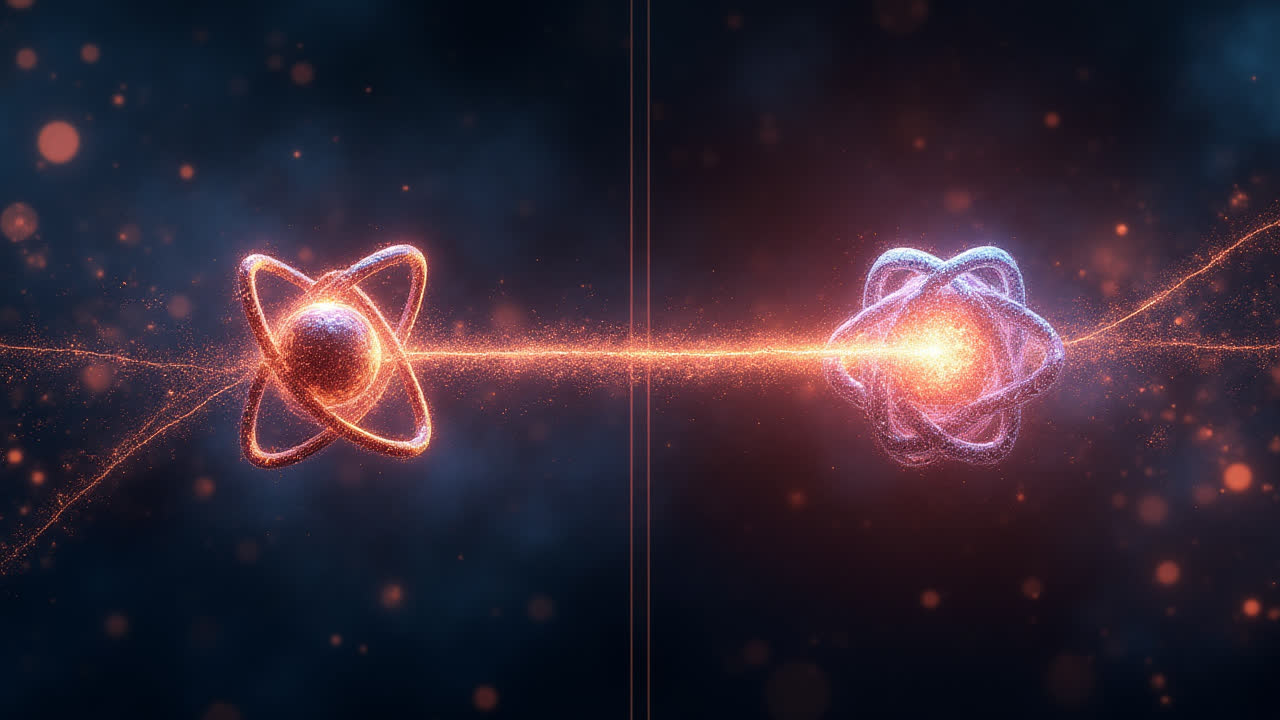
In the fascinating world of particle physics, baryons and mesons stand as fundamental building blocks that help us understand the very fabric of our universe. These subatomic particles belong to the hadron family and play crucial roles in the composition of matter as we know it. I've spent years studying these particles, and I'm still amazed at how these tiny components create everything we see around us.
The most significant distinction between these particles lies in their composition - baryons consist of three quarks bound together, while mesons contain one quark and one antiquark. This seemingly simple difference leads to profoundly different properties and behaviors that shape our physical reality. Let's dive deeper into understanding what makes these particles unique and why they matter in the grand scheme of things.
Have you ever wondered what's happening at the subatomic level when you touch an object? It's a dance of these particles that creates the sensation of solidity. The interactions between baryons and mesons help explain not just the structure of atoms but also cosmic phenomena like star formation and the early universe's development.
Understanding Baryons: The Three-Quark Powerhouses
Baryons represent some of the most familiar particles in physics, including protons and neutrons that form the nucleus of every atom in the universe. These subatomic particles consist of three quarks bound together by the strong nuclear force, one of the four fundamental forces of nature. The term "baryon" comes from the Greek word "barys," meaning "heavy," which is fitting since these particles contribute significantly to the mass of ordinary matter.
The composition of baryons involves quarks from six different "flavors": up, down, charm, strange, top, and bottom. These flavors aren't actual tastes but rather properties that distinguish one quark from another. In the case of protons, the combination includes two up quarks and one down quark, while neutrons contain one up quark and two down quarks. This specific arrangement gives each particle its unique properties, including charge and mass.
What I find particularly fascinating about baryons is their role in the early universe. Just moments after the Big Bang, when the universe was an incredibly hot, dense soup of energy, quarks and gluons (the carriers of the strong force) existed in a state called quark-gluon plasma. As the universe expanded and cooled, these quarks combined to form baryons, setting the stage for the formation of matter as we know it today. This process, known as baryogenesis, remains one of the most intriguing areas of cosmological research.
Baryons possess a property called "baryon number," which for these particles is always +1. This property is conserved in all known interactions, meaning the total baryon number before and after any reaction remains the same. Another distinctive characteristic is their half-integer spin (typically 1/2 or 3/2), classifying them as fermions, particles that follow Fermi-Dirac statistics and obey the Pauli exclusion principle. This principle states that no two identical fermions can occupy the same quantum state simultaneously, which has profound implications for the structure of matter.
Exploring Mesons: The Quark-Antiquark Pairs
Unlike their three-quark counterparts, mesons consist of just two components: one quark and one antiquark bound together by the strong nuclear force. This simpler structure gives mesons properties that distinguish them clearly from baryons. I once had a physics professor who compared mesons to a dance between partners, while baryons were more like a complex three-way tango – an analogy that stuck with me through years of study.
The most commonly known mesons include pions (pi mesons) and kaons (K mesons). Pions come in three varieties: π+, π-, and π0, each with different electric charges. These particles play a crucial role in mediating the strong nuclear force between nucleons (protons and neutrons) within atomic nuclei. In fact, when two nucleons interact, they often exchange virtual pions, which helps maintain the stability of the nucleus despite the electromagnetic repulsion between protons.
Kaons, another type of meson, exhibit a property called "strangeness," associated with the presence of a strange quark or antiquark. These particles have longer lifetimes than many other mesons and can decay through various channels into lighter particles. Studying these decay patterns has provided physicists with valuable insights into the weak force, another fundamental interaction in particle physics.
A key property of mesons is their integer spin (0 or 1), which classifies them as bosons. Unlike fermions, bosons can occupy the same quantum state simultaneously, following Bose-Einstein statistics. This property has significant implications for their behavior in quantum systems. Additionally, mesons have a baryon number of 0, as the baryon numbers of the quark (+1/3) and antiquark (-1/3) cancel each other out. This zero baryon number means that mesons can be created or destroyed more freely than baryons in particle interactions.
In particle accelerator experiments, mesons often appear as intermediate states in high-energy collisions. Their short lifetimes (typically on the order of 10^-8 to 10^-23 seconds) make them challenging to study, but modern detection technologies have allowed physicists to observe and analyze their properties with increasing precision. These studies continue to refine our understanding of the Standard Model of particle physics and test its predictions.
The Crucial Role of Quarks in Hadron Formation
At the heart of both baryons and mesons are quarks, the truly fundamental particles that, as far as we know, cannot be broken down into smaller components. These elementary particles come in six different flavors and combine in specific ways to form hadrons. The rules governing these combinations stem from a principle called color confinement in quantum chromodynamics (QCD), which dictates that quarks cannot exist in isolation but must form color-neutral composite particles.
In forming baryons, three quarks must combine their "color charges" (red, green, and blue) to create a "white" or colorless particle. For mesons, a quark carrying one color must pair with an antiquark carrying the corresponding anti-color. These color rules might sound abstract, but they're fundamental to understanding why we observe the particular particles that we do in nature and not others.
The strength of the binding between quarks increases with distance – a phenomenon unique to the strong force and unlike any other force in nature. When attempting to separate quarks, the energy invested in the separation eventually becomes sufficient to create a new quark-antiquark pair, making it impossible to isolate a single quark. This property, known as quark confinement, explains why despite decades of searching, scientists have never observed a free quark.
What's particularly fascinating about quarks is how their properties combine to create the characteristics of the hadrons they form. For instance, the charges of the three quarks in a proton (two up quarks with +2/3 charge each and one down quark with -1/3 charge) add up to give the proton its +1 charge. Similarly, the masses of hadrons aren't simply the sum of their constituent quark masses – the binding energy contributes significantly to the total mass, demonstrating Einstein's famous equation E=mc² in action.
Comparison Table: Baryons vs Mesons
| Property | Baryons | Mesons |
|---|---|---|
| Composition | Three quarks | One quark and one antiquark |
| Examples | Protons, neutrons, lambda particles | Pions, kaons, eta mesons |
| Spin | Half-integer (1/2 or 3/2) | Integer (0 or 1) |
| Classification | Fermions | Bosons |
| Baryon Number | +1 | 0 |
| Stability | Protons are stable; neutrons are stable in nuclei | Generally unstable with short lifetimes |
| Mass Range | Generally heavier (proton: 938 MeV/c²) | Generally lighter (pion: 140 MeV/c²) |
| Role in Matter | Form the nuclei of atoms | Mediate nuclear force between nucleons |
Importance in Modern Physics and Cosmology
Beyond their fundamental roles in particle physics, baryons and mesons have profound implications for our understanding of the universe at both the smallest and largest scales. The study of these particles has led to the development of the Standard Model of particle physics, our most comprehensive theory describing the fundamental particles and forces of nature (excluding gravity).
In cosmology, the concept of baryon asymmetry represents one of the biggest unsolved mysteries. According to our theories, the Big Bang should have produced equal amounts of matter and antimatter, which would have annihilated each other completely. Yet we observe a universe dominated by matter. This asymmetry, specifically in the baryon sector, suggests processes in the early universe that favored the production of baryons over anti-baryons, allowing matter to survive and form the structures we see today.
The interactions between baryons and mesons also play a crucial role in stellar nucleosynthesis – the process by which stars create heavier elements from lighter ones. Within the extreme conditions at a star's core, nuclear fusion reactions involve the exchange of virtual mesons between baryons, facilitating the creation of elements essential for life. Without these interactions, the chemical diversity necessary for complex structures like planets and living organisms would not exist.
Research in this field continues to push boundaries, with experiments at facilities like the Large Hadron Collider (LHC) discovering new exotic hadrons that challenge our understanding of quark combinations. For instance, tetraquarks (two quarks and two antiquarks) and pentaquarks (four quarks and one antiquark) have been confirmed, expanding the traditional classification beyond simple baryons and mesons. These discoveries hint at the possibility of even more complex quark structures and may provide new insights into the strong force that binds them.
I remember attending a lecture where a prominent physicist suggested that understanding hadrons might eventually lead to technological applications we can't even imagine today. While that remains to be seen, it's clear that these fundamental particles are far more than abstract concepts – they're the building blocks that, through their unique properties and interactions, make our existence possible.
Frequently Asked Questions About Baryons and Mesons
What makes protons more stable than other baryons?
Protons demonstrate remarkable stability because they are the lightest baryons and have no lighter baryon to decay into while conserving baryon number. According to current experimental limits, the proton's lifetime exceeds 10^34 years, making it effectively stable. This stability is crucial for the existence of atoms and matter as we know it. In contrast, free neutrons (outside atomic nuclei) decay with a half-life of about 15 minutes into a proton, electron, and antineutrino through the weak interaction, as they're slightly heavier than protons.
How do scientists detect and study mesons given their extremely short lifetimes?
Scientists study mesons using particle accelerators that create high-energy collisions, producing these short-lived particles. Advanced detection systems like calorimeters, tracking chambers, and time-of-flight detectors identify mesons by measuring their decay products rather than observing them directly. Computer algorithms analyze the energy signatures, trajectories, and timing information from these decay products to reconstruct the properties of the original meson. Modern facilities like the Large Hadron Collider can produce billions of particle collisions per second, providing sufficient statistical data to study even the rarest meson varieties and their properties with remarkable precision.
Could new types of hadrons beyond baryons and mesons exist in nature?
Yes, exotic hadrons beyond traditional baryons and mesons not only could exist but have been experimentally confirmed. Tetraquarks (containing two quarks and two antiquarks) and pentaquarks (four quarks and one antiquark) have been discovered at facilities like the Large Hadron Collider. Quantum chromodynamics also theoretically allows for other exotic combinations like hexaquarks (six quarks) and even "glueballs" composed entirely of bound gluons with no quarks. These exotic hadrons expand our understanding of the strong force and quark confinement. Research into these particles remains an active and exciting frontier in particle physics, potentially revealing new aspects of fundamental forces.
Conclusion
The distinction between baryons and mesons goes beyond their quark composition; it reflects fundamental principles that govern the behavior of matter at the subatomic level. While baryons, with their three-quark structure, form the stable matter of our everyday experience, mesons play an equally crucial role in mediating the forces that hold nuclei together. Together, they demonstrate the elegant symmetries and patterns that underlie the apparent complexity of our physical world.
As our experimental techniques and theoretical models continue to evolve, our understanding of these particles deepens, potentially revealing new physics beyond the Standard Model. The study of baryons and mesons reminds us that even in the smallest components of matter, we find profound connections to the largest structures in the cosmos – a testament to the unifying power of fundamental physics.