Biotrophs vs Necrotrophs: Understanding Plant Pathogen Strategies
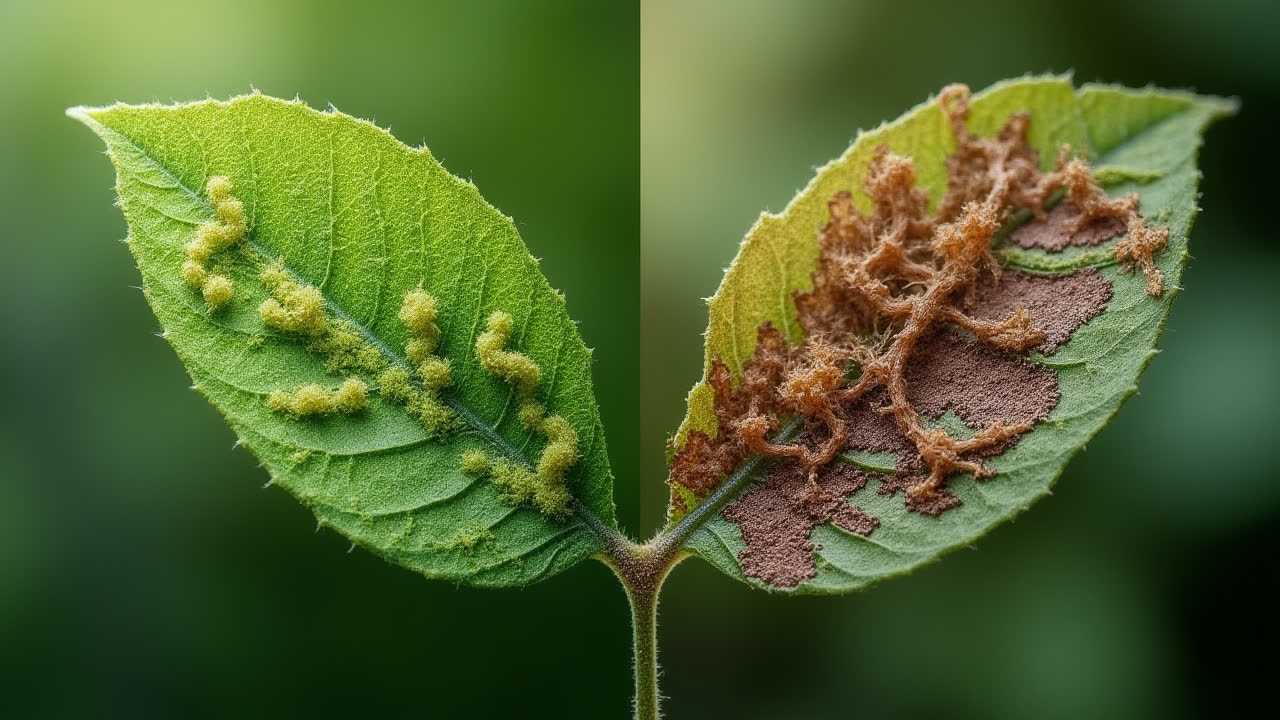
In the microscopic battleground of plant diseases, biotrophs and necrotrophs represent two fundamentally different invasion strategies employed by fungal pathogens. These microorganisms may be invisible to the naked eye, but their impact on global agriculture is enormous, threatening food security and causing billions in economic losses annually. Have you ever wondered why some plant diseases kill tissues quickly while others keep their host alive for extended periods?
The distinction between these two pathogen types isn't just academic—it's crucial for developing effective disease management strategies. I've spent years studying plant pathology, and I'm still fascinated by the sophisticated relationship between these fungi and their plant hosts. It's like watching two completely different military strategies unfold on a cellular battlefield.
This article explores the fundamental differences between biotrophic and necrotrophic pathogens, examining their infection mechanisms, ecological roles, and impact on plant health. Understanding these differences helps farmers, gardeners, and researchers better combat plant diseases and develop resistant crop varieties.
What Are Biotrophs? The Stealthy Invaders
Biotrophic pathogens are remarkable organisms that derive nutrients exclusively from living plant cells. Think of them as sophisticated parasites that have evolved to extract resources without killing their host—at least not immediately. Biotrophs establish an intimate relationship with plants, often forming specialized feeding structures called haustoria that penetrate the plant cell wall but typically don't breach the plasma membrane.
The most fascinating thing about biotrophs, in my experience, is their ability to suppress the plant's immune system. They're like stealthy thieves that can disable the alarm system before breaking into the house. They secrete effector proteins that essentially reprogram the host to silence its defense responses. I once observed powdery mildew developing on a rose bush in my garden—it was almost like watching a slow-motion hijacking of the plant's resources.
Common examples of biotrophic pathogens include rust fungi (like Puccinia graminis, which causes wheat stem rust), powdery mildews (such as those in the Erysiphales order), and fungi from genera including Ustilago, Cladosporium, and Magnaporthe. These pathogens are notoriously difficult to culture in laboratory settings because they can't survive without their living hosts—they're truly obligate parasites.
Biotrophs typically have a narrow host range, meaning they've specialized to infect specific plant species or families. This specialization reflects their highly evolved relationship with host plants. They've developed mechanisms to navigate the specific defenses of their preferred hosts but may lack the tools to overcome the immune responses of other plant species.
What Are Necrotrophs? The Destructive Killers
In stark contrast to the subtle approach of biotrophs, necrotrophic pathogens employ a brutal "scorched earth" strategy. These fungi kill host cells rapidly and then feed on the contents of dead or dying plant tissue. It's a much less sophisticated but highly effective approach—they destroy first and feast later.
Necrotrophs are opportunistic pathogens that often target plants already weakened by stress, damage, or age. They typically enter through wounds or natural openings and immediately begin producing an arsenal of cell-wall-degrading enzymes and toxins. I remember examining a tomato plant with early blight in my vegetable garden last summer—the rapidly expanding brown lesions were a textbook example of necrotrophic destruction in action.
Common examples of necrotrophic pathogens include Cochliobolus species (causing leaf blights), Botrytis cinerea (causing gray mold), Alternaria species (causing various leaf spots and blights), Phytophthora capsici (causing blight in peppers), and Moniliophthora perniciosa (causing witches' broom disease in cacao). Unlike biotrophs, these fungi are relatively easy to culture in laboratory settings since they don't require living host tissue.
Necrotrophs typically have a broad host range, meaning they can infect multiple plant species across different families. This versatility makes them particularly problematic in agricultural settings where monoculture practices already increase disease vulnerability. Their less specialized nature allows them to opportunistically attack various hosts using similar destructive mechanisms.
Key Differences Between Biotrophs and Necrotrophs
The distinction between biotrophs and necrotrophs goes beyond their basic feeding strategies. These pathogens differ in numerous aspects of their biology, infection processes, and ecological roles. Understanding these differences is crucial for developing effective disease management strategies.
| Characteristic | Biotrophs | Necrotrophs |
|---|---|---|
| Nutrient source | Living plant cells | Dead or dying plant cells |
| Host cell fate | Maintain host cell viability | Rapidly kill host cells |
| Type of pathogen | Obligate pathogens | Non-obligate, opportunistic pathogens |
| Mode of entry | Direct penetration or through natural openings | Often through wounds or natural openings |
| Specialized structures | Produce haustoria/appressoria | Rarely produce haustoria |
| Host range | Typically narrow (specialized) | Often broad (generalist) |
| Lytic enzymes and toxins | Produce minimal amounts | Produce abundant amounts |
| Growth pattern | Primarily intercellular | Both intercellular and intracellular |
| Laboratory cultivation | Difficult to culture axenically | Relatively easy to culture |
Infection Strategies and Plant Responses
The contrasting strategies of biotrophs and necrotrophs trigger fundamentally different responses from their plant hosts. Plants have evolved sophisticated immune systems with multiple layers of defense, but these pathogens have equally evolved to overcome these barriers—each in their own way.
How Biotrophs Manipulate Host Immunity
Biotrophs must maintain a delicate balance—extracting nutrients while keeping the host alive. They achieve this through sophisticated molecular manipulation, primarily by suppressing the plant's immune responses. They secrete effector proteins that interfere with signaling pathways involved in defense responses. I've always found it remarkable how these microscopic organisms can effectively "hack" into a plant's cellular machinery with such precision.
Plants typically respond to biotrophic infections by activating salicylic acid (SA)-dependent defense pathways, which can lead to hypersensitive response (HR)—a form of programmed cell death that limits pathogen spread. It's like the plant sacrificing a few cells to save the whole organism. However, successful biotrophs have evolved mechanisms to suppress or evade these responses.
How Necrotrophs Overwhelm Host Defenses
Necrotrophs employ a brute-force approach, secreting an arsenal of cell wall-degrading enzymes and host-specific toxins that quickly kill plant cells. Unlike biotrophs, they don't need to maintain host viability—in fact, they benefit from rapid cell death. Some necrotrophic toxins even trigger the plant's own cell death pathways, essentially turning the plant's defenses against itself.
Plants typically respond to necrotrophic infections by activating jasmonic acid (JA) and ethylene-dependent defense pathways. However, some clever necrotrophs have evolved ways to manipulate these pathways for their own benefit. It's a fascinating evolutionary arms race where the pathogen turns the host's own immune system into a weapon.
Ecological and Agricultural Importance
Both biotrophs and necrotrophs play significant roles in natural ecosystems and agricultural systems. Their different lifestyles and infection strategies have important implications for disease management and plant breeding programs.
From an evolutionary perspective, biotrophic relationships often represent more ancient associations between pathogens and hosts. The sophisticated molecular dialogue required for biotrophic interactions suggests a long co-evolutionary history. In contrast, many necrotrophic relationships may represent more recent adaptations, utilizing more generalized mechanisms to overcome plant defenses.
In agriculture, these pathogens pose different challenges. Biotrophic diseases like rusts and mildews can spread rapidly under favorable conditions, causing widespread epidemics in susceptible crops. The infamous Irish potato famine of the 1840s, caused by the hemibiotroph Phytophthora infestans, demonstrates the devastating potential of these pathogens.
Necrotrophic diseases, while often less spectacular in their spread, can cause significant post-harvest losses and are particularly problematic in storage conditions. Their ability to infect multiple host species can make crop rotation less effective as a management strategy. In my own garden, I've struggled with Alternaria leaf spot attacking multiple vegetable species despite careful rotation practices.
Management Strategies
Effective management of plant diseases requires an understanding of the pathogen's lifestyle. Biotrophic pathogens, being obligate parasites, are often controlled through resistant varieties, protective fungicides, and cultural practices that reduce humidity and improve air circulation. Breeding for resistance against biotrophs typically focuses on major resistance genes that can completely block infection.
Necrotrophic pathogens, being more adaptable and often soilborne, may require integrated approaches including crop rotation, sanitation, biological controls, and fungicides with different modes of action. Breeding for resistance against necrotrophs is often more challenging, typically involving multiple genes that contribute to quantitative (partial) resistance rather than complete immunity.
Frequently Asked Questions
Can a pathogen be both biotrophic and necrotrophic?
Yes, some pathogens exhibit both biotrophic and necrotrophic phases during their life cycle. These are called hemibiotrophic pathogens. They initially establish a biotrophic relationship with living host cells before switching to a necrotrophic phase later in the infection process. Notable examples include Phytophthora infestans (causing late blight of potato) and Magnaporthe oryzae (causing rice blast disease). This dual strategy allows them to benefit from both approaches—initially establishing themselves stealthily before switching to destructive tissue colonization.
Why can't biotrophs be cultured in laboratories?
Biotrophic pathogens are extremely difficult to culture in laboratory settings because they have evolved to depend completely on living host cells for their nutrition and development. They've lost many genes needed for independent growth, including those for certain metabolic pathways. Their specialized adaptation to manipulate living plant cells can't be easily replicated in artificial media. This obligate parasitism makes studying them challenging, often requiring specialized techniques like detached leaf cultures or living plant tissue to maintain them. In contrast, necrotrophs can typically grow on standard laboratory media because they naturally derive nutrients from dead organic matter.
How do climate change and environmental factors affect biotrophic versus necrotrophic pathogens?
Climate change affects biotrophic and necrotrophic pathogens differently based on their distinct life strategies. Biotrophs often thrive in moderate temperatures and high humidity conditions—many rust and mildew diseases are predicted to expand their ranges as climate patterns shift. However, they're also sensitive to extreme heat that might damage their living hosts. Necrotrophs tend to be more resilient to environmental stresses and may become more problematic in regions experiencing increased drought conditions, as water-stressed plants become more susceptible to opportunistic infections. Additionally, milder winters in many regions may allow both types of pathogens to overwinter more successfully, potentially leading to earlier and more severe disease outbreaks in subsequent growing seasons.
Conclusion
The distinction between biotrophs and necrotrophs represents one of the most fundamental concepts in plant pathology. These contrasting parasitic strategies—one subtle and sophisticated, the other aggressive and destructive—highlight the diverse evolutionary paths that plant pathogens have taken.
Understanding these differences isn't merely academic. It provides the foundation for developing effective disease management strategies, breeding resistant crop varieties, and potentially engineering novel forms of disease resistance. As agricultural challenges intensify with climate change and growing global food demands, this knowledge becomes increasingly valuable.
Whether you're a farmer battling crop diseases, a gardener dealing with plant problems, or a researcher exploring the molecular dialogue between plants and pathogens, recognizing the biotrophic or necrotrophic nature of the culprit is your first step toward effective solutions. The ancient evolutionary dance between plants and their pathogens continues, and our understanding of these distinct pathogenic strategies helps us to intervene when necessary to protect our food supply and natural ecosystems.