Braising vs Stewing: Essential Differences Between These Cooking Methods
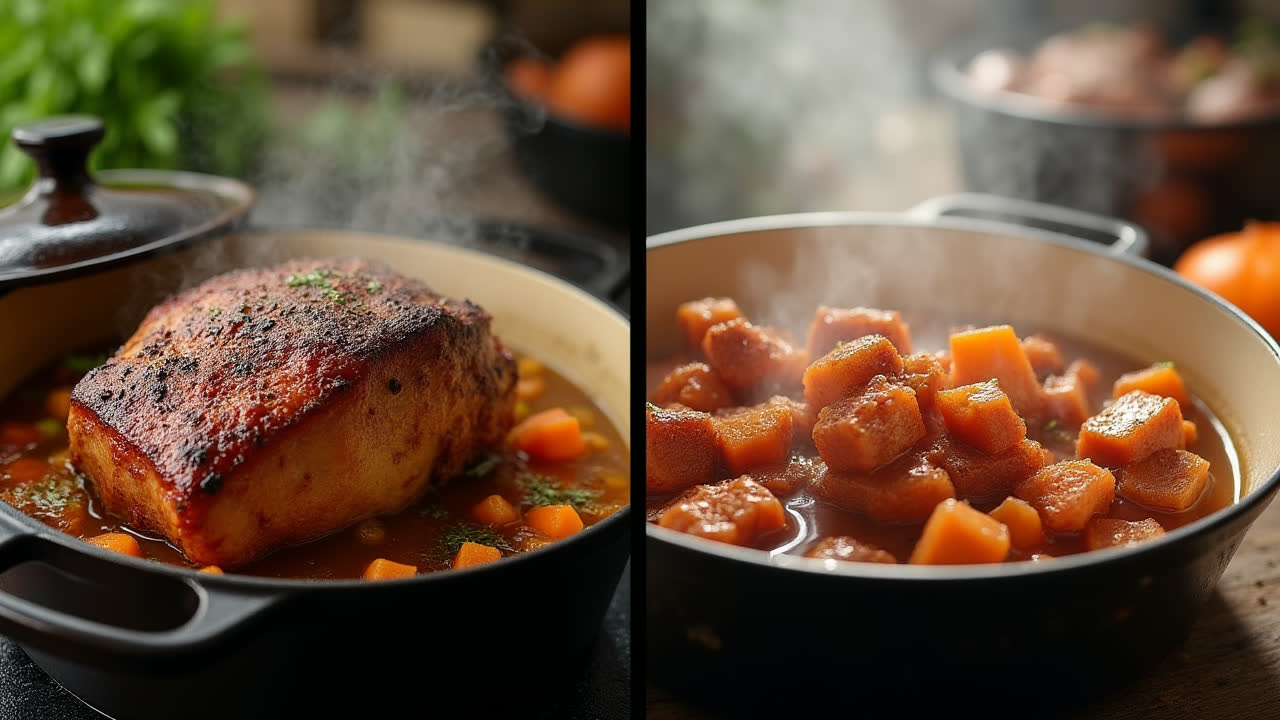
If you've ever found yourself confused about the difference between braising and stewing, you're not alone. These two popular moist heat cooking methods share many similarities, yet they have distinct characteristics that set them apart. Both techniques transform tough cuts of meat into tender, flavorful dishes, but they do so in slightly different ways. As someone who's spent countless hours in the kitchen experimenting with both methods, I've come to appreciate the unique benefits each offers.
Whether you're a beginner cook or a seasoned home chef looking to refine your skills, understanding when to braise and when to stew can elevate your cooking to restaurant quality. I remember the first time I successfully braised short ribs – the meat literally fell off the bone! And nothing beats a hearty beef stew on a cold winter evening. Let's dive into what makes each method special and how you can master them both.
What is Moist Heat Cooking?
Before we delve into the specifics of braising and stewing, it's helpful to understand the broader category they belong to: moist heat cooking. This method uses liquid or steam to cook food at relatively low temperatures compared to dry heat methods like grilling or roasting. The main benefit? It excels at breaking down tough fibers in meat and vegetables, resulting in incredibly tender dishes.
Moist heat cooking encompasses several techniques including poaching, boiling, steaming, braising, and stewing. Each method varies in the amount of liquid used, cooking temperature, and typical ingredients. Have you ever noticed how a tough cut of meat becomes fork-tender after slow cooking? That's the magic of moist heat cooking at work!
What makes moist heat cooking particularly useful is its forgiving nature. Unlike high-temperature methods where timing can be critical, techniques like braising and stewing allow for a wider margin of error. This makes them perfect for busy home cooks who might not be able to tend to their cooking constantly. Plus, these methods often result in dishes with complex, developed flavors as ingredients have time to meld together during the long cooking process.
What is Braising?
Braising is a cooking technique that combines both dry and moist heat methods. It typically begins with searing the main ingredient at a high temperature to develop color and flavor (the dry heat portion), followed by slow cooking it partially submerged in liquid at a low temperature (the moist heat portion). The key characteristic of braising is that the liquid only partially covers the food – usually about one-third to halfway up the sides.
This cooking method is particularly well-suited for larger cuts of meat such as pot roasts, short ribs, lamb shanks, or whole chickens. The partial submersion in liquid allows the top portion of the food to brown and develop a crust while the bottom portion becomes tender from the simmering liquid. I've found that this dual-cooking approach creates a wonderful contrast in textures that you don't get with other methods.
Braising is typically done in a heavy pot with a tight-fitting lid, such as a Dutch oven. After the initial browning step, the dish is covered and either placed in a low oven (around 325°F/165°C) or left to simmer gently on the stovetop. Cooking times can range from 1 hour for vegetables or chicken to 3-4 hours for tougher cuts of red meat. The patience required is well rewarded, though – there's nothing quite like lifting the lid after hours of braising to reveal a transformed dish with concentrated flavors and melt-in-your-mouth texture.
One of my favorite things about braising is how it creates its own sauce. As the food cooks, it releases juices that combine with the cooking liquid, resulting in a rich, flavorful liquid that can be served as is or reduced further into a sauce. This self-saucing quality makes braised dishes feel especially complete and satisfying without requiring additional steps.
What is Stewing?
Stewing is another slow-cooking moist heat method, but with some distinct differences from braising. In stewing, food is cut into uniform, bite-sized pieces and completely submerged in liquid. This complete submersion is perhaps the most obvious difference between stewing and braising – there's no partial coverage here, everything is swimming in the cooking liquid.
The cut size is another important distinction. While braising often features large cuts of meat, stewing uses smaller, uniform pieces. This ensures even cooking throughout and allows the flavors to penetrate each piece more thoroughly. I've found that this uniformity also makes stews more practical for serving – no additional cutting required at the table!
Typical stewing liquids include water, stock, wine, beer, or a combination. These liquids, along with added vegetables and seasonings, create a flavorful broth that becomes an integral part of the dish. Unlike in braising where the sauce might be reduced separately, in stewing, the liquid is meant to be enjoyed as part of the meal. This creates a wonderful opportunity for serving stews with bread or over starches like rice, potatoes, or noodles to soak up all that delicious liquid.
Stewing is generally done at a very gentle simmer – just enough heat to see occasional bubbles breaking the surface, but not a rolling boil. This slow, gentle cooking is key to developing flavors while keeping the meat tender rather than tough. Most stews benefit from at least an hour of cooking time, with many traditional recipes calling for 2-3 hours. I've found it's almost impossible to overdo a stew if the heat is kept low enough – the longer it cooks, the more the flavors meld and intensify.
Key Differences Between Braising and Stewing
| Feature | Braising | Stewing |
|---|---|---|
| Liquid Level | Partially covers the food (1/3 to 1/2) | Completely covers the food |
| Food Size | Larger cuts of meat and vegetables | Smaller, uniform, bite-sized pieces |
| Browning Step | Almost always browned before adding liquid | Sometimes browned, but often added directly to liquid |
| Cooking Vessel | Usually a Dutch oven or braiser with tight-fitting lid | Typically a stockpot or large saucepan |
| Resulting Sauce | Less sauce, often more concentrated | More sauce/broth, integral to the dish |
| Typical Serving Style | Main protein as centerpiece with sauce spooned over | All components served together in the broth |
| Temperature | Low simmer, often in oven (325°F/165°C) | Very gentle simmer, usually on stovetop |
| Example Dishes | Coq au vin, pot roast, osso buco | Beef stew, goulash, bouillabaisse |
Best Ingredients for Braising
Braising shines when applied to tougher, less expensive cuts of meat that benefit from long, slow cooking. These cuts typically come from the parts of the animal that get more exercise, resulting in more connective tissue that needs time to break down. Don't be tempted to use premium cuts here – they'll actually become overcooked and dry.
Some of the best meats for braising include:
- Beef: Chuck roast, brisket, short ribs, shanks
- Pork: Shoulder (Boston butt), country-style ribs, ham hocks
- Lamb: Shanks, shoulder, neck
- Poultry: Whole chicken, thighs, legs (dark meat works better than white)
- Game: Venison shoulder, wild boar shoulder
Beyond meat, braising works wonderfully for certain vegetables, particularly those that are dense and would be tough when raw or quickly cooked. Cabbage, fennel, leeks, and root vegetables like carrots, turnips, and celeriac transform beautifully when braised. I once made a vegetarian braised cabbage dish that converted even the most dedicated meat-eaters at my dinner table!
For braising liquids, consider using options with more flavor than plain water. Stock, wine, beer, cider, and even fruit juices can contribute complexity to your finished dish. Aromatics like onions, garlic, herbs, and spices added to the braising liquid will infuse your main ingredient with additional layers of flavor during the long cooking process.
Best Ingredients for Stewing
Just like with braising, stewing works best with tougher cuts of meat that benefit from long cooking times. The difference is that for stews, you'll want to cut these tough cuts into smaller, uniform pieces before cooking.
Excellent choices for stewing include:
- Beef: Chuck, bottom round, top round (cut into cubes)
- Pork: Shoulder meat, cut into cubes
- Lamb: Shoulder or leg, cubed
- Chicken: Thighs and legs, bone-in or boneless
- Seafood: Firmer fish varieties, squid, octopus (though these require much shorter cooking times)
In addition to the main protein, stews typically incorporate a variety of vegetables. Classic choices include carrots, potatoes, onions, celery, and peas, but don't be afraid to experiment. I've made wonderful stews with parsnips, sweet potatoes, fennel, and even fruits like apples or dried apricots for a sweet-savory balance.
The liquid component is crucial in stews since it becomes a major part of the finished dish. Stock is the most common base, but wine, beer, tomato juice, or coconut milk can create distinctive flavor profiles. Many stew recipes also call for a thickening agent such as flour, cornstarch, or a roux to give the liquid a more substantial body. This helps the sauce cling to the meat and vegetables, creating that classic stew consistency we all love.
Tips for Successful Braising
After years of braising everything from short ribs to vegetables, I've gathered some tips that can help ensure your braised dishes turn out perfectly every time:
- Don't skip the browning step: Searing your meat or vegetables before adding liquid develops deep flavor through caramelization. This initial step is crucial for the rich taste of a good braise.
- Choose the right pot: A heavy pot with a tight-fitting lid is essential. Dutch ovens are ideal because they retain and distribute heat evenly. The tight lid traps moisture, creating a self-basting environment.
- Mind your liquid level: Remember, in braising, the liquid should only come about halfway up the sides of your main ingredient. Too much liquid and you're stewing, not braising!
- Keep the temperature low: Braising should happen at a gentle simmer, not a boil. In an oven, this typically means 325°F/165°C or even lower for longer cooking times.
- Be patient: Braising isn't a quick cooking method – it's all about giving tough cuts of meat time to become tender. Don't try to rush it by increasing the heat.
- Consider making ahead: Many braised dishes actually taste better the next day after the flavors have had time to meld. This makes them perfect for entertaining or meal prep.
I've found that one of the most common mistakes people make when braising is peeking too often. Every time you lift the lid, you release heat and moisture, extending the cooking time. Trust the process and resist the urge to check constantly!
Tips for Perfect Stewing
Creating a delicious stew requires attention to detail and a few key techniques:
- Cut ingredients uniformly: Ensure all pieces of meat and vegetables are similar in size for even cooking. This consistency is key to a well-executed stew.
- Consider browning: While not always necessary for stewing, browning meat before adding it to the liquid can add significant flavor depth. It's an extra step that's often worth the effort.
- Layer your flavors: Add ingredients at different times based on their cooking needs. Root vegetables might go in early, while peas or quick-cooking vegetables should be added toward the end.
- Simmer, don't boil: Keep your stew at a gentle simmer – aggressive boiling can toughen meat and break down vegetables too much. You should see occasional bubbles, not a rolling boil.
- Skim when needed: For clearer stews, occasionally skim any foam or fat that rises to the surface during cooking.
- Season gradually: Add salt and spices in stages throughout cooking, tasting as you go. Remember that flavors concentrate as liquid reduces, so be cautious with salt early on.
One stewing technique I've come to appreciate is adding a bouquet garni – a bundle of herbs tied together or wrapped in cheesecloth – to the pot during cooking. This infuses flavor without leaving bits of herbs throughout the stew. It's easily removed before serving, giving you all the taste without the texture of the herbs themselves.
Frequently Asked Questions About Braising and Stewing
Can I use a slow cooker for braising and stewing?
Absolutely! Slow cookers are excellent for both braising and stewing, as they maintain the consistent low temperature that these methods require. For braising in a slow cooker, you may want to still sear your main ingredient on the stovetop first for flavor development, then transfer it to the slow cooker with your liquid. Just remember that slow cookers create less evaporation than traditional methods, so you might want to reduce the amount of liquid called for in conventional recipes by about 1/3, or plan to reduce the sauce separately at the end for a more concentrated flavor.
What's the best way to store leftover braised dishes and stews?
Both braised dishes and stews typically store excellently and often taste even better the next day as flavors continue to develop. Allow the food to cool to room temperature (but don't leave it out for more than 2 hours), then transfer to airtight containers and refrigerate for up to 3-4 days. For longer storage, freeze portions in freezer-safe containers for up to 3 months. When reheating, do so gently over low heat to prevent tough meat. If the sauce has thickened too much during storage, you can thin it with a little stock or water while reheating.
Can vegetarian or vegan dishes be braised or stewed?
Definitely! While meat is traditional in both methods, vegetables and plant-based proteins can be braised or stewed to great effect. Hearty vegetables like cabbage, fennel, leeks, artichokes, and mushrooms take particularly well to braising. For stews, beans, lentils, and firm tofu or tempeh make excellent protein options. Plant-based stews benefit from the same careful building of flavors as meat versions – use rich vegetable stock, umami-boosting ingredients like tomato paste or miso, and plenty of herbs and spices. Many traditional dishes like ratatouille (French vegetable stew) or braised leeks in white wine are naturally vegetarian and showcase how delicious these techniques can be without meat.
Conclusion: Choosing Between Braising and Stewing
Both braising and stewing are valuable techniques in any cook's repertoire, each with its own strengths. When deciding which method to use, consider what you're cooking and what result you're hoping to achieve.
Choose braising when:
- You want to showcase a larger cut of meat as the centerpiece of your meal
- You prefer a more concentrated sauce rather than a brothy dish
- You're looking for a contrast in textures (the caramelized exterior vs. tender interior)
- You're cooking something like a whole chicken or large vegetables that wouldn't work well cut into pieces
Choose stewing when:
- You want a one-pot meal with protein, vegetables, and sauce all together
- You're feeding a crowd and need to stretch ingredients further
- You want each bite to contain a mix of components
- You're looking for a dish that can be easily served in bowls, perhaps over rice or with bread
Whatever method you choose, remember that both braising and stewing reward patience and allow for creativity. They're forgiving techniques that leave plenty of room for personalization and experimentation. So next time you're at the market eyeing those less expensive cuts of meat, or looking at a pile of root vegetables and wondering what to do with them, consider the low, slow magic of braising and stewing. Your taste buds (and your budget) will thank you!