Cappuccino vs Frappuccino: 6 Key Differences You Should Know
Cappuccino vs Frappuccino: 6 Key Differences You Should Know
Coffee lovers often find themselves faced with countless options at cafes, and two popular choices that frequently cause confusion are the cappuccino and the frappuccino. Though they sound similar and both belong to the coffee family, these beverages couldn't be more different in terms of preparation, taste, and origin. Understanding these differences can help you make a more informed choice the next time you visit your favorite coffee shop.
What Is a Cappuccino?
A cappuccino is a traditional Italian coffee beverage that has cemented its place in coffee culture worldwide. It consists of three equal parts: espresso, steamed milk, and milk foam, creating a perfect harmony of flavors and textures. The foundation of any good cappuccino is a shot of espresso, which provides that rich, bold coffee flavor that caffeine enthusiasts crave.
The preparation method of a cappuccino follows a specific sequence. First, baristas pour a shot of espresso into the cup, followed by equal portions of steamed milk and milk foam. The traditional cappuccino sports a luxurious 2cm thick layer of foam on top, giving it that distinctive creamy finish. This careful layering process creates a drink that's both visually appealing and delightfully balanced in flavor.
Interestingly, cappuccinos come in variations that cater to different preferences. A "dry cappuccino" contains more foam and less milk, resulting in a stronger coffee taste. Conversely, if you order a "wet cappuccino," you'll receive a creamier beverage with more milk and less foam. Some baristas also add creative touches like a sprinkle of cocoa powder or cinnamon on top, or even artistic latte art, though purists might argue that these additions aren't part of the classic recipe.
What makes cappuccinos stand out is their balanced flavor profile. They occupy a middle ground between the intensity of a macchiato and the milkiness of a latte. Despite containing milk, cappuccinos maintain a pronounced coffee flavor that coffee enthusiasts appreciate. The combination of the espresso's bitterness, the milk's sweetness, and the foam's light texture creates a sensory experience that's both sophisticated and satisfying.
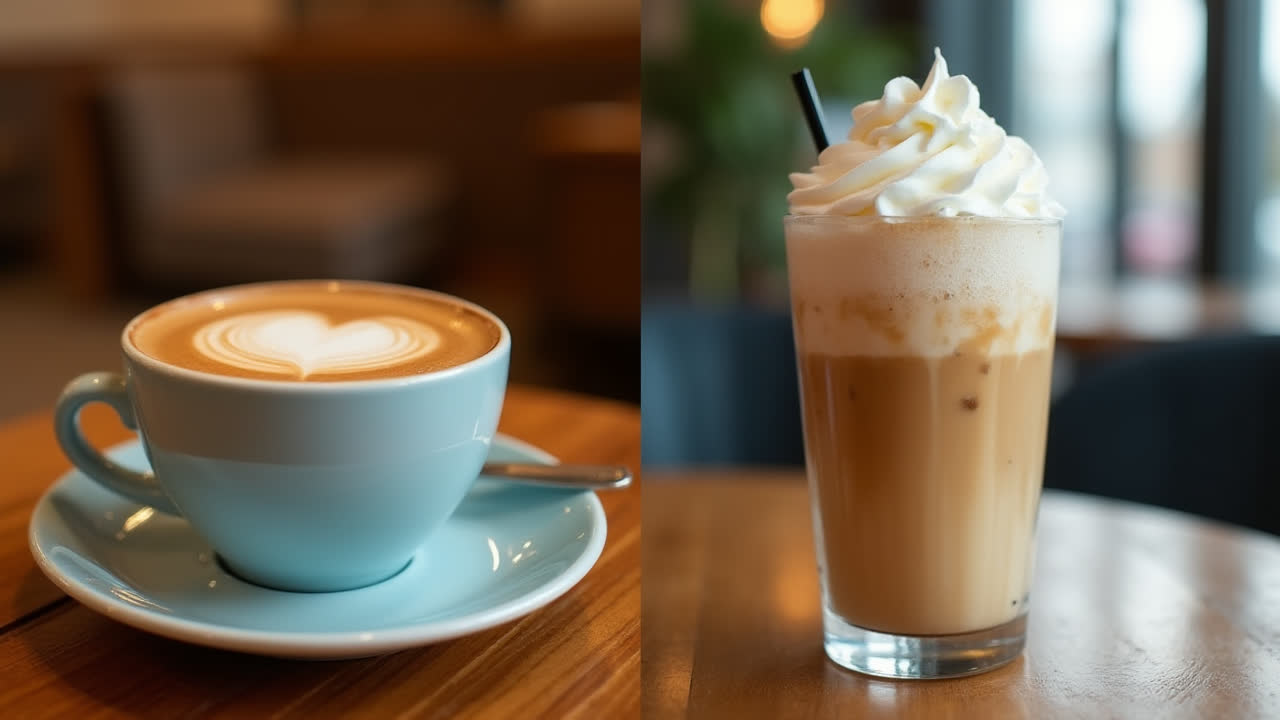
A traditional cappuccino with its characteristic foam layer
A Starbucks Frappuccino topped with whipped cream
What Is a Frappuccino?
In contrast to the centuries-old cappuccino, the Frappuccino is a modern creation and a trademarked product of Starbucks. The name itself is a clever blend of "frappe" and "cappuccino," though the drink bears little resemblance to its Italian namesake. A Frappuccino is essentially a cold, blended beverage that comes in numerous varieties and flavors.
The basic Frappuccino formula consists of a coffee or crème base blended with ice and various flavored syrups, then topped with whipped cream and additional toppings like caramel sauce, chocolate drizzle, or cookie crumbles. What many people don't realize is that not all Frappuccinos contain coffee. The Starbucks menu divides them into two main categories: Coffee Frappuccinos and Cream Frappuccinos, with the latter being completely coffee-free.
Coffee Frappuccinos come in popular variations such as Mocha Frappuccino, Caramel Frappuccino, Espresso Frappuccino, Java Chip Frappuccino, and the classic Coffee Frappuccino. For those who prefer to avoid caffeine or simply don't enjoy coffee flavor, Cream Frappuccinos offer options like Caramel Cream Frappuccino, Vanilla Cream Frappuccino, Chocolate Cream Frappuccino, Chai Cream Frappuccino, and the indulgent Double Chocolaty Chip Frappuccino.
I'll never forget my first Frappuccino experience during a sweltering summer day in college. The refreshing blend of coffee, ice, and chocolate was exactly what I needed during finals week. It was nothing like the hot cappuccinos I was used to drinking in the morning – this was more like a dessert in a cup! That's the thing about Frappuccinos – they're often criticized for their high sugar content, but sometimes, that's precisely what makes them so appealing as an occasional treat.
Cappuccino vs Frappuccino: Key Differences
| Feature | Cappuccino | Frappuccino |
|---|---|---|
| Origin | Traditional Italian coffee beverage | Trademarked product by Starbucks |
| Temperature | Hot drink served warm | Cold drink served chilled |
| Coffee Content | Always contains espresso coffee | Not all varieties contain coffee (Cream Frappuccinos are coffee-free) |
| Serving Size | Typically 150ml (5oz) cup | At least 350ml (12oz) cup |
| Ingredients | Espresso, steamed milk, milk foam | Base (coffee or crème), ice, syrups, toppings |
| Preparation | Layered (espresso, milk, foam) | Blended together with ice |
| Nutritional Profile | Lower in sugar and fat | Higher sugar and fat content |
| Texture | Creamy with distinct layers | Slushy, smooth consistency |
While both drinks might share similar syllables in their names, they represent two entirely different coffee experiences. The cappuccino embodies the traditional European coffee culture with its precise ratios and careful preparation. In contrast, the Frappuccino represents the modern American approach to coffee drinks – innovative, customizable, and designed to appeal to a wide range of taste preferences.
Have you ever noticed how cappuccinos are typically served in smaller cups? There's a reason for that. The intensity of the espresso and the richness of the milk in a cappuccino means you don't need a large serving to feel satisfied. On the other hand, Frappuccinos are served in generous portions, often starting at 12 ounces and going up to 24 ounces for the "venti" size. These larger portions make sense given their more diluted flavor profile due to the ice content.
When to Choose a Cappuccino vs a Frappuccino
Choosing between these two beverages often comes down to the situation and your personal preferences. A cappuccino is ideal for those morning wake-up calls when you need a warm, comforting drink with a robust coffee flavor and a moderate caffeine kick. It's perfect for sipping slowly while reading the morning news or during a quiet conversation at a café. I personally love a well-made cappuccino on chilly winter mornings – there's something about that warm foam hitting your lips before the rich espresso that just can't be beaten.
A Frappuccino, on the other hand, shines during hot summer days when you're craving something cold and refreshing. It's more of an indulgent treat than a daily coffee ritual, making it suitable for afternoon pick-me-ups or dessert replacements. The variety of flavors available means there's likely a Frappuccino to match whatever you're in the mood for, whether that's something fruity, chocolatey, or caramel-infused.
From a health perspective, cappuccinos generally contain fewer calories, less sugar, and less fat than Frappuccinos. A standard cappuccino typically has around 80-120 calories, while even a small Frappuccino can pack 200-500 calories depending on the flavor and toppings. If you're watching your calorie intake but still want to enjoy a Frappuccino occasionally, consider requesting it with nonfat milk, no whipped cream, or fewer pumps of syrup.
Frequently Asked Questions
Which has more caffeine, a cappuccino or a frappuccino?
A standard cappuccino typically contains more caffeine than many Frappuccinos. A cappuccino is made with a shot of espresso (approximately 63-75mg of caffeine), while the caffeine content in Frappuccinos varies widely depending on the size and variety. Coffee-based Frappuccinos contain caffeine, but often less than a standard cappuccino because the coffee is diluted with ice and other ingredients. Cream-based Frappuccinos contain no coffee and therefore no caffeine (unless they include chocolate, which contains minimal caffeine). If you're looking for a stronger caffeine hit, you can always ask for an extra shot of espresso in either drink.
Can I make a cappuccino or frappuccino at home?
Yes, both drinks can be made at home, though with different equipment requirements. For a cappuccino, you'll need an espresso machine with a milk steamer or a separate milk frother. The key is achieving the right balance of espresso, steamed milk, and foam. For a homemade Frappuccino, you'll need a blender to combine cold coffee (or coffee syrup for cream versions), milk, ice, sweetener, and any flavor additions you prefer. Homemade versions give you control over ingredients, allowing you to adjust the sweetness and create healthier variations than store-bought options. While they might not be exactly the same as professionally made versions, home experiments can be fun and often quite delicious.
Are there any dairy-free options for cappuccinos and frappuccinos?
Absolutely! Both cappuccinos and Frappuccinos can be made with non-dairy alternatives. For cappuccinos, plant-based milks like soy, almond, oat, and coconut can be steamed and frothed, though each creates a slightly different texture and flavor profile. Oat milk tends to froth particularly well for cappuccinos. At Starbucks and many other coffee shops, Frappuccinos can be customized with various non-dairy milk options. The base of most Frappuccinos is vegan, but you'll want to specify no whipped cream (which contains dairy) and check if any of the flavor syrups or toppings contain dairy ingredients. Many coffee shops now offer specific vegan menu items or can guide you through creating a dairy-free version of your favorite drink.
Conclusion
The cappuccino and frappuccino represent two distinct branches of coffee culture – one rooted in Italian tradition and the other born from American innovation. While the cappuccino offers a classic, refined coffee experience with its perfect balance of espresso, milk, and foam served hot, the Frappuccino provides a playful, customizable cold beverage that often blurs the line between coffee and dessert.
Understanding the differences between these popular coffee drinks can enhance your café experience and help you choose the beverage that best suits your mood, the weather, and your caffeine needs. Whether you prefer the sophisticated simplicity of a cappuccino or the indulgent variety of Frappuccino flavors, both drinks have earned their place in the diverse world of coffee offerings.
The next time you stand in line at your local coffee shop, you'll know exactly what makes these two similarly-named but distinctly different beverages unique – and which one might be calling your name that day.