Carbonization vs Coalification: Understanding the Key Differences
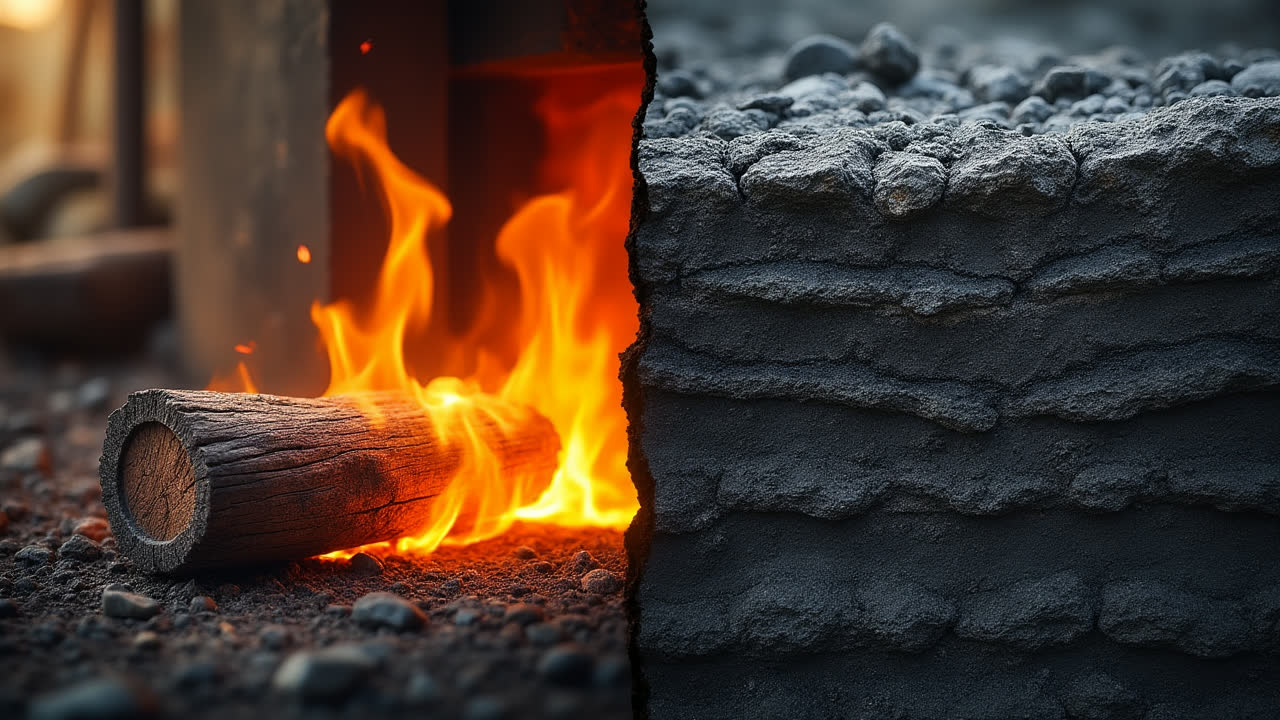
What is Carbonization? The Human-Controlled Carbon Creation Process
Carbonization is a remarkable process that transforms organic materials like wood, plant waste, or animal remains into carbon-rich materials. This transformation occurs in an oxygen-limited environment where organic matter breaks down while preserving significant carbon content due to the lack of oxygen. It's a process that humans have used for thousands of years, though our understanding and control of it have improved dramatically over time.
Unlike natural processes that take millions of years, carbonization is relatively quick. The organic matter is heated at high temperatures ranging from approximately 400°C to 700°C by burning in containers with limited air intake, using specialized kilns, or employing pyrolysis techniques. The duration of the process depends on the desired outcome and chosen production method, typically varying from several hours to a few days – quite rapid compared to geological processes!
One of the most common products of carbonization is charcoal – a porous, lightweight material primarily used as fuel. Charcoal is prized for its ability to burn with a steady and clean flame, making it ideal for cooking, grilling, and various industrial applications. When I tried making my own charcoal last summer, I was amazed at how effectively it burned compared to raw wood, with far less smoke and a more consistent heat.
Another valuable product of carbonization is biochar, which has gained significant attention in recent years for its applications in soil amendment and carbon sequestration. Biochar helps preserve soil fertility by retaining moisture and nutrients, making it an increasingly important tool in sustainable agriculture practices. I've seen this firsthand in community gardens where biochar-amended soil shows remarkable improvements in plant health and yield.
The advantages of carbonization extend beyond just the products it creates. This process provides an effective way to convert waste biomass into valuable resources, helping reduce greenhouse gas emissions in the process. By turning organic waste into useful products rather than allowing it to decompose and release methane, carbonization represents a sustainable practice with significant environmental benefits.
What is Coalification? Nature's Slow Carbon Compression
Coalification represents nature's patient approach to creating carbon-rich materials. Unlike the rapid process of carbonization, coalification is a natural geological process where organic matter transforms into coal over millions of years. The journey begins when dead organic material, primarily plant matter, accumulates in swamp-like environments with limited oxygen. These ancient swamps were often lush with vegetation, creating perfect conditions for the first stage of coal formation.
As time passes, this organic matter gets buried progressively deeper due to the continuous sedimentation of other materials on top. The increasing weight creates immense pressure that begins to squeeze out water and gases from the organic matter, initiating its breakdown and transformation. Imagine the weight of an entire mountain slowly pressing down on plant remains – that's the kind of pressure we're talking about!
With increasing burial depth, the organic matter experiences both high heat and pressure, allowing further chemical breakdown to occur. This combination drives out volatile components and concentrates the carbon content. The process is remarkably slow by human standards – what takes us hours in carbonization takes nature millions of years in coalification. When hiking in coal-rich regions, I'm always struck by the thought that I'm walking over compressed forests from times when dinosaurs roamed the Earth.
The coalification process isn't uniform, and it creates different types of coal depending on the duration and intensity of pressure and heat. Starting with peat (the least "cooked" form), the progression continues through lignite, sub-bituminous coal, bituminous coal, and finally anthracite (the most carbon-rich form). Each type has different properties and energy content, making them suitable for various applications from power generation to metallurgical processes.
Interestingly, the coal we mine today contains not just carbon but also a record of ancient ecosystems. Scientists can study coal deposits to learn about prehistoric environments, climate conditions, and plant life. In this way, coalification not only creates a valuable fuel source but also preserves a geological record of Earth's history that we can decipher today.
Key Similarities Between Carbonization and Coalification
Before diving deeper into their differences, it's worth noting that carbonization and coalification do share some fundamental similarities. Both processes aim to convert organic matter, particularly plant material, into carbon-rich compounds. Whether through human intervention or geological forces, both transform relatively low-carbon organic materials into substances with much higher carbon concentrations.
Additionally, both processes require the application of heat to drive the chemical changes necessary for carbon enrichment. While the temperature ranges differ significantly, thermal energy plays a crucial role in breaking down complex organic molecules and removing volatile components, leaving behind concentrated carbon structures.
Both carbonization and coalification also depend on oxygen-limited environments to prevent complete combustion of the organic matter. If unlimited oxygen were present, the carbon would simply burn away as carbon dioxide rather than becoming concentrated in the remaining material. This anaerobic aspect is essential for preserving and concentrating carbon content in both processes.
Carbonization vs Coalification: A Detailed Comparison
While both processes transform organic matter into carbon-rich materials, carbonization and coalification differ dramatically in their time scales, conditions, and resulting products. The following table provides a comprehensive comparison of these two fascinating processes.
| Comparison Factor | Carbonization | Coalification |
|---|---|---|
| Definition | Process of converting organic matter into carbon through decomposition at high temperatures in oxygen-limited environments | Gradual geological process transforming plant material into coal over millions of years through biochemical and physical changes |
| Time Period | Rapid process taking hours to days | Extremely slow process occurring over millions of years |
| Pressure Conditions | Typically occurs at atmospheric pressure | Driven by immense pressure from deep burial under sediment |
| Temperature Range | High temperatures (approximately 400-700°C) | Moderate temperatures (approximately 30-200°C) |
| Primary Products | Charcoal, biochar with lower carbon content than coal | Progression of coal types with increasing carbon content (peat, lignite, bituminous, anthracite) |
| Human Involvement | Human-controlled industrial or artisanal process | Natural process with no human intervention |
| Starting Materials | Various organic materials including wood, agricultural waste, animal remains | Primarily plant matter accumulated in ancient swampy environments |
| Primary Applications | Fuel production, soil amendment, carbon sequestration | Energy production, metallurgical processes, chemical production |
The Science Behind the Transformation
The transformation of organic matter into carbon-rich materials involves fascinating chemical and physical processes. In carbonization, the high temperatures break the chemical bonds in organic compounds, driving off hydrogen, oxygen, and other elements as gases. This process, known as pyrolysis, leaves behind a carbon-rich solid. The rapid heating prevents the complete oxidation of carbon that would occur in normal combustion.
Coalification works differently, relying on a combination of biological and geological processes. Initially, microorganisms break down some of the plant matter in anaerobic conditions, similar to how compost forms but with limited oxygen. As pressure increases, physical compression squeezes out water and further concentrates the material. Over time, chemical reactions continue at moderate temperatures, gradually increasing the percentage of carbon while reducing other elements.
The molecular structures that result from these processes also differ significantly. Charcoal from carbonization maintains some of the cellular structure of the original wood, creating its characteristic porosity. Coal from coalification has undergone much more extensive restructuring at the molecular level, forming more ordered carbon arrangements that give different coal types their distinct properties.
Understanding these chemical transformations has practical applications beyond just knowledge. For example, researchers are now developing enhanced carbonization techniques that produce biochar with specific properties for different agricultural applications. Similarly, studying coalification helps geologists locate and evaluate coal deposits and helps engineers develop more efficient ways to utilize this resource while minimizing environmental impact.
Environmental and Industrial Implications
The environmental footprints of carbonization and coalification – and their products – differ dramatically. Modern carbonization for biochar production is increasingly viewed as an environmentally positive process that can help sequester carbon that would otherwise enter the atmosphere. When organic waste is converted to biochar and added to soil, the carbon can remain stable for hundreds or even thousands of years, effectively removing it from the carbon cycle.
Coalification, while natural, has led to the formation of vast coal deposits that, when extracted and burned, release significant amounts of carbon dioxide and other pollutants. The coal industry faces increasing pressure to address these environmental concerns through technologies like carbon capture and storage or by transitioning away from coal as an energy source altogether.
From an industrial perspective, both processes have significant economic importance. Carbonization creates products used in cooking, water filtration, soil amendment, and specialized industrial applications. Coal remains a major energy source globally and a key ingredient in steel production, though its role is evolving as societies work to reduce carbon emissions.
Looking to the future, we might see these two processes intersect in interesting ways. For example, some researchers are exploring whether accelerated carbonization processes might eventually be able to create coal-like materials more rapidly and with less environmental impact than mining natural coal. While such technologies are still theoretical, they highlight how understanding these fundamental carbon transformation processes could lead to innovative solutions for our energy and resource needs.
Frequently Asked Questions About Carbonization and Coalification
What are the main products of carbonization and how are they used?
The main products of carbonization are charcoal and biochar. Charcoal is primarily used as a fuel source for cooking, grilling, and certain industrial processes due to its clean-burning properties and high heat output. Biochar, on the other hand, is increasingly used in agriculture as a soil amendment that improves fertility by enhancing water and nutrient retention. Additionally, biochar serves as a form of carbon sequestration, helping to mitigate climate change by storing carbon in a stable form in the soil rather than releasing it into the atmosphere.
How do scientists determine the age of coal deposits?
Scientists determine the age of coal deposits through various dating methods, with radiometric dating being the most common for older deposits. They analyze the coal itself or, more commonly, the surrounding sedimentary rock layers which may contain minerals suitable for radiometric dating. Paleontologists also examine plant and animal fossils found within and around coal seams, as certain fossils are associated with specific geological periods. Additionally, the type of coal itself provides clues – anthracite typically indicates older deposits that have undergone more extensive coalification than younger lignite or sub-bituminous coal. By combining these methods, scientists can establish relatively accurate timelines for when the original plant material was deposited and when coalification occurred.
Can carbonization be considered an environmentally friendly process?
Carbonization can indeed be considered environmentally friendly when properly managed, particularly in modern applications. When used to create biochar from agricultural waste or forestry residues, carbonization offers multiple environmental benefits: it diverts waste from decomposition (which would release methane, a potent greenhouse gas), sequesters carbon in a stable form that can remain in soil for centuries, and produces a valuable soil amendment that reduces the need for chemical fertilizers. However, traditional charcoal production methods can be harmful if they involve deforestation or emit significant smoke and particulates. The environmental impact largely depends on the source materials, production techniques, and ultimate use of the carbonized products. Modern, controlled carbonization systems with proper emissions controls represent a significant improvement over traditional methods and can be part of sustainable resource management strategies.
Conclusion: Bridging Natural and Human Carbon Processes
Both carbonization and coalification transform organic matter into carbon-rich materials, but they do so through dramatically different pathways. Carbonization is a human-controlled, rapid process using high temperatures to create charcoal or biochar in hours to days. Coalification is a natural and slow process with high pressure and moderate heat over millions of years, resulting in various types of coal with different properties and applications.
Understanding these processes helps us appreciate the complex carbon transformations that occur both in nature and in human industry. As we face growing environmental challenges, this knowledge becomes increasingly valuable in developing sustainable carbon management strategies – whether through improved biochar production methods or more efficient and cleaner ways to utilize coal resources.
The story of carbon transformation is ultimately one of time, pressure, and heat – factors that humans can manipulate quickly or that nature applies slowly but inexorably. By studying both approaches, we gain valuable insights into carbon's journey through Earth's systems and how we might better manage this essential element in our changing world.
Interested in Learning More About Carbon Processes?
Explore our related articles on sustainable carbon management, renewable energy alternatives, and the environmental impact of different carbon-based fuels.
References:
- https://www.sciencedirect.com/topics/earth-and-planetary-sciences/coal
- https://www.sciencedirect.com/topics/chemical-engineering/carbonizatio
- https://commons.wikimedia.org/w/index.php?curid=86927038
- https://ourworldindata.org/grapher/coal-production-by-region
- https://commons.wikimedia.org/w/index.php?curid=25673658
- http://goldbook.iupac.org/C00840.html