Christmas vs Hanukkah: 8 Key Differences Between These Winter Festivals
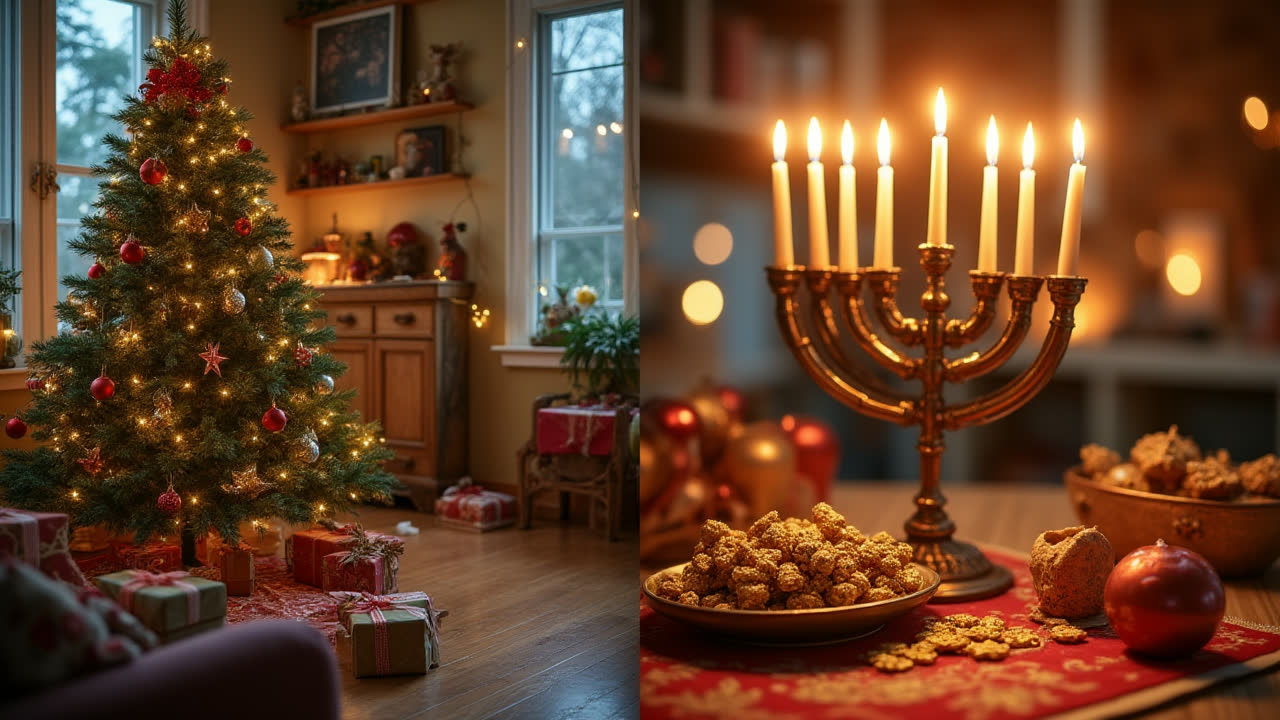
The winter season brings with it some of the most cherished celebrations across different cultures and religions. Among these, Christmas and Hanukkah stand out as two major religious holidays that often occur around the same time of year. While these festivals share some similarities like family gatherings, lights, and gift-giving, they have distinct origins, traditions, and significance. I've always been fascinated by how these different celebrations can coexist during the same season yet maintain their unique cultural identities.
Having grown up in a diverse neighborhood, I witnessed both celebrations firsthand. The twinkling Christmas trees on one street and the warm glow of menorahs in windows on another created a magical atmosphere during those cold winter evenings. But what exactly are the differences between these two beloved festivals? Let's explore the unique aspects of each celebration and understand what makes them special to their respective communities.
What is Christmas? Origins and Significance
Christmas is the annual Christian festival celebrating the birth of Jesus Christ, observed primarily on December 25th as a religious and cultural celebration among billions of people around the world. The word "Christmas" literally means "Christ's Mass" - referring to the religious service held to commemorate Jesus's birth. Though the exact date of Jesus's birth isn't specified in the Bible, December 25th became widely accepted as the celebration date by the 4th century.
The significance of Christmas extends beyond just marking a historical birth. For Christians, it represents hope and redemption through the arrival of the Savior. The nativity story, featuring Mary, Joseph, the shepherds, and the three wise men, forms the cornerstone of Christmas traditions. Over time, Christmas has evolved to include both religious observances like Midnight Mass or church services and secular traditions such as decorating Christmas trees, exchanging gifts, and the beloved figure of Santa Claus.
I still remember my grandmother telling me how Christmas wasn't always celebrated as just a single day but rather as an entire season. In some traditions, the Christmas season begins with Advent (four Sundays before Christmas) and extends until Epiphany on January 6th. This expansive celebration period reflects the tremendous cultural impact this holiday has had throughout history.
Did you know? While Christmas is now synonymous with December 25th, early Christians didn't initially celebrate Christ's birth. The celebration of Christmas didn't become widespread until several centuries after Jesus's time.
What is Hanukkah? Origins and Significance
Hanukkah, also spelled Chanukah, is a Jewish festival commemorating the recovery of Jerusalem and subsequent rededication of the Second Temple at the beginning of the Maccabean revolt against the Seleucid Empire in the 2nd century BCE. The Hebrew word "Hanukkah" appropriately means "dedication," reflecting the rededication of the temple after its desecration by foreign forces.
The historical basis of Hanukkah centers around the Maccabean Revolt. After the Seleucid King Antiochus IV outlawed Jewish religious practices and ordered the worship of Greek gods, a small group of Jewish rebels led by Judah Maccabee fought back against the mighty empire. Against all odds, they were victorious and reclaimed the Holy Temple in Jerusalem. When they sought to light the Temple's menorah, they found only enough untainted olive oil to keep the flames burning for one day. Miraculously, the oil lasted for eight days—the time needed to prepare a fresh supply of kosher oil. This miracle of the oil is the foundation for the eight-day celebration of Hanukkah.
Unlike Christmas, Hanukkah follows the Hebrew calendar, falling on the 25th day of Kislev (the ninth month of the Hebrew calendar). This means in the Gregorian calendar, Hanukkah can occur anytime from late November to late December. The festival is also known as the "Festival of Lights," which perfectly captures its most central tradition—the lighting of the menorah or hanukkiah.
Having attended a few Hanukkah celebrations with friends, I've witnessed the beautiful progression of lighting the candles each night. The atmosphere grows increasingly brighter as more candles are lit on successive nights, symbolizing how light can grow and overcome darkness.
Key Differences Between Christmas and Hanukkah
| Aspect | Christmas | Hanukkah |
|---|---|---|
| Religious Origin | Christian celebration of Christ's birth | Jewish commemoration of the rededication of the Second Temple |
| Calendar Date | Fixed on December 25th (Gregorian calendar) | 25th of Kislev (Hebrew calendar), varies in Gregorian calendar |
| Duration | Traditionally one day (extended with Christmas Eve and the 12 days of Christmas in some traditions) | Eight days and nights |
| Primary Symbols | Christmas tree, nativity scene, star, Santa Claus | Menorah (Hanukkiah), dreidel, Star of David |
| Light Traditions | Christmas lights on trees and houses | Lighting one additional candle each night on the menorah |
| Traditional Foods | Turkey, ham, Christmas pudding, cookies, eggnog | Foods fried in oil: latkes (potato pancakes), sufganiyot (jelly doughnuts) |
| Gift-Giving | Typically exchanged on Christmas Day | Often given each night of Hanukkah (with some families emphasizing smaller gifts) |
| Music Traditions | Christmas carols, hymns, and popular Christmas songs | Traditional Hanukkah songs like "Maoz Tzur" and "I Have a Little Dreidel" |
Christmas Traditions Around the World
Christmas celebrations vary dramatically across different cultures, creating a rich tapestry of traditions around the world. In the United States and many Western countries, decorating Christmas trees, hanging stockings, exchanging gifts, and the legend of Santa Claus (or Father Christmas) dominate the holiday. The tradition of the Christmas tree originated in Germany in the 16th century and was popularized in England during the Victorian era before spreading globally.
Christmas foods form another essential aspect of the celebration, though what's considered "traditional" varies by region. In the UK, Christmas pudding and mince pies are staples, while Italian families might enjoy the panettone bread. American tables often feature ham or turkey, and Australians might have a Christmas barbecue on the beach! The culinary diversity reflects how Christmas has been adapted across different climates and cultures.
Religious observances remain central for many Christians, with church services like Midnight Mass or Christmas Day services forming a cornerstone of the celebration. The practice of caroling—going door-to-door singing Christmas songs—continues in many communities, though it's less common than it once was. Advent calendars and Advent wreaths help mark the countdown to Christmas in many households.
I've always loved how Christmas seems to transform entire cities. Streets glow with colorful lights, shop windows display elaborate decorations, and even the most serious adults seem to recapture a bit of childlike wonder. It's this transformative quality that makes Christmas such a powerful cultural force, even for many who don't celebrate its religious aspects.
Hanukkah Traditions and Celebrations
The central ritual of Hanukkah revolves around the lighting of the menorah or hanukkiah. Unlike a traditional menorah with seven branches, the Hanukkah menorah has nine—eight representing each night of the festival, plus the shamash or "helper" candle used to light the others. Each evening at sundown, families gather to light one additional candle, starting with one on the first night and ending with all eight on the final night. The candles are traditionally placed from right to left in the menorah but lit from left to right.
The dreidel game forms another beloved Hanukkah tradition, especially popular with children. This four-sided spinning top bears the Hebrew letters nun, gimel, hei, and shin, which form an acronym for "Nes Gadol Hayah Sham" meaning "A great miracle happened there." Players spin the dreidel and, depending on which letter lands face up, either give or take coins, chocolates, or other small prizes from a central pot. Legend has it that when the practice of Jewish studies was forbidden, children would play this game to disguise the fact they were gathering for religious education.
Food plays a significant role in Hanukkah celebrations, with oil-fried dishes predominating as a reference to the miracle of the oil. Latkes (potato pancakes) served with applesauce or sour cream are particularly popular in Ashkenazi Jewish traditions, while sufganiyot (jelly-filled doughnuts) are common in Israeli celebrations. Some Sephardic Jewish communities prepare buñuelos (fried fritters) or other regional oil-fried delicacies.
Gift-giving isn't historically central to Hanukkah but has become more common in modern times, particularly in countries where Jewish families live alongside Christmas-celebrating neighbors. Some families give small gifts on each of the eight nights, while others give gelt (chocolate coins or actual money)—a tradition that teaches children about charity and the importance of giving to those in need.
Coexistence and Cultural Exchange
In many diverse communities around the world, Christmas and Hanukkah coexist during the winter season, sometimes leading to interesting cultural exchanges and mutual appreciation. I've noticed how these distinct celebrations can complement rather than compete with each other, creating a richer experience for everyone in the community. Some interfaith families even celebrate both holidays, honoring multiple cultural heritages within a single household.
The phenomenon sometimes called "Christmukkah" represents a blending of traditions in interfaith families or inclusive communities. This can involve combined decorations, shared meals incorporating foods from both traditions, or celebrations that respect the distinct nature of each holiday while acknowledging their temporal proximity. While some religious leaders express concern about the dilution of each tradition's unique character, many families find meaningful ways to honor both celebrations.
Both holidays occur during the darkest time of the year in the Northern Hemisphere, and both incorporate themes of light overcoming darkness—Christmas with its star of Bethlehem and candlelit services, and Hanukkah with its progressively brightening menorah. This shared symbolism offers a meaningful point of connection between these otherwise distinct religious celebrations. While maintaining their significant differences, both holidays remind us of hope and resilience during the winter season.
Frequently Asked Questions About Christmas and Hanukkah
Why do Christmas and Hanukkah sometimes overlap but not always?
Christmas and Hanukkah sometimes overlap because Hanukkah follows the Hebrew calendar, which is lunar-based, while Christmas follows the Gregorian calendar, which is solar-based. Hanukkah begins on the 25th of Kislev in the Hebrew calendar, which can fall anywhere from late November to late December in the Gregorian calendar. This variable timing means that some years Hanukkah and Christmas coincide closely, while in other years they might be separated by several weeks.
Is gift-giving traditional for both Christmas and Hanukkah?
Gift-giving has different historical roots in each holiday. In Christmas traditions, gift-giving symbolizes the gifts brought by the Wise Men to baby Jesus, though the modern emphasis on presents developed much later. For Hanukkah, traditional gift-giving historically centered around gelt (money), often given to children as a reward for Torah study. The practice of giving presents for each of the eight nights of Hanukkah is relatively modern and may have developed partially in response to Christmas culture in countries where both holidays are celebrated.
What are appropriate greetings for Christmas and Hanukkah?
For Christmas, common greetings include "Merry Christmas," "Happy Christmas" (particularly in the UK), or the more inclusive "Happy Holidays" when addressing people of unknown religious background. For Hanukkah, the traditional greeting is "Chag Sameach" (Happy Holiday) or more specifically "Chag Hanukkah Sameach" (Happy Hanukkah Holiday). In English, "Happy Hanukkah" is widely used and appreciated. If you're unsure which holiday someone celebrates, "Season's Greetings" or "Happy Holidays" offers a respectful alternative that acknowledges the festive season without assuming which specific celebration a person observes.
Conclusion: Celebrating Diversity in Winter Festivals
While Christmas and Hanukkah originate from different religious traditions and commemorate entirely different historical events, both holidays bring light, joy, and community during the winter season. Whether you're decorating a Christmas tree or lighting a menorah, these traditions offer meaningful ways to connect with family, cultural heritage, and spiritual values during the darkest time of the year.
Understanding the differences between these celebrations helps us appreciate the rich diversity of cultural and religious expressions that coexist in many communities. Rather than focusing solely on their differences, we might also recognize how both holidays encourage values like gratitude, generosity, and hope—universal themes that resonate across cultural boundaries.
Have you experienced both Christmas and Hanukkah celebrations? Which traditions from either holiday do you find most meaningful? However you celebrate during the winter season, may your observations be filled with light, joy, and meaningful connections with those you love.