Cladogram vs Phylogenetic Tree: Essential Differences Explained
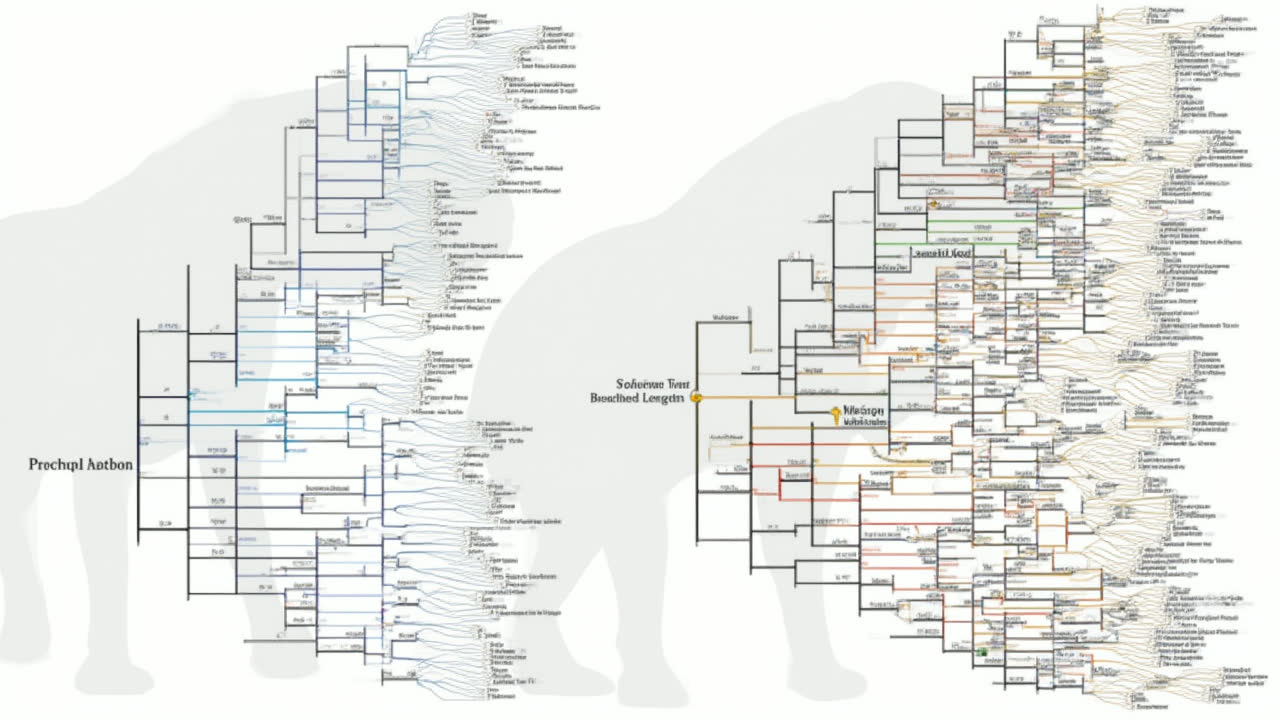
Have you ever wondered how scientists map out the complex relationships between different species? In the fascinating world of evolutionary biology, cladograms and phylogenetic trees serve as crucial visual tools that help us understand how organisms are related to each other. Though they might look similar at first glance, these two types of evolutionary diagrams have distinct purposes and tell different stories about life's history on our planet.
When I first encountered these diagrams in my biology textbook, I remember being confused about why we needed two different ways to show evolutionary relationships. Aren't they both just tree-like diagrams showing how species are connected? Well, as it turns out, the differences between them are quite significant and understanding these differences can give us a much deeper appreciation of evolutionary biology.
In this comprehensive guide, we'll explore what makes cladograms and phylogenetic trees unique, how scientists construct them, and why both are valuable tools in modern biology. Whether you're a student, teacher, or simply curious about evolutionary science, this comparison will help clarify these important concepts.
Understanding Cladograms: Structure and Features
A cladogram is essentially a branching diagram that illustrates the relationships among a group of organisms called clades. What's a clade, you ask? It's simply a group that includes a common ancestor and all its descendants. Think of it as a family tree that shows who's related to whom, but without telling you how long ago they shared a common ancestor or how different they've become since then.
When scientists create cladograms, they're primarily focused on showing the pattern of branching that has occurred during evolution. Each branch point (or node) represents where a lineage split into two or more groups. The tips of the branches represent the organisms being classified, while the nodes represent their hypothetical common ancestors.
One of the most important things to understand about cladograms is that the length of the branches doesn't mean anything specific. All branches are typically drawn with equal lengths, regardless of how much evolutionary change has occurred or how much time has passed. This is because cladograms focus purely on the order of branching events rather than the amount of change.
Cladograms are typically constructed based on shared derived characteristics (synapomorphies) among organisms. For example, if we were creating a cladogram of vertebrates, we might use characteristics like "has a backbone," "has four limbs," "has mammary glands," and so on to determine how different groups should be arranged.
I remember working on a project where we created a cladogram of common household pets. We used characteristics like "has fur," "has a tail," "can purr," etc. It was fascinating to see how animals we don't usually think of as closely related ended up on the same branches based on their shared traits!
The beauty of cladograms lies in their simplicity. They provide a clear picture of how organisms are grouped based on common ancestry without getting bogged down in the details of evolutionary rates or genetic distances. This makes them particularly useful for teaching and for getting a broad overview of evolutionary relationships.
Exploring Phylogenetic Trees: Beyond Simple Branching
While cladograms tell us about the branching pattern of evolution, phylogenetic trees take things a step further. A phylogenetic tree is also a branching diagram, but it adds an important dimension: the length of the branches represents the amount of evolutionary change that has occurred or the time that has passed since groups diverged from their common ancestor.
This additional information makes phylogenetic trees more complex but also more informative. When you look at a phylogenetic tree, not only can you see who's related to whom, but you can also get a sense of how much they've changed since they split from their common ancestor. Branches that are longer indicate more evolutionary change, which could mean more genetic mutations, more morphological changes, or a longer time period of separate evolution.
Creating a phylogenetic tree requires more data than a cladogram. Scientists typically use a combination of evidence sources, including:
- DNA and protein sequences
- Morphological characteristics
- Fossil evidence
- Developmental biology
- Behavioral traits
- Geographic distribution patterns
With advances in genetic sequencing technology, DNA evidence has become particularly important for constructing accurate phylogenetic trees. By comparing the genetic code of different species, scientists can estimate how recently they shared a common ancestor and how quickly their genomes have been changing.
I once attended a workshop where we analyzed DNA sequences from various primate species to construct a phylogenetic tree. It was eye-opening to see how the genetic evidence matched up with what we already knew from the fossil record, but also provided insights into relationships that weren't obvious from physical traits alone.
It's worth noting that phylogenetic trees are always hypotheses—educated guesses about evolutionary history based on available evidence. As new evidence emerges, these trees can be revised and refined. This is why you might see different versions of phylogenetic trees in different textbooks or scientific papers.
Key Differences Between Cladograms and Phylogenetic Trees
| Feature | Cladogram | Phylogenetic Tree |
|---|---|---|
| Branch Length | Equal lengths for all branches | Proportional to evolutionary change or time |
| Primary Purpose | Shows pattern of branching and relatedness | Shows both relatedness and degree of change |
| Evolutionary Time | Does not represent evolutionary time | Branch length often represents time |
| Genetic Distance | Does not show genetic differences | Branch length often represents genetic distance |
| Main Data Source | Primarily morphological characteristics | Morphological, genetic, and other evidence |
| Level of Detail | Simpler, focuses on branching pattern | More detailed, shows degree of divergence |
| Historical Accuracy | General hypothesis about relationships | Attempts to represent true evolutionary history |
| Application | Teaching, basic classification | Research, detailed evolutionary studies |
Similarities Between Cladograms and Phylogenetic Trees
Despite their differences, cladograms and phylogenetic trees share several important features and purposes. After all, they're both tools designed to help us understand evolutionary relationships.
Both cladograms and phylogenetic trees represent evolutionary relationships among organisms. They show how different species, genera, families, or other taxonomic groups are related through common ancestry. This is the fundamental purpose of both diagrams, and it's why they share a similar overall structure.
The branching pattern in both types of diagrams indicates divergence events where one lineage split into two or more separate lineages. These divergence events represent speciation—the process by which one species becomes two or more species.
Both diagrams are built on the principle of common descent, the idea that all organisms on Earth share common ancestors if you go back far enough in time. This is a central concept in evolutionary biology, and both cladograms and phylogenetic trees help visualize this concept.
Another similarity is that both cladograms and phylogenetic trees can be used at different taxonomic levels. They can show relationships among species within a genus, among genera within a family, among families within an order, and so on up the taxonomic hierarchy.
Finally, both types of diagrams are constantly being refined as new evidence becomes available. Whether it's new fossil discoveries, new genetic data, or new analytical methods, our understanding of evolutionary relationships is always improving, and both cladograms and phylogenetic trees are updated to reflect this improved understanding.
Applications in Modern Biology
These evolutionary diagrams aren't just academic exercises—they have real-world applications in various fields of biology. Let's explore how scientists use cladograms and phylogenetic trees in their work.
In taxonomy and classification, these diagrams help scientists organize the vast diversity of life in a way that reflects evolutionary relationships. Modern taxonomic systems aim to be "phylogenetic," meaning they group organisms based on common ancestry rather than just similar features.
Conservation biologists use phylogenetic information to identify evolutionarily distinct species or lineages that may deserve special protection. For example, the EDGE of Existence program (Evolutionarily Distinct and Globally Endangered) uses phylogenetic data to identify unique species that have few close relatives and are at risk of extinction.
In medicine and public health, phylogenetic analysis helps track the spread and evolution of pathogens. During disease outbreaks, scientists create phylogenetic trees of virus or bacterial samples to understand how the pathogen is spreading and changing. This was particularly important during the COVID-19 pandemic for tracking new variants of the SARS-CoV-2 virus.
Developmental biologists use evolutionary trees to study how developmental processes have changed over time. By mapping developmental genes and processes onto phylogenetic trees, they can determine which aspects of development are ancient and conserved across many species and which are more recent innovations.
Comparative genomics relies heavily on phylogenetic frameworks. When comparing genomes of different species, scientists need to know how those species are related to properly interpret similarities and differences. Are two genes similar because they're derived from a common ancestral gene, or did they evolve independently to perform similar functions?
How Scientists Construct These Evolutionary Diagrams
Creating accurate cladograms and phylogenetic trees is no simple task. It requires careful collection and analysis of data, sophisticated computational methods, and a solid understanding of evolutionary principles.
For cladograms, the process typically begins with selecting the taxa (groups of organisms) to be included and identifying characteristics that can be compared across all these taxa. These characteristics might be morphological features, behavioral traits, or molecular data. Scientists then determine the states of these characteristics for each taxon (present/absent, or various forms the characteristic might take).
The next step is to determine which character states are ancestral (plesiomorphic) and which are derived (apomorphic). This often involves selecting an outgroup—a taxon that's known to be more distantly related to all the other taxa being analyzed. Character states that are shared between the outgroup and some of the ingroup taxa are likely ancestral.
Based on the distribution of derived character states among taxa, scientists can determine the likely branching pattern that would explain this distribution most parsimoniously (with the fewest evolutionary changes). This forms the basis of the cladogram.
For phylogenetic trees, the process is similar but often relies more heavily on molecular data and uses more complex analytical methods. Scientists typically align sequences of DNA or proteins from different species to identify similarities and differences. Various computational algorithms are then used to find the tree that best explains these patterns of similarity and difference.
These methods include maximum parsimony (finding the tree that requires the fewest evolutionary changes), maximum likelihood (finding the tree that makes the observed data most probable given a model of evolution), and Bayesian inference (finding the tree with the highest posterior probability given the data and prior beliefs).
Frequently Asked Questions
Why do scientists use both cladograms and phylogenetic trees?
Scientists use both cladograms and phylogenetic trees because they serve different purposes. Cladograms are excellent for clearly showing the branching pattern of evolution and the hierarchical grouping of organisms based on common ancestry. They're simpler and often easier to interpret, making them valuable for teaching and for getting a quick overview of relationships. Phylogenetic trees, on the other hand, provide additional information about the degree of evolutionary change and the timing of divergence events, which is crucial for more detailed evolutionary studies. In many cases, scientists might use both types of diagrams to communicate different aspects of their research findings.
How reliable are cladograms and phylogenetic trees?
Both cladograms and phylogenetic trees are hypotheses based on available evidence, not definitive statements of evolutionary history. Their reliability depends on the quality and quantity of data used to construct them, the appropriateness of the analytical methods, and the complexity of the evolutionary history being represented. Modern phylogenetic analyses that incorporate multiple types of evidence (especially extensive genetic data) and use sophisticated analytical methods can be quite reliable for many groups of organisms. However, there are still many challenging cases, particularly for ancient divergences, rapid evolutionary radiations, or groups with sparse fossil records. Scientists acknowledge this uncertainty by sometimes presenting multiple possible trees or by indicating confidence levels for different parts of the tree.
Can cladograms and phylogenetic trees change over time?
Yes, both cladograms and phylogenetic trees frequently change as new evidence becomes available or as analytical methods improve. For example, the advent of DNA sequencing technology revolutionized our understanding of many evolutionary relationships, sometimes overturning classifications that were based solely on morphological characteristics. Even now, as whole-genome sequencing becomes more accessible and as new fossil discoveries are made, our evolutionary trees continue to be refined. This doesn't mean that earlier trees were "wrong"—rather, they were the best hypotheses given the evidence available at the time. Science is an iterative process, and our understanding of evolutionary relationships continues to improve with each new study.
Conclusion: The Complementary Value of Both Approaches
While cladograms and phylogenetic trees have distinct differences, they're both valuable tools in the evolutionary biologist's toolkit. Cladograms excel at clearly showing the pattern of branching and the hierarchical relationships among groups, while phylogenetic trees provide additional information about the degree and timing of evolutionary change.
Rather than viewing one as superior to the other, it's more useful to see them as complementary approaches that serve different purposes. A cladogram might be more appropriate for teaching basic evolutionary concepts or for illustrating the logic of classification systems, while a detailed phylogenetic tree would be more useful for researchers studying rates of evolution or trying to date divergence events.
As our methods for gathering and analyzing biological data continue to advance, both cladograms and phylogenetic trees will become increasingly accurate and informative. These visual representations of life's history not only help us understand how different organisms are related but also provide a framework for organizing biological knowledge and for making predictions about undiscovered features of living things.
The next time you encounter one of these evolutionary diagrams, take a moment to consider what it's telling you about life's history on Earth—and what it might not be showing. By understanding the strengths and limitations of different types of evolutionary trees, you'll be better equipped to interpret and appreciate the complex tapestry of relationships among living things.
References:
- https://www.biologycorner.com/worksheets/cladogram.html
- https://www.nature.com/scitable/topicpage/reading-a-phylogenetic-tree-
- https://www.khanacademy.org/science/biology/her/tree-of-life/a/phyloge
- https://commons.wikimedia.org/w/index.php?curid=2555582
- https://commons.wikimedia.org/w/index.php?curid=5497511