Embassy vs High Commission: Essential Differences Explained
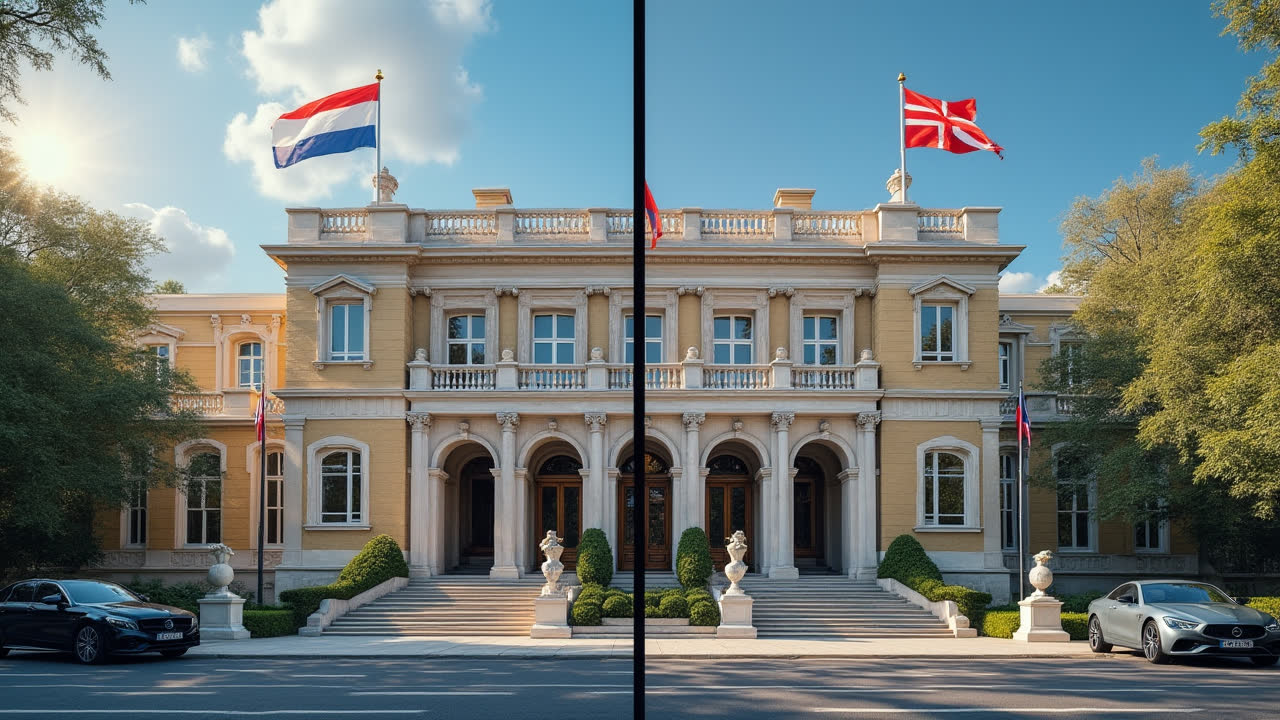
In the complex world of international diplomacy, understanding the distinction between an embassy and a high commission can be confusing for many. These diplomatic representations serve as crucial links between nations, but they differ in significant ways depending on historical relationships and international agreements. Have you ever wondered why some countries establish embassies while others set up high commissions? This comprehensive guide will clarify all your questions about these important diplomatic institutions.
What Is An Embassy?
An embassy represents the primary diplomatic mission of one country in another. It serves as the official representation of a sending country's government in the receiving country. Embassies are typically located in capital cities and act as the main channel of communication between two governments. The chief diplomat who heads an embassy is called an Ambassador.
Embassies function as mini-versions of their home countries on foreign soil. When you enter an embassy, you're technically stepping onto the territory of the country that embassy represents. I've personally experienced this unique feeling when visiting the American Embassy in London—it's like taking a small step into the United States while still being in the United Kingdom.
The responsibilities of an embassy include representing the sending state's interests, protecting its citizens abroad, negotiating with the host government, promoting cultural exchanges, and fostering friendly relations. Embassies also process visa applications for foreigners wishing to visit the sending country. Sometimes, I'm amazed at how these diplomatic outposts manage to juggle so many important functions simultaneously.
Most countries around the world use the term "embassy" to describe their main diplomatic missions. For instance, the United States has embassies in nearly every country with which it maintains diplomatic relations. Similarly, non-Commonwealth countries like Japan, Brazil, and Russia establish embassies in other nations. These diplomatic missions form the backbone of international relations and global diplomacy.
What Is A High Commission?
A high commission is essentially the equivalent of an embassy but with a crucial distinction: it specifically refers to the diplomatic mission of a Commonwealth country in another Commonwealth nation. The Commonwealth is a political association of 54 member states, most of which are former territories of the British Empire. The chief representative of a high commission is called a High Commissioner rather than an Ambassador.
High commissioners perform virtually identical functions to ambassadors. They represent their government's interests, assist their citizens in the host country, promote trade and cultural ties, and maintain diplomatic communications. The difference lies mainly in terminology rather than function.
For example, India and Canada are both Commonwealth members. Therefore, India maintains a high commission in Ottawa, and Canada maintains a high commission in New Delhi. However, both countries would have embassies in non-Commonwealth nations like Mexico or South Korea. This distinction reflects the special historical relationship that exists between Commonwealth nations.
I once had the opportunity to speak with a Canadian diplomat who explained that despite the different terminology, the day-to-day operations of high commissions and embassies are remarkably similar. Both institutions work tirelessly to maintain international relationships and protect their citizens abroad. The unique terminology is primarily a reflection of shared historical connections rather than functional differences.
Key Similarities Between Embassies and High Commissions
Despite their different names, embassies and high commissions share numerous similarities in their functions and operations. Both serve as the official diplomatic representatives of their home countries in host nations. They operate under the principles established by the Vienna Convention on Diplomatic Relations, which provides the framework for diplomatic privileges and immunities.
Both embassies and high commissions are headed by senior diplomats who represent their head of state and government. These representatives enjoy diplomatic immunity and privileges that allow them to conduct their duties without interference from the host country. The buildings themselves often have special legal status and protection under international law.
The core responsibilities of both institutions include protecting the interests of their sending state and its citizens in the receiving state, negotiating with the government of the receiving state, promoting friendly relations, and developing economic, cultural, and scientific relations. Both also typically handle visa and immigration matters for people wishing to travel to their country.
Key Differences Between Embassies and High Commissions
| Feature | Embassy | High Commission |
|---|---|---|
| Definition | Diplomatic mission of any country in a non-Commonwealth host country | Diplomatic mission of a Commonwealth country in another Commonwealth country |
| Head of Mission | Ambassador | High Commissioner |
| Countries Involved | Any country can establish an embassy | Limited to Commonwealth member states |
| Historical Background | Traditional diplomatic representation dating back centuries | Evolved from colonial relationships within the British Empire |
| Official Residence | Embassy or Ambassador's Residence | High Commission or High Commissioner's Residence |
| Protocol Level | Ambassador typically reports directly to Foreign Ministry | High Commissioner typically reports directly to Foreign Ministry |
| Official Communications | Diplomatic notes and formal correspondence | Diplomatic notes and formal correspondence (often with Commonwealth-specific terminology) |
| Location | Usually in the capital city | Usually in the capital city |
The Role of Consulates and Consuls-General
In addition to embassies and high commissions, countries often establish consulates in major cities outside the capital. While embassies and high commissions focus on government-to-government relations, consulates primarily serve the needs of citizens and handle matters like passport services, visa processing, and assistance to nationals in distress.
Consulates are headed by Consuls or Consuls-General and operate under the general supervision of the embassy or high commission in the capital city. For instance, the United States maintains numerous consulates throughout larger countries like India, China, and Brazil to provide services to American citizens and visa applicants in different regions.
I remember needing emergency passport services while traveling in a foreign country, and the local consulate was instrumental in resolving my situation quickly. These smaller diplomatic outposts play a vital role in providing on-the-ground support to citizens abroad. Their practical, citizen-focused services complement the broader diplomatic work of embassies and high commissions.
Historical Development of Diplomatic Missions
The concept of diplomatic representation has evolved significantly over centuries. Permanent embassies as we know them today began to emerge during the Italian Renaissance in the 15th century. Before that, diplomatic missions were typically temporary in nature, with envoys sent for specific negotiations and then recalled.
The term "high commission" emerged from the colonial relationships within the British Empire. As former colonies gained independence but remained within the Commonwealth, they established high commissions rather than embassies to reflect their special relationship. This practice began with the Dominions (Canada, Australia, New Zealand, and South Africa) and continued as more countries gained independence throughout the 20th century.
The Vienna Convention on Diplomatic Relations of 1961 codified diplomatic practices that had developed through custom over centuries. This important international treaty established the framework for diplomatic relations between independent countries and standardized the rules governing diplomatic missions, including embassies and high commissions.
Today's diplomatic landscape continues to evolve with changing international relations. Digital diplomacy and virtual consular services are increasingly important, though the traditional embassy and high commission structures remain the foundation of formal diplomatic relationships between nations.
Frequently Asked Questions
Why do Commonwealth countries use high commissions instead of embassies?
Commonwealth countries use high commissions instead of embassies when establishing diplomatic missions in other Commonwealth nations to reflect their special historical relationship. This practice dates back to when these countries were part of the British Empire and later became independent but maintained close ties through the Commonwealth. The use of different terminology emphasizes the unique bond and shared heritage among Commonwealth members, though functionally high commissions serve the same purpose as embassies.
Can a country have both an embassy and a high commission?
A country cannot have both an embassy and a high commission in the same host country. The type of diplomatic mission established depends on whether both countries are Commonwealth members. If both are Commonwealth members, a high commission is established. If either or both are not Commonwealth members, an embassy is established. However, a Commonwealth country will maintain high commissions in other Commonwealth nations and embassies in non-Commonwealth countries simultaneously.
What happens to diplomatic missions when a country joins or leaves the Commonwealth?
When a country joins the Commonwealth, diplomatic missions between it and other Commonwealth members typically transition from embassies to high commissions. Conversely, when a country leaves the Commonwealth, high commissions convert to embassies. This transition usually involves changing official designations, titles (from Ambassador to High Commissioner or vice versa), and sometimes updating signage and official documentation. Recent examples include The Gambia, which changed its diplomatic status when it left the Commonwealth in 2013 and rejoined in 2018, and Zimbabwe, which has experienced changes in diplomatic status due to its complicated relationship with the Commonwealth.
Conclusion
While embassies and high commissions differ primarily in terminology rather than function, this distinction reflects important historical relationships and international alignments. Embassies serve as the standard diplomatic mission for most countries worldwide, while high commissions specifically represent Commonwealth nations in other Commonwealth countries.
Understanding these diplomatic distinctions provides insight into international relations and the complex web of global diplomacy. Whether through embassies or high commissions, diplomatic missions continue to play a crucial role in facilitating communication between governments, protecting citizens abroad, promoting trade and cultural exchanges, and maintaining peace in our interconnected world.
Next time you pass by an embassy or high commission in your city, you'll have a better understanding of what these institutions represent and the important work that happens behind their doors. The world of international diplomacy may seem distant from everyday life, but these diplomatic outposts form the essential framework that allows nations to cooperate and coexist in our global community.
References:
- http://dfat.gov.au/about-us/department/Pages/roles-and-responsibilitie
- http://classroom.synonym.com/what-is-the-role-of-an-embassy-13583319.h
- https://en.wikipedia.org/wiki/High_commissioner_(Commonwealth)
- http://tanzania.usembassy.gov/
- https://commons.wikimedia.org/w/index.php?curid=32751777
- https://commons.wikimedia.org/w/index.php?curid=63329500