Fable vs Parable: 8 Essential Differences You Should Know
Fable vs Parable: 8 Essential Differences You Should Know
Have you ever wondered what exactly makes a fable different from a parable? While both of these storytelling forms share the purpose of teaching valuable life lessons, they differ in significant ways that affect how they deliver their messages. Fables and parables have ancient roots in human storytelling traditions, serving as vehicles for moral guidance across cultures and generations. Understanding the difference between these two literary genres can enrich your appreciation of stories and help you recognize the unique characteristics of each.
Understanding Fables: Stories Where Animals Teach Human Lessons
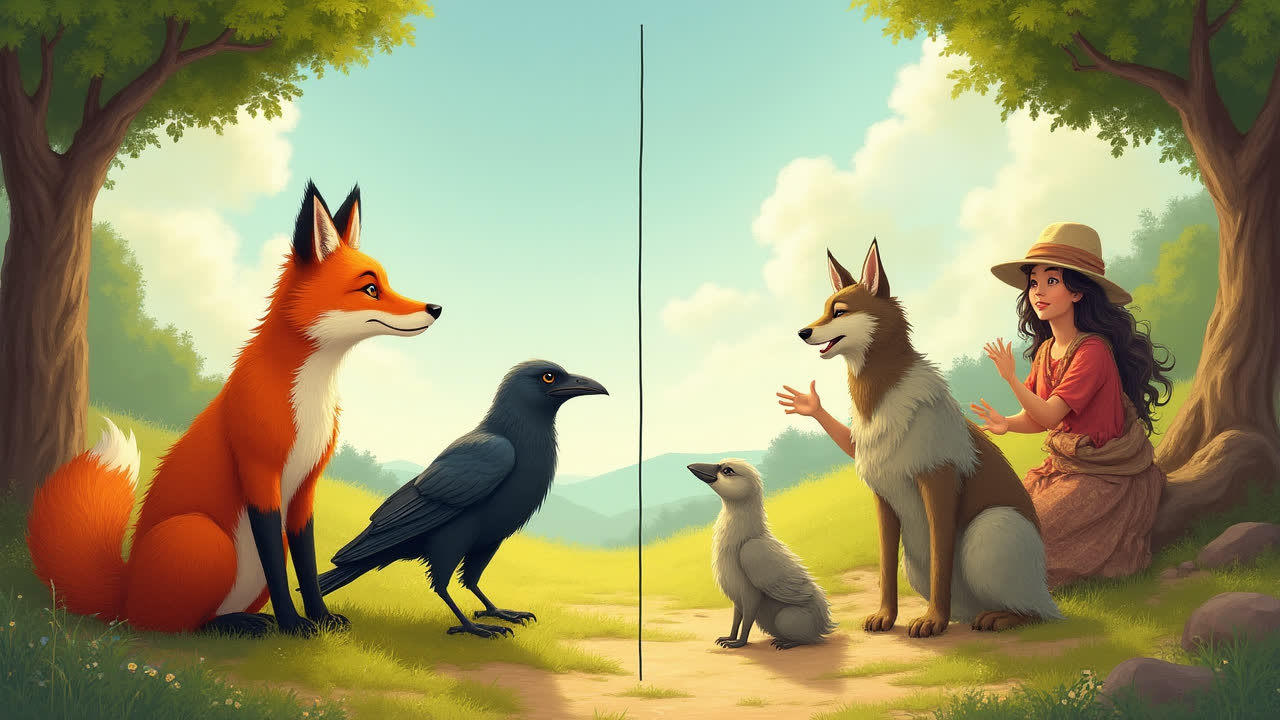
A fable is a concise story written in either prose or verse that typically features non-human characters such as animals, plants, mythical creatures, or even forces of nature. What makes fables particularly distinctive is that these non-human characters are personified—they're given human qualities, behaviors, and often the ability to speak. Through this creative device, fables address human flaws, virtues, and social dynamics from a safe distance.
The moral lesson in a fable is usually explicit and clearly stated at the conclusion of the story. Think of the familiar phrase "the moral of the story is..." that often appears at the end of traditional fables. This directness ensures that readers or listeners, including children, can easily grasp the intended message about proper conduct, wisdom, or ethical behavior.
Fables generally inhabit the realm of fantasy, which allows them to simplify complex human situations into digestible allegories. When a tortoise steadily outpaces a hare, we understand the value of persistence over natural talent. When a fox can't reach grapes and declares them sour, we recognize the human tendency to disparage what we cannot attain. These anthropomorphic characters create a buffer that makes potentially harsh life lessons more palatable and memorable.
Popular Fable Example: The Ant and the Grasshopper
In this classic Aesop's fable, a hardworking ant spends the summer gathering food for winter while the grasshopper sings and plays. When winter arrives, the grasshopper has no food and begs the ant for help. The explicit moral teaches the importance of hard work and preparation for the future.
Exploring Parables: Human Stories With Deeper Meanings
Unlike fables, parables feature human characters navigating realistic situations. The word "parable" derives from the Greek term "parabole," which means "comparison." True to this etymology, parables create analogies between everyday scenarios and deeper spiritual or moral truths. They're firmly rooted in the realistic world rather than fantasy, making them relatable in a different way than fables.
Parables often employ symbolic imagery and metaphors that resonate with their intended audience. While they do convey moral lessons like fables, parables typically have a greater focus on religious or spiritual principles. Many religious texts, including the Bible, Quran, and Buddhist scriptures, use parables extensively to communicate theological concepts in accessible ways.
The characters in parables frequently face moral dilemmas or make decisions that have consequences, allowing the audience to witness how choices shape outcomes. Rather than explicitly stating their moral, parables sometimes leave room for interpretation and personal reflection. This approach encourages deeper contemplation of the message and its application to one's own life circumstances.
The realism of parables creates immediate relevance for listeners or readers. When we hear about a traveler who helps a stranger in need, as in the Good Samaritan, we can directly imagine ourselves in similar situations without the imaginative leap required by talking animals or magical elements.
Popular Parable Example: The Prodigal Son
In this biblical parable, a young man demands his inheritance early, leaves home, wastes all his money, and returns destitute. His father welcomes him back with celebration. This story teaches about forgiveness, redemption, and unconditional love within a realistic human family dynamic.
Fable vs Parable: Key Differences Comparison
While both fables and parables serve as vehicles for moral instruction, understanding their distinct characteristics helps us appreciate how each form achieves its purpose. I've noticed that people often confuse these two storytelling formats, so let's break down their differences in a clear, comprehensive way.
| Comparison Point | Fables | Parables |
|---|---|---|
| Characters | Animals, plants, mythical creatures, forces of nature, or inanimate objects | Humans in realistic settings |
| Setting | Fantasy world or mythical realm | Real world with realistic scenarios |
| Moral Lesson | Primarily ethical or social lessons | Ethical, social, and religious/spiritual lessons |
| Delivery of Moral | Usually explicit, clearly stated at the end | Often implicit, requiring reflection and interpretation |
| Complexity | Generally simpler, more straightforward | Can be more nuanced with layers of meaning |
| Target Audience | Often suitable for children and adults alike | Sometimes addresses more mature themes |
| Cultural Origin | Found across many cultures, often secular | Frequently connected to religious traditions |
| Famous Examples | Aesop's Fables, Jataka Tales, Panchatantra | Parables in religious texts like the Bible, Quran, Buddhist scriptures |
Historical Significance and Cultural Impact
Both fables and parables have ancient origins that stretch back to the earliest human civilizations. They emerged as effective teaching tools in oral traditions long before they were written down. I've always found it fascinating how these literary forms have persisted across thousands of years while maintaining their core functions.
Fables have a rich history dating back to ancient Mesopotamia, Greece, India, and China. Aesop, a Greek storyteller believed to have lived around 620-564 BCE, created or compiled many of the fables we still tell today. In India, collections like the Panchatantra and Jataka Tales (stories about Buddha's previous lives) have been influential for over two millennia. These collections crossed cultural boundaries, being translated and adapted throughout Asia, the Middle East, and eventually Europe.
Parables have been equally influential, particularly through their presence in major religious texts. The parables of Jesus in the New Testament have shaped Western culture and ethics for centuries. Similarly, Buddhist parables, Sufi teaching stories, and parables in the Quran have guided moral and spiritual development across diverse civilizations.
In modern times, these storytelling forms continue to evolve and find new expressions. Contemporary children's literature often uses fable-like elements, while modern novels and films sometimes employ parable structures to explore ethical questions. Writers like George Orwell with "Animal Farm" created sophisticated political fables, while filmmakers like Ingmar Bergman crafted cinematic parables addressing existential themes.
Educational Value and Modern Applications
The enduring popularity of fables and parables in education stems from their remarkable effectiveness as teaching tools. Both forms package complex ideas into memorable narratives that resonate with learners of all ages. When I was teaching literature to middle school students, I noticed how quickly they grasped abstract concepts when presented through these story forms.
Fables, with their clear morals and engaging animal characters, are particularly useful in early childhood education. They help young children develop empathy, critical thinking, and an understanding of cause and effect. When a child hears about the consequences faced by the boy who cried wolf, they internalize the importance of honesty in a way that direct instruction might never achieve.
Parables find extensive use in religious education but also serve broader educational purposes. Their emphasis on human relationships and difficult choices makes them valuable for discussions about ethics, philosophy, and personal development. In multicultural education, comparing parables from different traditions can highlight both universal values and cultural differences.
Modern educators and communicators continue to draw on these ancient forms. TED talks often incorporate parable-like personal stories to illustrate broader principles. Corporate training materials use fable structures to teach leadership concepts and organizational behavior. Even public health messaging sometimes employs these narrative formats to promote behavioral change.
Digital storytelling has created new opportunities for fables and parables to reach audiences. Animated versions of classic fables populate streaming platforms, while social media has become a vector for concise moral tales that share structural similarities with traditional parables. These adaptations demonstrate the remarkable adaptability of these ancient forms to new media and contemporary concerns.
Frequently Asked Questions About Fables and Parables
Can a story be both a fable and a parable?
While fables and parables are distinct genres with different characteristics, some stories fall into a gray area with elements of both. A story featuring animals (like a fable) but with explicit religious or spiritual teachings (like a parable) could be considered a hybrid. However, most traditional stories clearly fall into one category or the other based on their characters and setting. The key determining factor is usually whether the characters are human (parable) or non-human (fable).
Why are fables often associated with children while parables seem more directed toward adults?
Fables typically feature animal characters and straightforward morals that are accessible to children. Their fantasy elements and clear lessons make them ideal for young audiences learning basic ethical principles. Parables, however, often address more complex moral dilemmas, contain nuanced religious concepts, and require deeper reflection to fully understand. They typically feature realistic human situations that adults can more readily relate to. That said, both forms can be appreciated by people of all ages, and many fables contain layers of meaning that adults can appreciate beyond the surface moral.
How have modern authors adapted the traditional formats of fables and parables?
Modern authors have reimagined these ancient forms in several ways. Contemporary fables may address current issues like technology addiction or environmental concerns while maintaining the traditional animal characters and moral framework. Modern parables often explore secular ethical questions rather than explicitly religious themes. Authors like Franz Kafka, Jorge Luis Borges, and Ursula K. Le Guin have created sophisticated stories with parable-like qualities that resist simple moral interpretation. In children's literature, authors like Dr. Seuss created fable-like stories with invented creatures rather than traditional animals. These adaptations demonstrate the flexibility and continued relevance of these narrative structures in addressing contemporary moral questions.
Conclusion: The Timeless Value of Moral Storytelling
Despite their differences in characters, settings, and delivery methods, both fables and parables stand as testaments to the power of story as a vehicle for moral and spiritual teaching. These ancient literary forms have survived millennia precisely because they package wisdom in memorable, engaging narratives that resonate across cultures and generations.
In our modern world of information overload and complex moral challenges, these simple yet profound story structures continue to offer valuable frameworks for ethical reflection. Whether through talking animals or human characters facing difficult choices, fables and parables invite us to consider our own behavior and values.
The next time you encounter a story with a clear moral message, take a moment to consider whether it's structured as a fable or a parable. Understanding these distinctions not only enhances literary appreciation but also helps us recognize how different storytelling approaches can illuminate ethical principles in complementary ways.
Both forms remind us that narrative has always been one of humanity's most powerful teaching tools—a truth as relevant in today's digital age as it was when these stories were first told around ancient fires. Through fables and parables, we continue our oldest tradition: passing wisdom from one generation to the next through the timeless art of storytelling.