Geology vs Geography: Understanding the Key Differences
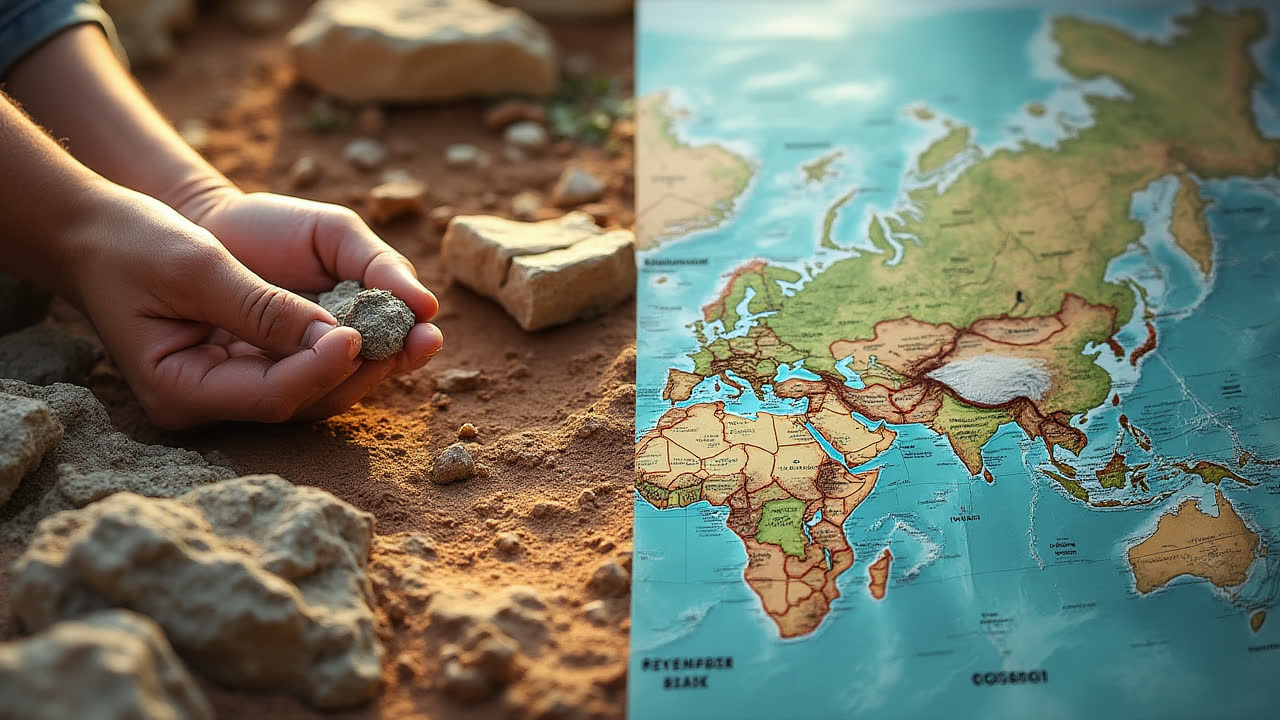
When exploring the sciences that study our planet, two fields often get confused: geology and geography. While both examine Earth, they approach this vast subject from different perspectives. Have you ever wondered what makes these disciplines distinct, despite their overlapping interests? In this comprehensive guide, we'll explore the fascinating differences between these essential earth sciences.
Geology focuses on the physical structure, composition, and processes of Earth, delving deep into its history and the forces that have shaped it over billions of years. Geography, on the other hand, takes a broader approach, studying not only the physical features of our planet but also how humans interact with and influence these environments. The relationship between humanity and Earth is a fundamental aspect that sets geography apart from its more rock-focused cousin.
Understanding the differences between these fields isn't just academic curiosity—it can help students choose career paths, researchers find collaboration opportunities, and everyday people better appreciate the complex systems that make our world function. Let's dig deeper into what makes each discipline unique and valuable in our quest to understand Earth.
What is Geology?
Geology is an Earth science that examines the solid Earth, the rocks it's composed of, and the processes by which these rocks change over time. Geologists are essentially Earth historians, reading the planet's autobiography written in stone. They study everything from microscopic minerals to massive tectonic plates, unraveling Earth's 4.5-billion-year story.
The scope of geology is both vast and detailed. Geologists investigate volcanic eruptions, earthquakes, fossil formation, mountain building, and the slow but powerful forces that reshape continents. They analyze the physical properties of rocks and minerals, examining their composition, texture, and arrangement to understand how they formed and what they can tell us about Earth's past.
Different specializations within geology focus on various aspects of Earth's physical features. Mineralogists study the formation, composition, and properties of minerals. Paleontologists examine fossils to understand prehistoric life. Structural geologists investigate how rocks deform under stress, while volcanologists focus on the formation and activity of volcanoes. Each sub-discipline contributes to our comprehensive understanding of Earth's physical nature.
Practical applications of geology are numerous and vital. Geologists help locate valuable resources like oil, natural gas, and minerals. They assess areas for potential hazards such as landslides, earthquakes, and volcanic eruptions. Environmental geologists monitor groundwater quality and movement, helping protect this crucial resource. In construction, geologists evaluate land stability before major projects begin, potentially saving lives and resources.
Perhaps most importantly, geology gives us perspective on our place in Earth's grand timeline. When I gaze at sedimentary rock layers in a canyon wall, I'm looking at hundreds of millions of years compressed into a visual timeline. Isn't it humbling to realize that the entire span of human civilization represents merely a thin veneer on top of this immense geological record?
What is Geography?
Geography is a multifaceted discipline that examines both the physical features of Earth and how humans interact with these environments. Unlike geology's focus on Earth's composition and internal processes, geography takes a more surface-level and holistic approach, studying the distribution of physical and human phenomena across our planet.
The field divides into two major branches: physical geography and human geography. Physical geography studies natural features and processes—including landforms, climate, vegetation, soils, and water bodies. It examines how these elements interact to create Earth's diverse environments. Human geography, meanwhile, focuses on how people organize themselves across space, examining population distribution, cultural patterns, political organizations, economic activities, and human impacts on the environment.
Geography's breadth allows it to answer questions that cross traditional disciplinary boundaries. Why are certain industries concentrated in specific regions? How do climate patterns influence agricultural practices? What cultural adaptations have people made to survive in extreme environments? These questions require understanding both natural systems and human behaviors—precisely geography's strength.
Modern geographers employ sophisticated tools to study our planet. Geographic Information Systems (GIS) allow for complex spatial analysis, combining layers of data to reveal patterns and relationships not otherwise apparent. Remote sensing technologies provide detailed images of Earth's surface from satellites and aircraft, helping track changes in land use, monitor natural disasters, and map inaccessible areas. Field research remains important too, with geographers collecting firsthand observations to supplement technological data.
The practical applications of geography are endless and touch nearly every aspect of modern life. Urban planners use geographical principles to design functional cities. Businesses apply location analysis to determine optimal sites for new facilities. Environmental managers rely on geographical knowledge to develop conservation strategies. Transportation networks, disaster response plans, and international development projects all benefit from geographical insights.
Most fundamentally, geography helps us understand our place in the world—not just physically, but culturally and ecologically. When I travel to a new place and notice how the local architecture reflects adaptation to the regional climate, or how a city's layout reveals its historical development, I'm thinking like a geographer. Don't you find it fascinating how geography connects everything from the shape of a river valley to the cultural traditions that developed along its banks?
Key Differences Between Geology and Geography
| Aspect | Geology | Geography |
|---|---|---|
| Primary Focus | Earth's physical structure, composition, and processes | Earth's surface features and human-environment interactions |
| Time Perspective | Primarily historical, spanning billions of years | Primarily contemporary, with some historical context |
| Depth of Study | From Earth's core to surface processes | Mostly surface and near-surface phenomena |
| Human Element | Limited focus on human interactions | Strong focus on human activities and spatial organization |
| Key Tools | Rock hammers, microscopes, seismographs, mass spectrometers | GIS software, remote sensing, surveys, census data |
| Main Subdisciplines | Mineralogy, petrology, paleontology, structural geology | Physical geography, human geography, GIS, cartography |
| Career Applications | Mining, petroleum, environmental assessment, hazard mitigation | Urban planning, conservation, business location, teaching |
| Typical Research Questions | "How did this mountain range form?" "What is the age of these rocks?" | "Why are cities distributed this way?" "How do climate patterns affect agriculture?" |
While the table above highlights the major differences, the relationship between geology and geography is more complementary than competitive. In many ways, geological knowledge forms a foundation for physical geography. The shape of a landscape—whether it features mountains, plains, or river valleys—results from geological processes acting over millennia. Geographers then study how these physical features influence climate patterns, vegetation distribution, and human settlement.
Consider climate change research as an example of how these disciplines intersect. Geologists analyze ice cores and sediment layers to understand Earth's historical climate fluctuations. Geographers study current climate patterns and their effects on ecosystems and human communities. Together, these perspectives provide a more complete picture than either could alone.
Educational Paths and Career Opportunities
Geology Education and Careers
Students pursuing geology typically take courses heavily focused on physical sciences. The curriculum often includes mineralogy, petrology, structural geology, stratigraphy, paleontology, and field methods. Laboratory work is extensive, teaching students to identify rocks and minerals, analyze geological structures, and interpret geological maps. Field experiences are considered essential, with many programs requiring multi-week field camps where students learn to document and interpret geological features in natural settings.
Career paths for geologists frequently involve resource exploration and extraction. Petroleum geologists locate and help extract oil and natural gas reserves. Mining geologists identify and evaluate mineral deposits. Environmental geologists assess contamination risks and remediation strategies. Engineering geologists evaluate site stability for construction projects. Research positions in academia and government agencies offer opportunities to advance geological knowledge through detailed studies. Have you ever noticed how many critical resources we depend on—from the metals in your smartphone to the energy powering your home—require geological expertise to discover and extract?
Geography Education and Careers
Geography education typically balances physical and social sciences. Students often take courses in physical geography, human geography, cartography, GIS, research methods, and regional studies. Fieldwork may involve collecting environmental samples, conducting community surveys, or mapping land use patterns. Technical training, particularly in spatial analysis software, has become increasingly important in geography education.
Career opportunities for geographers span public, private, and nonprofit sectors. Urban and regional planners develop land use strategies for growing communities. GIS specialists create and analyze spatial datasets for numerous applications. Environmental managers develop conservation plans for natural areas. Business geographers conduct market analyses and site selection studies. Government agencies employ geographers for everything from census work to international development. Teaching positions at various levels allow geographers to share their knowledge with new generations.
The digital revolution has transformed both fields, creating new specialties and career paths. Geologists now use advanced imaging techniques to "see" beneath Earth's surface without extensive drilling. Geographers leverage big data to analyze complex spatial patterns in human behavior. Both disciplines increasingly need professionals skilled in programming, data analysis, and visualization—creating opportunities for tech-savvy students who might not have considered earth sciences previously.
Interdisciplinary Connections and Emerging Fields
The boundaries between geology and geography continue to blur in exciting ways, especially as environmental challenges demand integrated approaches. Several emerging interdisciplinary fields draw from both disciplines:
Geomorphology sits at the intersection of geology and physical geography, studying landforms and the processes that create them. Geomorphologists might investigate how river systems evolve, how coastal areas respond to rising sea levels, or how landslides transform mountain slopes. Their work is increasingly valuable for predicting natural disasters and planning resilient infrastructure.
Environmental science draws from both geology and geography, along with biology, chemistry, and other fields. Environmental scientists study ecosystems holistically, examining how physical environments, biological communities, and human activities interact. This integrated approach is essential for addressing complex issues like habitat loss, pollution, and resource management.
Climate science represents another area where geological and geographical perspectives complement each other. Geologists contribute deep-time climate records from ice cores, ocean sediments, and rock formations. Geographers analyze current climate patterns and their impacts on ecosystems and human communities. Together, these approaches help us understand Earth's climate system and predict future changes.
Perhaps the most exciting developments occur when traditional disciplinary tools are applied in novel ways. Geological dating techniques, originally developed to determine rock ages, now help archaeologists establish chronologies for human settlements. Geographic mapping technologies, designed to track land use changes, assist geologists in monitoring volcanic activity and ground deformation. Innovation often happens at these disciplinary boundaries, where different perspectives generate fresh insights.
Frequently Asked Questions About Geology and Geography
Which is better for someone interested in environmental conservation—geology or geography?
Both fields offer valuable pathways for environmental conservation work, but with different emphases. Geography might be more suitable if you're interested in conservation planning, human-environment interactions, and the social aspects of environmental issues. A geography background can prepare you for roles in conservation organizations, park management, and policy development. Geology would be more appropriate if you're drawn to understanding environmental processes like groundwater movement, soil formation, or natural hazards. Geologists often work in environmental consulting, remediation, and resource management. Many environmental professionals actually have interdisciplinary backgrounds, combining elements of both fields. The best choice depends on whether you're more interested in the human dimensions of conservation or the physical processes underlying environmental systems.
Can I study both geology and geography in college?
Absolutely! Many universities offer ways to combine these disciplines. Options include double majoring, majoring in one with a minor in the other, or choosing an interdisciplinary environmental science program that incorporates elements of both. Some institutions even offer specialized degrees like "Earth Systems Science" that intentionally bridge the gap between geology and geography. If your university doesn't have a formal combined program, you can often design a customized course of study with your academic advisor. This interdisciplinary approach can be particularly valuable in today's job market, where employers increasingly value professionals who can integrate different perspectives. Just be prepared for a challenging course load, as you'll need to fulfill requirements in both physical and social sciences.
Which field has better job prospects—geology or geography?
Job prospects fluctuate for both fields depending on economic conditions and industry trends. Traditionally, geology has been tied to resource extraction industries like petroleum and mining, which offer high salaries but experience boom-and-bust cycles. Geography jobs tend to be more diverse across public and private sectors, potentially providing more stability but sometimes with lower average salaries. Currently, both fields are seeing growth in technology-focused roles, with increasing demand for professionals skilled in GIS, remote sensing, and data analysis. Environmental consulting offers opportunities for both geologists and geographers as regulations increasingly require detailed environmental assessments. The most employable graduates from either discipline typically combine strong technical skills (like coding or modeling) with field experience and the ability to communicate complex findings clearly to non-specialists.
Conclusion
Geology and geography represent two profound approaches to understanding our planet. While geology dives deep into Earth's physical composition and history, geography takes a broader view that includes human interactions with the environment. Both sciences are essential for addressing the complex challenges facing our world today.
The most exciting work often happens at the intersection of these disciplines, where geological processes meet geographical patterns. Climate research, natural resource management, disaster mitigation, and environmental protection all benefit from the combined perspectives of geology and geography. As our planet faces unprecedented challenges from climate change, population growth, and resource constraints, professionals who can integrate geological and geographical thinking will be increasingly valuable.
Whether you're a student considering career options, a professional looking to understand related fields, or simply someone curious about Earth sciences, appreciating the distinctions and connections between geology and geography enriches your understanding of the complex systems that shape our world. Both fields remind us that Earth is not just a planet we inhabit, but a dynamic system we participate in—a perspective that's more important now than ever before.


Related Posts