Ion Pumps vs Gated Channels: Essential Differences Explained
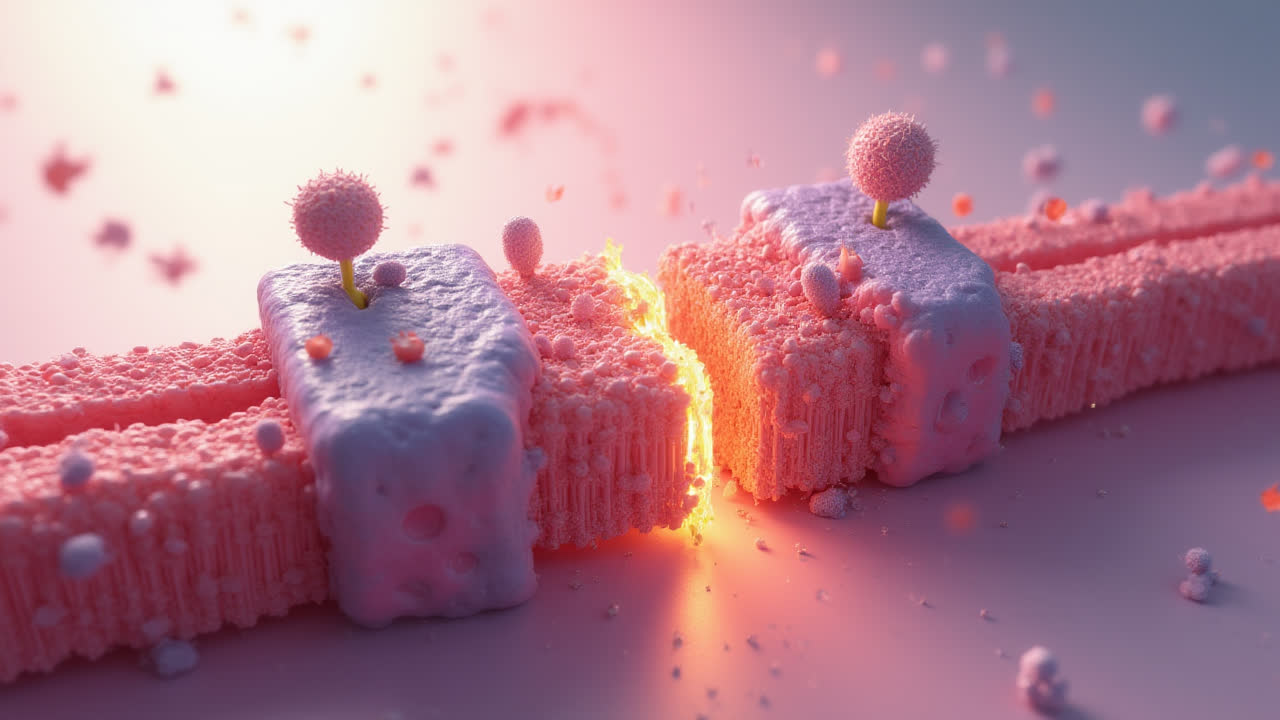
Our cells are bustling with activity, constantly maintaining a delicate balance between their internal environment and the external world. At the forefront of this cellular balancing act are two crucial molecular mechanisms: ion pumps and gated channels. These transmembrane proteins serve as cellular gatekeepers, regulating the movement of ions across cell membranes, which is essential for nearly every biological function we depend on.
Have you ever wondered how your nerve cells generate electrical signals, how your muscles contract, or how your heart maintains its steady rhythm? The answer lies in understanding the fundamental differences between ion pumps and gated channels. While both are involved in ion transport, they operate through distinctly different mechanisms that complement each other to maintain cellular homeostasis.
In this comprehensive guide, we'll explore the fascinating world of these molecular machines, breaking down their structures, functions, and the critical differences that make each unique. Whether you're a biology student, healthcare professional, or simply curious about the microscopic workings of your body, this article will provide valuable insights into these essential cellular components.
Understanding Ion Pumps: The Active Transporters
Ion pumps are sophisticated molecular machines embedded in cell membranes that actively move ions against their concentration gradient. This means they push ions from areas of lower concentration to areas of higher concentration—a process that defies the natural tendency of molecules to move from high to low concentration areas. Because this transport works against the natural gradient, it requires energy input, typically in the form of ATP (adenosine triphosphate), the cellular energy currency.
Think of ion pumps as tiny cellular elevators that lift ions "uphill" against their natural flow. This uphill transport is crucial for maintaining the uneven distribution of ions across cell membranes, which creates electrical and chemical gradients that power various cellular processes. Without these gradients, our nervous system couldn't generate electrical signals, our muscles couldn't contract, and many other essential bodily functions would cease.
Ion pumps are classified into two main categories based on their energy source and transport mechanism: primary transporters and secondary transporters. Let's explore each type in more detail to understand their unique contributions to cellular function.
Primary Transporters: Direct Energy Users
Primary transporters directly use energy, typically from ATP hydrolysis, to power the movement of ions across membranes. The most well-known example is the sodium-potassium pump (Na⁺/K⁺-ATPase), which plays a critical role in maintaining the resting membrane potential of cells. This pump works tirelessly, using ATP to transport three sodium ions out of the cell while bringing two potassium ions in—creating and maintaining the electrical gradient across the cell membrane.
Other examples of primary transporters include calcium pumps (Ca²⁺-ATPase) that maintain low calcium levels inside cells, and proton pumps (H⁺-ATPase) that acidify the stomach and regulate pH in various cellular compartments. These pumps are essential for cellular signaling, muscle contraction, and many other physiological processes.
Secondary Transporters: Energy Recyclers
Secondary transporters are more energy-efficient, as they don't directly use ATP. Instead, they harness the potential energy stored in ion gradients (created by primary transporters) to drive the transport of other ions or molecules. This clever energy-recycling system allows cells to maximize their energy efficiency.
A prime example is the sodium-glucose cotransporter found in intestinal and kidney cells. This transporter uses the sodium gradient established by the sodium-potassium pump to drive glucose uptake into cells—an essential process for nutrient absorption. Secondary transporters come in various forms including symporters (which transport molecules in the same direction) and antiporters (which transport molecules in opposite directions).
Exploring Gated Channels: The Passive Facilitators
Unlike ion pumps, gated channels are membrane proteins that form selective pores or passages through which ions can flow down their concentration gradient—from areas of high concentration to areas of low concentration. This passive transport doesn't require direct energy input, as it follows the natural direction of ion movement. However, the opening and closing of these channels are tightly regulated by various stimuli.
I like to compare gated channels to specialized doors that open and close in response to specific signals. When open, they allow ions to rush through at astonishing rates—up to 100 million ions per second! This rapid ion movement is critical for fast cellular responses like nerve impulse transmission and muscle contraction.
Gated channels are highly selective, typically allowing only specific types of ions to pass through. This selectivity is crucial for maintaining proper ion balance and cellular function. Based on their activation mechanism, gated channels are classified into three main types: voltage-gated, ligand-gated, and mechanosensitive channels.
Voltage-Gated Ion Channels: Responding to Electrical Changes
Voltage-gated channels open or close in response to changes in the electrical potential across the cell membrane. These channels are particularly important in electrically excitable cells like neurons and muscle cells. When the membrane potential reaches a specific threshold, these channels undergo conformational changes that allow ions to pass through.
Various types of voltage-gated channels exist, each selective for different ions: sodium channels (Na⁺), potassium channels (K⁺), calcium channels (Ca²⁺), and chloride channels (Cl⁻). Together, they orchestrate the generation and propagation of action potentials in neurons and the contraction of muscle cells. The precise timing of their opening and closing creates the electrical signals that underlie nervous system function.
Ligand-Gated Ion Channels: Chemical Messengers
Ligand-gated channels are activated by the binding of specific molecules (ligands) such as neurotransmitters or hormones. This binding triggers a conformational change that opens the channel, allowing ions to flow through. These channels are crucial for synaptic transmission—the process by which neurons communicate with each other and with target cells.
Examples include nicotinic acetylcholine receptors (crucial for muscle contraction), GABA receptors (involved in inhibitory neurotransmission), and glutamate receptors (involved in excitatory neurotransmission). Ligand-gated channels are important targets for many drugs, including anesthetics, anxiolytics, and anticonvulsants.
Mechanosensitive Channels: Feeling Physical Forces
Mechanosensitive channels respond to mechanical forces or physical deformation of the cell membrane. These channels are essential for touch sensation, hearing, balance, and blood pressure regulation. When mechanical force is applied to the membrane, these channels open, allowing ions to flow through and generating electrical signals that the brain interprets as sensory information.
Disorders in mechanosensitive channels are associated with various conditions including cardiac arrhythmias, muscular dystrophy, neuronal degeneration, and polycystic kidney disease. Their proper function is essential for our ability to interact with and respond to the physical world around us.
Key Differences Between Ion Pumps and Gated Channels
| Characteristic | Ion Pumps | Gated Channels |
|---|---|---|
| Transport Mechanism | Active transport (against concentration gradient) | Passive diffusion (down concentration gradient) |
| Energy Requirement | Requires energy (typically ATP) | No direct energy required |
| Transport Rate | Relatively slow (100-1000 ions/second) | Very fast (millions of ions/second) |
| Primary Function | Establish and maintain ion gradients | Allow rapid ion flow for signaling |
| Main Types | Primary transporters, Secondary transporters | Voltage-gated, Ligand-gated, Mechanosensitive |
| Examples | Na⁺/K⁺-ATPase, Ca²⁺-ATPase, H⁺-ATPase | Na⁺ channels, K⁺ channels, nAChR, GABA receptors |
| Role in Membrane Potential | Establishes resting potential | Generates action potentials |
| Conformational Changes | Complex cycle of conformational changes | Simple open-closed states |
Physiological Importance of Ion Pumps and Gated Channels
The collaborative work of ion pumps and gated channels is essential for numerous physiological functions. In neurons, for instance, the sodium-potassium pump establishes the resting membrane potential, while voltage-gated sodium and potassium channels generate and propagate action potentials. This electrical signaling is the basis for all thoughts, sensations, and movements.
In muscle cells, calcium pumps maintain low calcium levels at rest, while various calcium channels allow calcium influx during excitation, triggering contraction. This interplay is vital for all muscle movements, including the beating of your heart. Similarly, in the kidneys, various ion pumps and channels work together to regulate fluid and electrolyte balance, controlling blood pressure and preventing dehydration.
Numerous diseases result from dysfunction in these transport systems. For example, cystic fibrosis involves defective chloride channels, leading to thick mucus production in the lungs and digestive system. Certain types of epilepsy and cardiac arrhythmias are linked to mutations in voltage-gated sodium or potassium channels. Understanding these molecular mechanisms has led to the development of many important medications, including calcium channel blockers for hypertension and local anesthetics that block sodium channels.
Frequently Asked Questions
How do ion pumps and gated channels work together in neurons?
In neurons, ion pumps and gated channels work in a synchronized dance that enables electrical signaling. The sodium-potassium pump (an ion pump) creates and maintains the resting membrane potential by keeping sodium ions concentrated outside the cell and potassium ions concentrated inside. When a neuron receives stimulation, voltage-gated sodium channels open briefly, allowing sodium to rush in and depolarize the membrane. This is followed by the opening of voltage-gated potassium channels, which restore the resting potential. After the action potential, the sodium-potassium pump works to restore the original ion gradients. This coordinated activity allows neurons to transmit signals rapidly and is the basis for all neural communication in the brain and body.
What happens when ion pumps or gated channels malfunction?
Malfunctions in ion pumps or gated channels can lead to serious health conditions. For example, mutations in voltage-gated sodium channels can cause epilepsy, certain cardiac arrhythmias, and chronic pain syndromes. Defects in the CFTR chloride channel cause cystic fibrosis, while dysfunction in mechanosensitive channels can lead to conditions like neuronal degeneration and polycystic kidney disease. Many medications target these proteins—calcium channel blockers treat hypertension and certain arrhythmias, while some antiepileptic drugs modulate sodium channels. The critical role these proteins play in cellular function makes them both important disease mediators and valuable therapeutic targets.
Why do cells need both ion pumps and gated channels?
Cells need both ion pumps and gated channels because they serve complementary functions in cellular physiology. Ion pumps establish and maintain the electrochemical gradients that store potential energy across cell membranes—similar to charging a battery. Gated channels, on the other hand, allow for the rapid, controlled release of this stored energy when needed—like using the battery power. Without ion pumps, the gradients would quickly dissipate due to passive leakage, and cells would lose their ability to generate electrical signals. Without gated channels, cells couldn't rapidly respond to stimuli or communicate effectively. Together, they create a dynamic system that enables quick responses while maintaining long-term stability, supporting essential functions from neural signaling to muscle contraction.
Conclusion: Understanding the Cellular Gatekeepers
Ion pumps and gated channels represent two sides of the same coin in cellular physiology. Ion pumps work tirelessly to create and maintain the ion gradients that store potential energy across cell membranes, while gated channels provide controlled pathways for the rapid release of this energy when needed. This interplay creates the electrical and chemical signals that underlie virtually all physiological processes.
The main difference between these two types of transmembrane proteins lies in their transport mechanism—ion pumps use energy to move ions against their concentration gradient (active transport), while gated channels allow ions to flow down their concentration gradient without direct energy input (passive transport). This fundamental distinction underlies their complementary roles in cellular function.
Understanding these molecular mechanisms not only satisfies our curiosity about how cells work but also provides valuable insights into disease processes and potential therapeutic targets. As research in this field continues to advance, our understanding of these remarkable cellular components will deepen, potentially leading to new treatments for conditions ranging from cystic fibrosis to epilepsy and heart disease.