Lifestyle vs Standard of Living: 8 Critical Differences Explained
Have you ever wondered how your lifestyle choices affect your overall quality of life? Or perhaps you're curious about how your standard of living compares to others in different parts of the world? Understanding the distinction between these two concepts can help you make better financial decisions and live a more fulfilling life.
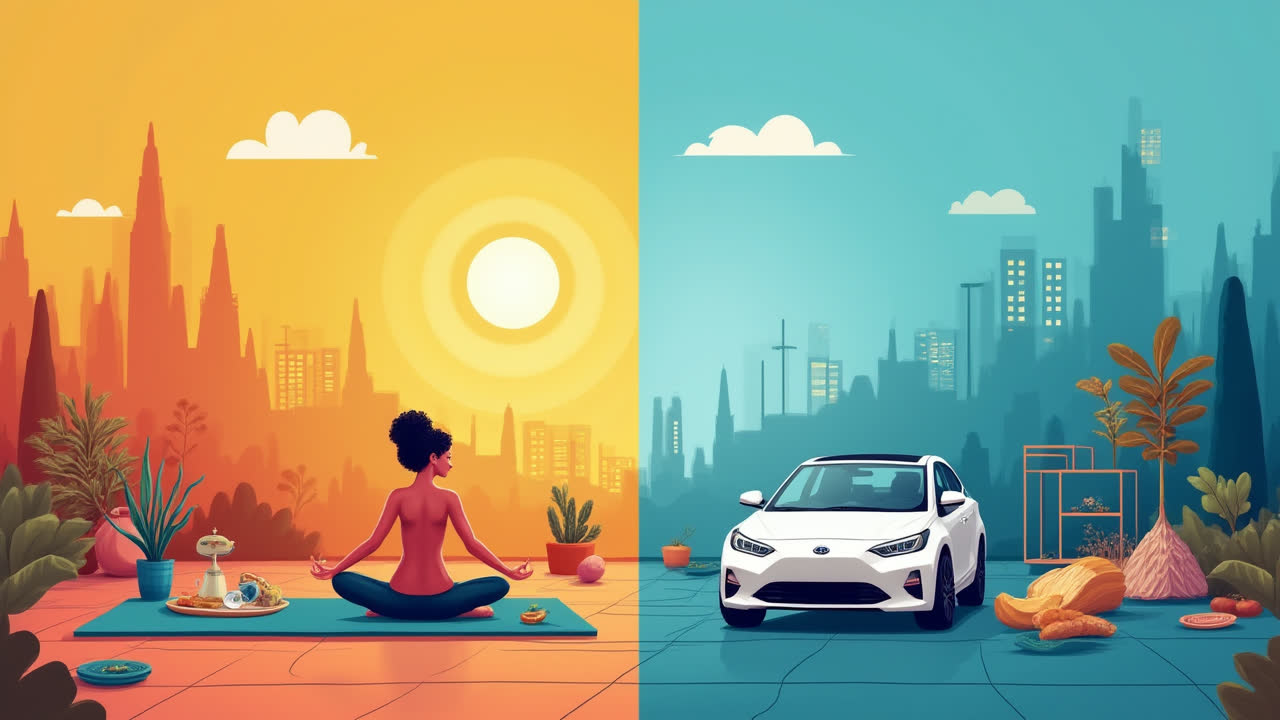
While often used interchangeably in everyday conversation, lifestyle and standard of living represent fundamentally different aspects of human existence. The main difference between lifestyle and standard of living is that lifestyle reflects how you choose to live your life, while standard of living measures the material wealth and comfort available to you or your community.
This comprehensive guide will explore these differences in detail, helping you understand how these concepts shape our daily lives, influence our decisions, and impact our sense of well-being and satisfaction.
What is Lifestyle? A Comprehensive Definition
Lifestyle is essentially the way a person lives. It encompasses the patterns of behavior, interactions, and choices that define our daily existence. Your lifestyle reflects your values, interests, attitudes, and how you express yourself in the world.
Think about the work you do, how you behave in social situations, the activities you enjoy during leisure time, and the social patterns you follow—all these elements combine to create your unique lifestyle. What makes lifestyle particularly interesting is that it's deeply connected to our psychological well-being and sense of fulfillment.
Have you noticed how different people within the same neighborhood might lead vastly different lives despite similar incomes? That's because lifestyle is more about personal choices than economic factors. For instance, two individuals with comparable salaries might have completely different approaches to spending, saving, socializing, and maintaining their health.
Lifestyle also has a strong cultural component. The cultural context in which we live significantly influences our lifestyle choices, from the food we eat to the traditions we observe. Even within the same society, lifestyle variations emerge based on factors like religion, social class, personal beliefs, and individual preferences.
Some common lifestyle categories include:
- Vegan or vegetarian lifestyle
- Minimalist lifestyle
- Eco-friendly or green lifestyle
- Digital nomad lifestyle
- Fitness-focused lifestyle
- Religious lifestyle (Christian, Buddhist, etc.)
- Urban vs. rural lifestyle
- Academic or college lifestyle
What's fascinating about lifestyle is its flexibility—we can often modify our lifestyle through conscious decisions, regardless of our economic circumstances. A person might choose a minimalist lifestyle despite high income, or prioritize experiences over material possessions. These choices reflect our values and what we find meaningful in life.
Understanding Standard of Living: Beyond Basic Needs
Standard of living refers to the level of wealth, comfort, material goods, and necessities available to a particular socioeconomic class or geographic area. Unlike lifestyle, which focuses on how we choose to live, standard of living measures what resources are available to us.
Economists and policymakers use standard of living as a crucial metric to evaluate economic progress and compare different regions or time periods. It provides a quantitative assessment of material well-being rather than qualitative aspects of life.
When we talk about a country having a "high standard of living," we're referring to factors such as:
- Income levels and purchasing power
- Access to healthcare and quality of medical services
- Educational opportunities and literacy rates
- Life expectancy and mortality rates
- Housing quality and availability
- Infrastructure development (roads, electricity, clean water)
- Economic opportunity and employment rates
- Gross Domestic Product (GDP) per capita
Standard of living allows us to make meaningful comparisons between different geographical areas or historical periods. For example, we can compare the standard of living in Canada versus Brazil, or examine how living standards in the United States have evolved over the past century.
GDP per capita is frequently used as a measure of standard of living—it's calculated by dividing a country's gross domestic product by its population. However, economists recognize that GDP alone doesn't capture the full picture. That's why the United Nations developed the Human Development Index (HDI), which incorporates factors like education, health outcomes, and income to provide a more comprehensive measure.
When examining global standards of living, it's clear that developed nations like Norway, Switzerland, and Australia typically rank higher than developing countries. This gap reflects differences in economic development, infrastructure, and access to resources rather than lifestyle choices.
Key Differences Between Lifestyle and Standard of Living
Now that we've explored both concepts individually, let's directly compare lifestyle and standard of living to better understand their distinctions and relationships. Although they influence each other, these concepts represent different aspects of human existence.
| Comparison Point | Lifestyle | Standard of Living |
|---|---|---|
| Basic Definition | The way in which a person chooses to live | The degree of wealth and material comfort available |
| Primary Focus | Behavioral patterns and personal choices | Economic and material resources |
| Key Factors | Interests, wants, needs, values, behaviors, social patterns | Income, GDP, economic opportunity, life expectancy, housing |
| Measurement Approach | Qualitative assessment of how one lives | Quantitative measurement of available resources |
| Typical Application | Describes individuals or small communities | Compares regions, countries, or historical periods |
| Influencing Elements | Culture, religion, personal values, social groups | Economic development, government policies, technology |
| Level of Personal Control | Highly customizable through individual choices | Limited individual control; largely determined by broader economic factors |
| Relationship to Happiness | Direct connection to personal fulfillment and subjective well-being | Indirect relationship; higher standards don't always mean greater happiness |
One of the most interesting aspects of this comparison is the relationship between the two concepts. A high standard of living provides more options for lifestyle choices, but doesn't dictate which choices a person will make. Conversely, certain lifestyle choices may be limited by standard of living constraints.
For example, a person living in a developed country with a high standard of living might choose a minimalist lifestyle, deliberately limiting material possessions despite having access to them. Meanwhile, someone in a developing nation might aspire to certain lifestyle elements but be constrained by economic realities.
How Lifestyle Choices Impact Your Standard of Living
While standard of living often determines what lifestyle options are available to you, it's also true that lifestyle choices can significantly impact your standard of living over time. This dynamic relationship creates interesting patterns that can shape entire life trajectories.
Consider how certain lifestyle choices might affect your financial situation and material comfort:
Financial lifestyle choices—such as spending habits, saving patterns, and investment decisions—have direct consequences for your economic well-being. Someone who adopts a frugal lifestyle and consistently saves a portion of their income might gradually improve their standard of living, even without significant income increases. Conversely, a lavish lifestyle without sufficient income to support it could lead to debt and financial instability.
Health-related lifestyle choices also play a crucial role. Regular exercise, balanced nutrition, adequate sleep, and stress management can prevent costly medical issues later in life. These preventive measures not only improve quality of life but can also preserve financial resources that would otherwise go toward medical expenses.
Educational lifestyle choices represent another impactful area. Dedicating time to learning new skills, pursuing further education, or developing expertise in your professional field can lead to better career opportunities and higher income potential. The desire for continuous improvement and growth—a lifestyle orientation—can translate directly into standard of living improvements.
It's worth noting that some lifestyle choices might deliberately trade material comfort for other values. For instance, someone might choose a career they find meaningful over one that pays more, or decide to work fewer hours to have more time with family. These decisions reflect personal priorities that value certain aspects of life over standard of living metrics.
This complex interplay demonstrates that while standard of living creates the framework within which we make lifestyle choices, those very choices can reshape our standard of living over time. Understanding this relationship can help us make more intentional decisions about how we want to live and what we truly value.
Global Variations in Lifestyle and Standard of Living
Around the world, both lifestyles and standards of living vary dramatically based on geographical, cultural, and economic factors. These variations offer fascinating insights into human adaptability and the relationship between prosperity and life choices.
In developed nations like those in Scandinavia, a high standard of living is often accompanied by lifestyle choices that emphasize work-life balance, environmental consciousness, and social welfare. The economic security provided by strong social safety nets allows for lifestyle choices that might be considered luxuries elsewhere—like extended parental leave or sabbaticals for personal growth.
Contrast this with rapidly developing economies like China or India, where standards of living are improving quickly but unevenly. Urban centers in these countries often feature lifestyle patterns that blend traditional cultural practices with newer, globalized consumption habits. The dramatic economic transformation in these regions has created interesting lifestyle contrasts between generations, with younger people often adopting significantly different lifestyles than their parents.
In regions facing economic challenges, such as parts of Sub-Saharan Africa or certain areas in Latin America, lower standards of living constrain some lifestyle options but don't eliminate diversity in how people live. Communities in these regions often develop lifestyle adaptations that maximize limited resources, with stronger emphasis on community support networks and resourcefulness.
What's particularly interesting is how digital connectivity is creating global lifestyle influences that transcend standard of living differences. Young people in countries with vastly different economic circumstances may share similar interests, entertainment preferences, or aspirations due to exposure to similar online content.
Climate and geography also shape both lifestyle and standard of living in profound ways. Island nations in the Pacific have developed lifestyles adapted to their unique environments, while countries with extreme climates like Canada or Russia require significant infrastructure investments (heating, insulation) just to maintain comfortable living conditions—affecting both lifestyle norms and the cost of maintaining a certain standard of living.
These global variations remind us that neither lifestyle nor standard of living exists in isolation—they're shaped by complex interactions between economic resources, cultural values, technological access, and environmental conditions.
Frequently Asked Questions About Lifestyle and Standard of Living
Can you have a high quality of life with a low standard of living?
Yes, it's absolutely possible to maintain a high quality of life despite a relatively low standard of living as measured by conventional economic metrics. Quality of life encompasses subjective factors like personal fulfillment, meaningful relationships, and sense of purpose—elements not directly tied to material wealth. Many communities around the world with modest economic resources report high levels of happiness and life satisfaction due to strong social bonds, cultural richness, and lifestyle choices that prioritize non-material values. The relationship between material prosperity and happiness is not linear, as demonstrated by research showing that beyond meeting basic needs, additional wealth produces diminishing returns in terms of happiness and well-being.
How does technology affect lifestyle and standard of living?
Technology impacts both lifestyle and standard of living in profound ways. From a standard of living perspective, technological advancement typically increases productivity, creates new economic opportunities, and improves access to essential services like healthcare and education. These improvements translate to higher material comfort and expanded options for most populations. From a lifestyle perspective, technology has revolutionized how we work (remote work, digital careers), communicate (social media, instant messaging), consume entertainment, shop, and manage our homes. Technology can both enhance lifestyle options through convenience and efficiency, while sometimes creating new challenges like digital addiction or work-life boundary issues. The increasing accessibility of technology worldwide is also narrowing some lifestyle gaps between regions with different standards of living.
Can changing your lifestyle improve your standard of living?
Yes, strategic lifestyle changes can significantly improve your standard of living over time. Financial lifestyle adjustments like reducing unnecessary expenses, developing saving habits, investing wisely, and pursuing additional income streams can gradually build wealth and improve material comfort. Educational lifestyle choices—such as continuous learning, skill development, and professional networking—can lead to better career opportunities and income growth. Health-focused lifestyle practices reduce medical expenses and increase productivity. Even social lifestyle choices can impact economic outcomes, as building strong professional networks often opens doors to new opportunities. The key is making consistent, sustainable lifestyle changes aligned with long-term goals rather than seeking quick fixes. Remember that some improvements may take time to materialize, requiring patience and persistence.
Final Thoughts: Finding Balance Between Lifestyle and Standard of Living
As we've explored throughout this article, lifestyle and standard of living represent different yet interconnected aspects of human experience. While standard of living provides the economic framework and material resources available to us, lifestyle represents how we choose to live within that framework—our behaviors, preferences, and values in action.
Understanding the distinction between these concepts can help us make more intentional choices about what truly matters to us. Rather than automatically equating a higher standard of living with greater happiness, we can consider what lifestyle elements actually contribute to our well-being and fulfillment.
For some, this might mean prioritizing career advancement to improve standard of living, while for others, it could involve simplifying material needs to focus on lifestyle elements like creativity, relationships, or personal growth. There's no universal "right answer"—the optimal balance depends on individual values and circumstances.
What's your current balance between lifestyle considerations and standard of living pursuits? Are there aspects of either that you might want to reconsider or adjust? By thoughtfully examining these questions, we can move toward lives that aren't just materially comfortable but also personally meaningful and fulfilling.
Remember that while standard of living tends to be compared between groups and regions, lifestyle remains deeply personal. The richness of human experience comes not just from what resources we have access to, but from the unique ways we choose to live, connect, create, and find meaning in our daily existence.