Magno vs Parvo Cells: Complete Visual System Comparison
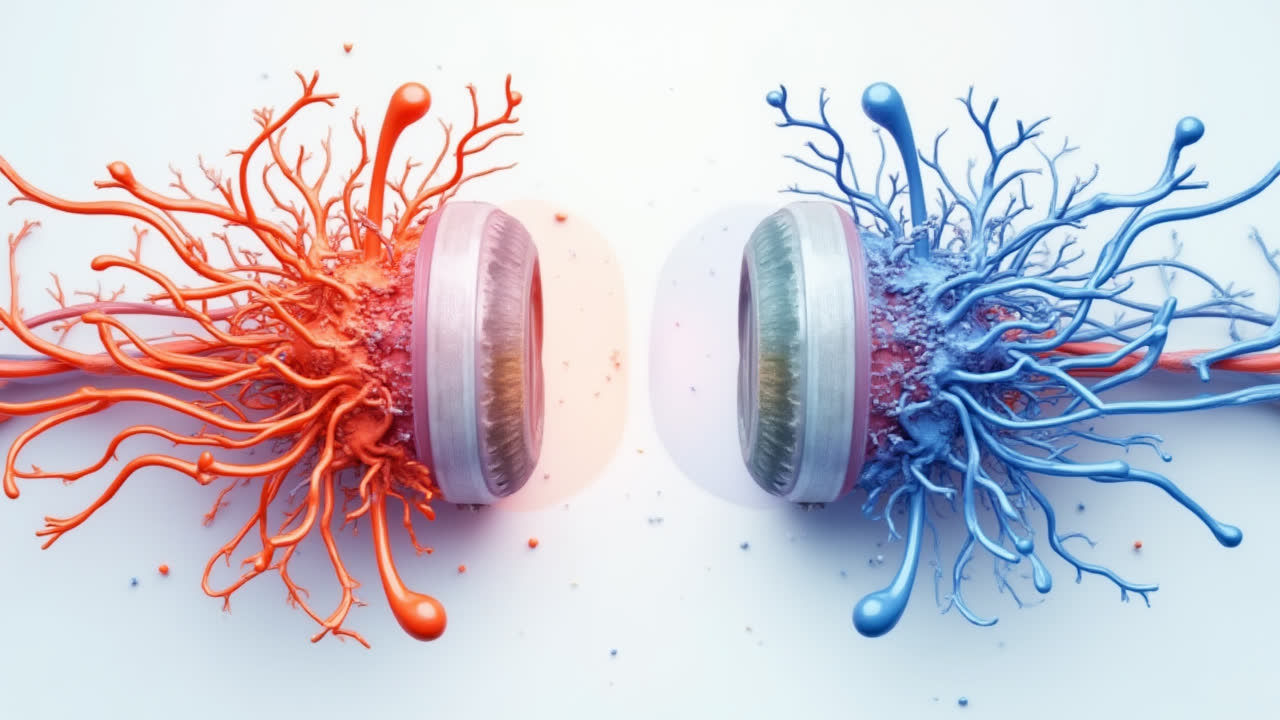
The human visual system is a marvel of biological engineering, processing countless signals every second to create the seamless visual experience we often take for granted. At the heart of this complex system are two distinct types of ganglion cells: Magno cells and Parvo cells. These specialized neurons form the foundation of our visual processing, yet they function in remarkably different ways. Have you ever wondered why you can perceive both rapid movement and fine details? The answer lies in understanding these two cellular pathways.
When light enters our eyes, the journey of visual processing begins at the retina. From there, compressed information travels through specific neural highways to reach the visual cortex where meaningful images are formed. These neural highways aren't identical—they're specialized for different aspects of vision. The differences between Magno (M-cells) and Parvo cells (P-cells) explain how our brains can simultaneously process motion, depth, color, and fine details, allowing us to navigate the world with incredible visual precision.
I've spent years fascinated by neurobiology, and the Magno-Parvo cell distinction remains one of the most elegant examples of functional specialization in the brain. Through this article, I'll break down the structural and functional differences between these crucial components of our visual system, exploring how their complementary roles create the rich visual experience we enjoy every day.
What Are Magno Cells? Structure and Function
Magno cells, also known as M-cells or magnocellular cells, are relatively large neurons located within the magnocellular layers of the lateral geniculate nucleus (LGN) of the thalamus. Their name derives from the Greek word "magnos," meaning large—an apt description given their substantial cell bodies and thick, heavily myelinated axons. Specifically, these cells occupy the inner two layers of the LGN, forming a distinctive component of the visual processing pathway.
The structure of Magno cells directly influences their function. Their large size and thick axons allow for rapid signal transmission, while their extensive dendritic trees collect input from many retinal cells. This convergence means each Magno cell receives information from a relatively large area of the visual field. I've always found it fascinating how their physical characteristics perfectly align with their specialized role in visual processing—it's as if they were designed specifically for their function.
Functionally, Magno cells specialize in detecting motion, depth, and changes in luminance (brightness). They're exquisitely sensitive to contrast differences and excel at detecting objects moving across the visual field. When you notice movement in your peripheral vision or perceive depth relationships between objects, you're experiencing your Magno cells in action. These cells respond rapidly but transiently to visual stimuli, making them perfect for alerting us to movement and changes in our environment—an evolutionary advantage that helped our ancestors detect predators or prey in their peripheral vision.
Contrary to some outdated sources, Magno cells do process color information, though with less precision than their Parvo counterparts. They're particularly responsive to low spatial frequencies (broad, general patterns) and high temporal frequencies (rapid changes). Think of watching a basketball game—when you follow the quick movements of players across the court, your visual system is heavily relying on the Magno pathway to track that motion.
What Are Parvo Cells? Structure and Function
Parvo cells, also called P-cells or parvocellular cells, stand in stark contrast to their Magno counterparts. The term "parvo" comes from Latin, meaning small, which accurately describes their more diminutive size. These neurons are situated in the outer four layers of the lateral geniculate nucleus of the thalamus, creating a separate pathway for visual information processing. Their smaller cell bodies are accompanied by thinner axons with less myelin, resulting in a different pattern of signal transmission.
The structural characteristics of Parvo cells create a different set of functional capabilities. Their smaller receptive fields mean each cell responds to information from a more limited area of the visual field, allowing for greater precision and detail discrimination. I remember learning about this in graduate school and being amazed at how these tiny cells contribute so significantly to our ability to read fine print or recognize complex patterns.
Functionally, Parvo cells excel at processing fine details, form, and color information. While Magno cells might help you notice a bird flying across the sky, Parvo cells allow you to appreciate the intricate patterns of its feathers when it lands nearby. These cells generate sustained responses to visual stimuli, maintaining their signaling as long as a stimulus remains present—perfect for the detailed analysis of stationary objects.
Parvo cells demonstrate exceptional sensitivity to high spatial frequencies (fine details) but respond poorly to high temporal frequencies (rapid changes). They're the workhorses behind our ability to read text, recognize faces, and discriminate between subtle color variations. Their slower but more sustained response pattern complements the quick but transient signaling of Magno cells, creating a comprehensive visual processing system that handles both dynamic and static aspects of our visual world.
The parvocellular pathway receives nerve signals primarily from midget retinal ganglion cells and supplies this information to the striate cortex through a distinct route. One of the most interesting aspects of Parvo cells is their contribution to our extraordinary color perception abilities—they're essential for distinguishing between similar hues and appreciating the vibrant spectrum of colors in our environment.
Similarities Between Magno and Parvo Cells
Despite their differences, Magno and Parvo cells share important similarities that highlight their complementary roles in the visual system. Both cell types are ganglion cells that compress and transfer information generated by the cone cells in the retina. They represent parallel processing channels that begin at the retina and extend to the visual cortex, allowing for simultaneous analysis of different aspects of the same visual scene.
Both Magno and Parvo cells have their cell bodies located in the lateral geniculate nucleus (LGN) of the thalamus, though in different layers. They both receive input from retinal ganglion cells, albeit different types, and both project to the primary visual cortex (V1), creating separate but parallel pathways for visual information. This parallel processing is one of the most elegant features of the visual system—it's like having multiple specialized processors working simultaneously on different aspects of the same data.
Another similarity is that both cell types contribute to form perception and play essential roles in our overall visual experience. Neither pathway works in isolation; instead, they function as complementary systems that together create our rich, detailed, and dynamic perception of the world. I've always found it remarkable how these different neuronal populations, with their distinct properties, work in concert to create a unified visual experience.
Both Magno and Parvo cells also share a common evolutionary origin and developmental pathway, diverging to serve specialized functions as the visual system evolved greater complexity. This specialization represents a fundamental principle in neural organization: the balance between generalization and specialization that allows for efficient information processing.
Key Differences Between Magno and Parvo Cells
Before diving into the detailed comparison table, let's highlight the most significant differences:
- Magno cells are larger with thicker axons, while Parvo cells are smaller with thinner axons
- Magno cells excel at motion perception, while Parvo cells specialize in detail and color analysis
- Magno cells have large receptive fields, while Parvo cells have small receptive fields
- Magno cells respond transiently with short latency, while Parvo cells respond in a sustained manner with longer latency
| Characteristic | Magno Cells (M-Cells) | Parvo Cells (P-Cells) |
|---|---|---|
| Size | Large cell bodies | Small cell bodies |
| Axon Characteristics | Thick axons with more myelin | Thin axons with less myelin |
| Location in LGN | Inner two layers | Outer four layers |
| Receptive Field Size | Large | Small |
| Response Pattern | Transitory (brief) | Sustained (longer duration) |
| Response Latency | Short (faster) | Long (slower) |
| Motion Perception | Excellent | Poor |
| Color Processing | Limited color discrimination | Excellent color discrimination |
| Spatial Frequency Sensitivity | Responsive to low spatial frequencies | Responsive to high spatial frequencies |
| Temporal Resolution | Fast (good at detecting rapid changes) | Slow (better at sustained viewing) |
| Primary Function | Motion detection, depth perception | Form and color analysis, detail perception |
The structural and functional differences between Magno and Parvo cells represent a classic example of neural specialization. This division of labor allows the visual system to simultaneously process different aspects of the visual world with remarkable efficiency. The Magno system's sensitivity to motion and depth complements the Parvo system's aptitude for detail and color discrimination, creating a comprehensive visual experience that seamlessly integrates these different aspects.
It's worth noting that these differences aren't absolute—there's some overlap in function, and both pathways contribute to our overall visual perception. However, the specialization enables more efficient processing of complex visual scenes, allowing us to simultaneously track moving objects while appreciating fine details and vibrant colors.
Functional Implications in Vision
The distinct properties of Magno and Parvo cells have profound implications for how we perceive the world around us. Their complementary functions allow us to experience a visual world that is both dynamic and detailed. When watching a basketball game, for instance, your Magno cells help track the fast-moving players and ball, while your Parvo cells allow you to distinguish between jersey colors and read distant scoreboards.
The Magno pathway's specialization for motion detection makes it crucial for navigating through space, detecting approaching objects, and tracking movement in our environment. In evolutionary terms, this system likely developed to help our ancestors detect predators or prey moving in their peripheral vision—a critical survival advantage. I've always found it fascinating to think about how these neural specializations shaped our species' survival and success.
Meanwhile, the Parvo system's excellence at processing fine details and color makes it essential for tasks requiring precision and discrimination. Reading text, recognizing faces, appreciating artwork, and distinguishing between similar objects all heavily rely on the Parvo pathway. Our ability to perform delicate manual tasks, from threading a needle to performing microsurgery, depends on the detailed visual information provided by this system.
These complementary systems also explain why certain visual disorders affect specific aspects of vision. Damage to the Magno pathway might impair motion perception while leaving color vision intact, while Parvo pathway disruption could affect color discrimination and detail perception while preserving motion sensitivity. Understanding these pathways has significant implications for diagnosing and potentially treating various visual disorders.
The specialized functions of these cells also explain certain visual illusions and phenomena. For example, the motion aftereffect (where stationary objects appear to move after prolonged exposure to motion in the opposite direction) likely results from adaptation in the Magno pathway, while certain color contrast illusions relate to Parvo pathway processing. These illusions not only entertain us but provide valuable insights into how our visual system functions.
FAQ: Magno and Parvo Cells
How do Magno and Parvo cells contribute to color vision?
Contrary to some older research, both Magno and Parvo cells contribute to color vision, but in different ways. Parvo cells are the primary processors of color information, with excellent ability to discriminate between hues and process red-green color differences. They receive input from cone cells that are sensitive to specific wavelengths of light. Magno cells, while less specialized for color, do process some color information and are particularly responsive to differences in luminance (brightness) between colors. The combined input from both pathways creates our rich color perception, with Parvo cells providing the fine color discrimination and Magno cells contributing to the perception of color boundaries and movement of colored objects.
What happens when either the Magno or Parvo pathway is damaged?
Damage to the Magno pathway typically results in difficulties with motion perception, depth estimation, and detecting objects in the peripheral vision. Patients might report problems with navigating in crowded environments, judging the speed of approaching vehicles, or catching objects. In contrast, damage to the Parvo pathway can cause deficits in color discrimination (particularly red-green color blindness), reduced visual acuity, and difficulties with form recognition and reading. Interesting research has also suggested that some developmental disorders, such as dyslexia, may involve subtle abnormalities in the Magno pathway, potentially contributing to the visual processing challenges experienced by individuals with these conditions.
How do Magno and Parvo cells develop during early childhood?
The development of Magno and Parvo cells follows different trajectories during childhood. Magno cells mature earlier, explaining why infants can track moving objects before they can discriminate fine details or colors. This early development of the Magno pathway likely has evolutionary advantages, allowing young children to detect movement (including approaching dangers) before their visual system is fully mature. The Parvo pathway develops more gradually, with color vision and fine detail discrimination improving significantly during the first few years of life. This developmental sequence explains why very young children are drawn to high-contrast, moving objects rather than fine details, and why color vision tests are typically not reliable until around age 4-5 when the Parvo system has sufficiently matured.
Conclusion: The Complementary Visual Pathways
The distinction between Magno and Parvo cells represents one of the most elegant examples of functional specialization in the human brain. These two neural pathways, while structurally and functionally distinct, work in concert to create our rich and seamless visual experience. The Magno pathway's excellence at processing motion, depth, and luminance changes complements the Parvo pathway's specialization for fine details, form, and color discrimination.
This parallel processing allows us to simultaneously perceive both the dynamic and detailed aspects of our visual world—tracking moving objects while appreciating intricate patterns, detecting peripheral motion while reading fine text, and perceiving depth relationships while distinguishing subtle color variations. It's a remarkable feat of neural engineering that enables the extraordinary visual capabilities we often take for granted.
Understanding the differences between these cell types has far-reaching implications for neuroscience, ophthalmology, and the study of visual disorders. It helps explain why certain visual impairments affect specific aspects of vision while sparing others, and it guides research into potential treatments and interventions for various visual conditions.
As our knowledge of these neural pathways continues to evolve, we gain deeper insights into how our visual system transforms patterns of light into meaningful perceptions. The Magno-Parvo distinction reminds us that the brain's approach to information processing often involves specialized, parallel pathways that together create our rich experience of the world—a principle that extends beyond vision to many aspects of neural function.