Mythology vs History: 8 Key Differences You Should Know
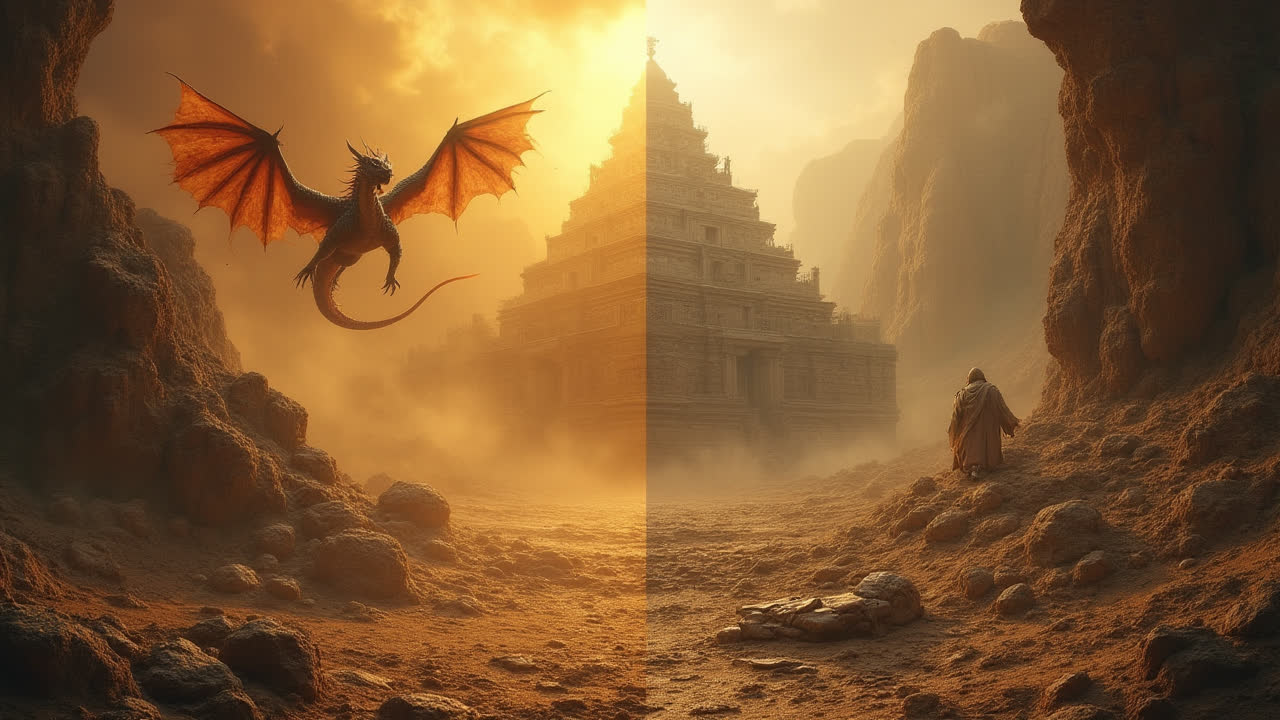
Have you ever wondered about the difference between mythology and history? While both explore tales from our past, they serve distinctly different purposes in helping us understand where we came from. As someone who's spent years studying ancient civilizations, I've found that the line between these two fields can sometimes blur, yet their fundamental approaches remain worlds apart.
The fascinating realm of mythology encompasses stories of gods, supernatural beings, and extraordinary heroes that have shaped cultures worldwide. Meanwhile, history strives to document real people and events using verifiable evidence. This distinction might seem obvious at first glance, but the relationship between these two disciplines is more complex and intertwined than many realize.
When I first began exploring ancient Greek texts, I was struck by how historical figures sometimes appeared alongside mythical creatures and divine interventions. This overlap has always intrigued me. How do we separate fact from fiction when examining ancient accounts? Let's dive deeper into what makes these two fields both different and surprisingly complementary.
Understanding Mythology: Stories That Shaped Civilizations
Mythology refers to the collection of traditional stories that often involve gods, supernatural beings, and extraordinary heroes. These narratives typically explain natural phenomena, cultural practices, or the origins of the world itself. What fascinates me about myths is their power to reveal the values, fears, and aspirations of ancient societies through symbolic storytelling.
I remember visiting the Parthenon in Athens and being overwhelmed by how mythology wasn't just entertainment for the ancient Greeks—it was their framework for understanding everything from morality to natural disasters. The stories of Zeus hurling thunderbolts or Poseidon stirring the seas weren't mere fantasies but attempts to make sense of a mysterious world.
Mythological studies encompass several genres that serve different explanatory functions:
- Creation mythology - Stories explaining how the world and humanity came into existence
- Hero mythology - Tales of extraordinary individuals whose journeys reflect cultural ideals
- Religious mythology - Narratives that form the foundation of organized spiritual beliefs
- Cultural mythology - Stories that explain customs, traditions, and social structures
Unlike historical accounts, mythology doesn't require factual verification. Its power lies in its symbolic truth rather than literal accuracy. When I tell my students about Pandora's box or the labors of Hercules, I'm not teaching them historical events but rather timeless lessons about human nature, consequences, and the struggle against adversity.
Mythology serves as a cultural technology—a means by which ancient peoples transmitted values, warned against taboos, and created collective identity. These stories endure not because they're factually accurate but because they speak to something fundamental about the human experience. Isn't it remarkable how myths from disconnected civilizations often share similar themes and archetypes?
Defining History: The Search for What Actually Happened
History, by contrast, is the systematic study of the past based on evidence. It seeks to establish what actually happened through careful examination of primary sources, archaeological findings, and critical analysis. As a discipline, history demands verification and skepticism—hallmarks that distinguish it from mythological studies.
I've spent countless hours in archives examining centuries-old documents, and what strikes me about historical research is its humility. Good historians acknowledge the limitations of evidence and remain open to revising their conclusions when new information emerges. History isn't set in stone; it's an ongoing conversation about our collective past.
Historical studies branch into numerous specialized fields, each examining different aspects of human experience:
- Political history - Focuses on governments, leadership, and power structures
- Social history - Examines everyday life, customs, and social movements
- Economic history - Studies production, trade, and resource management
- Cultural history - Investigates art, literature, and intellectual developments
- Military history - Analyzes conflicts, warfare, and defense systems
- Technological history - Traces innovations and their impacts on societies
The common thread running through all historical approaches is the commitment to evidence-based inquiry. When I teach about the Roman Empire or the Industrial Revolution, I'm presenting interpretations built on verifiable sources—though I remind my students that these interpretations are always subject to revision. History isn't about memorizing dates and names; it's about understanding causation, context, and change over time.
Perhaps the most challenging aspect of historical study is acknowledging its incompleteness. The surviving evidence represents only fragments of past realities, leaving historians to reconstruct complex narratives from partial information. This limitation sometimes creates space where mythology can fill interpretive gaps—not as fact, but as cultural context that helps us understand how people made sense of their world.
Key Similarities Between Mythology and History
Despite their fundamental differences, mythology and history share several important characteristics. Both serve as vehicles for understanding where we came from and how societies developed over time. In my lectures, I often highlight these parallels to help students appreciate the complex relationship between these two approaches to the past.
First, both mythology and history function as powerful shapers of identity. Whether through the founding myths of Rome or documented accounts of the American Revolution, societies use narratives about their origins to create cohesion and purpose. I've observed how deeply people identify with both mythic and historical accounts of their ancestors—sometimes not even distinguishing between the two.
Additionally, both fields reveal the values and priorities of the cultures that produced them. Just as Greek myths highlight themes of hubris and harmony with nature, historical chronicles from medieval Europe emphasize Christian virtue and dynastic legitimacy. Neither mythology nor history exists in a vacuum; both reflect the societies that created and preserved them.
Interestingly, both mythology and history also evolve through retelling. Historical interpretations change as new evidence emerges or analytical approaches develop, while myths transform as they're adapted to new cultural contexts. During my research on colonial narratives, I've been fascinated by how historical accounts sometimes take on mythic qualities through selective emphasis and nationalistic retellings.
Finally, both mythology and history serve educational purposes. They transmit knowledge, warn against past mistakes, and provide models (both positive and negative) for future generations. When teaching either subject, I emphasize their value not just as windows to the past but as tools for navigating the present and imagining better futures.
Comprehensive Comparison: Mythology vs History
Now that we've explored both fields individually, let's examine their differences systematically. This comparison highlights the distinctive features that separate mythological accounts from historical documentation.
| Comparison Point | Mythology | History |
|---|---|---|
| Primary Focus | Supernatural beings, gods, heroes, and extraordinary events | Real people, verifiable events, and societal developments |
| Verification Standard | Symbolic or metaphorical truth; consistency within cultural framework | Factual accuracy; evidence-based verification from multiple sources |
| Source Material | Oral traditions, religious texts, folklore, artistic representations | Primary documents, archaeological findings, contemporary accounts |
| Timeline Precision | Often vague or symbolic (e.g., "in the time before time") | Specific and chronological, with datable events |
| Purpose | Explain natural phenomena, transmit values, establish cultural identity | Document actual events, analyze cause and effect, inform present decisions |
| Characters | Often include immortals, supernatural beings, and idealized humans | Real people with documented existence and actions |
| Methodology | Narrative storytelling emphasizing symbolic meaning | Critical analysis of evidence using established research methods |
| Evolution Over Time | Changes to reflect shifting cultural values and beliefs | Revisions based on new evidence and analytical approaches |
The Overlap: When Mythology and History Intersect
The boundary between mythology and history isn't always clear-cut. Throughout my academic career, I've encountered fascinating cases where these domains overlap, creating rich interpretive possibilities. These intersections often occur in ancient texts that blend observable events with supernatural explanations or in cultural histories where myth has shaped historical understanding.
Consider Homer's Iliad—is it mythology or history? Archaeological discoveries at Troy suggest that the epic poem may contain kernels of historical truth about an actual conflict, wrapped in layers of divine intervention and heroic exaggeration. During a research trip to Turkey, I stood on the mounds of ancient Troy and was struck by how physical evidence lends credibility to elements of a story we primarily classify as myth.
Similarly, founding narratives often blend historical events with mythological elements. Rome's origin story featuring Romulus and Remus being suckled by a wolf contains mythical aspects, yet archaeological evidence confirms that Rome was indeed founded roughly when the legend suggests. These hybrid narratives serve both explanatory and legitimizing functions, connecting historical development to cosmic or divine purpose.
Historians sometimes use mythological accounts as windows into historical realities, not by accepting their literal truth but by analyzing what they reveal about cultural perceptions and values. For instance, studying Greek myths about the Amazons might not tell us whether warrior women actually existed exactly as described, but it offers insights into Greek attitudes toward gender roles and foreign societies.
In many traditional societies, the distinction between mythology and history as we understand it today wouldn't have existed at all. For Australia's Aboriginal peoples, Dreamtime stories simultaneously explain natural features, establish law, and record ancestral journeys—functioning as both mythology and history without contradiction. This reminds us that our categorical separation of these domains reflects particular cultural assumptions about truth and evidence.
Perhaps most importantly, mythological frameworks often influence how historical events are interpreted and remembered. During my work on medieval chronicles, I've observed how historical accounts frequently organize events according to preexisting religious narratives—seeing military victories as divine favor or natural disasters as punishment for moral failings. Even in our supposedly rational age, don't we still tend to shape historical narratives around archetypal patterns?
Why Both Mythology and History Matter Today
In our contemporary world of instant information and fact-checking, you might wonder why mythology still matters alongside history. I've found that both disciplines offer essential perspectives for understanding ourselves and our societies. While history provides factual frameworks and causal explanations, mythology offers insights into perennial human questions and cultural imagination.
Studying mythology enriches our appreciation of literature, art, and popular culture. When my students recognize mythological references in everything from Star Wars to corporate logos, they're connecting with cultural traditions that span millennia. These mythic patterns continue to shape storytelling because they speak to fundamental human experiences—the hero's journey, the fall from grace, the triumph over chaos—that transcend specific historical circumstances.
Meanwhile, historical literacy equips us to understand current events in context and to evaluate claims about the past that shape political discourse. I've witnessed how students who develop historical thinking skills become more discerning citizens, able to recognize when historical narratives are being oversimplified or manipulated for present purposes. History teaches us that societies change through complex interactions of factors, not simple causes.
Together, mythology and history offer complementary approaches to cultural understanding. Mythology reveals how societies make meaning through narrative, while history demonstrates how they develop through verifiable processes. Both are essential for cross-cultural dialogue and appreciation of diverse worldviews. I've found that students who study both develop more nuanced understanding than those who focus exclusively on either field.
In educational settings, both mythology and history serve crucial developmental functions. Mythological stories captivate young imaginations while conveying cultural values and ethical frameworks. Historical study develops critical thinking skills and reinforces the importance of evidence-based reasoning. Both teach us to situate ourselves within larger narratives that extend beyond individual experience.
Perhaps most valuably, the tension between mythology and history reminds us that human understanding requires both literal and symbolic truths. Sometimes a mythological explanation—while factually inaccurate—captures emotional or spiritual realities that purely historical accounts might miss. And sometimes historical evidence challenges cherished myths in ways that expand our understanding. The dialogue between these approaches enriches our collective wisdom.
Frequently Asked Questions About Mythology and History
Can mythology ever be considered historically accurate?
Mythology can contain historical elements, but usually not in a directly verifiable way. Certain myths might preserve memories of actual events—like floods, migrations, or conflicts—but these are typically transformed through repeated telling and symbolic interpretation. Archaeologists and historians sometimes discover historical kernels within mythological narratives, such as the discovery of Troy suggesting some historical basis for the Trojan War. However, mythology primarily serves cultural and explanatory functions rather than historical documentation. The most useful approach is to examine mythology not as literal history but as cultural evidence that reveals how societies understood their world and past.
How do historians deal with historical records that contain mythological elements?
Historians use several methodological approaches when working with sources that blend historical and mythological content. First, they employ source criticism to evaluate the reliability and purpose of the document, considering when it was written and by whom. They look for corroborating evidence from other sources or archaeological findings to separate verifiable facts from mythological embellishments. Historians also analyze the cultural context to understand why mythological elements were included and what function they served. Rather than dismissing such sources entirely, skilled historians extract valuable historical information while recognizing the significance of mythological frameworks in shaping how past events were recorded and remembered.
Why do so many cultures have similar mythological themes despite developing independently?
The remarkable similarities in mythological themes across independent cultures can be explained through several complementary theories. Universal human experiences—like birth, death, natural disasters, and celestial observations—naturally generate similar narrative responses. Psychologist Carl Jung proposed the concept of the "collective unconscious," suggesting that humans share certain archetypal patterns that manifest in myths worldwide. Additionally, similar social structures and environmental challenges might produce parallel mythological solutions. Some similarities may also result from ancient cultural diffusion through migration and trade routes more extensive than previously recognized. Finally, certain narrative patterns may simply be especially effective for memory and transmission in oral cultures. These factors combine to create what mythologist Joseph Campbell called "the monomyth" or hero's journey pattern that appears across diverse mythological traditions.
Conclusion: Embracing Both Narrative Traditions
The difference between mythology and history reflects two essential human needs: our desire for factual understanding and our hunger for meaningful narrative. Throughout this exploration, we've seen how these approaches to the past serve different yet complementary functions in helping us make sense of who we are and where we came from.
History grounds us in what actually happened, providing evidence-based accounts of real people and events that shaped our world. Mythology enriches our cultural imagination, offering symbolic frameworks that explain not just what happened but why it matters. Together, they form a more complete picture than either could provide alone.
In my years studying these fields, I've come to appreciate that the tension between mythological and historical approaches isn't a problem to solve but a creative dialogue to maintain. Each perspective checks and balances the other, preventing us from reducing the past to mere facts without meaning or elevating symbolic narratives without factual foundation.
Perhaps the wisdom lies in knowing when to apply each lens—when to seek verifiable evidence and when to explore symbolic meaning. Our ancestors didn't always distinguish between these approaches, and maybe there's something valuable in that holistic perspective. After all, don't we all need both facts and meaning to navigate our complex world?
As we continue to explore our collective past, let's value both the historian's commitment to evidence and the mythmaker's gift for meaningful narrative. Together, they help us understand not just what happened before, but who we are now, and who we might become.