Sound vs Voice: Understanding the Key Differences & Characteristics
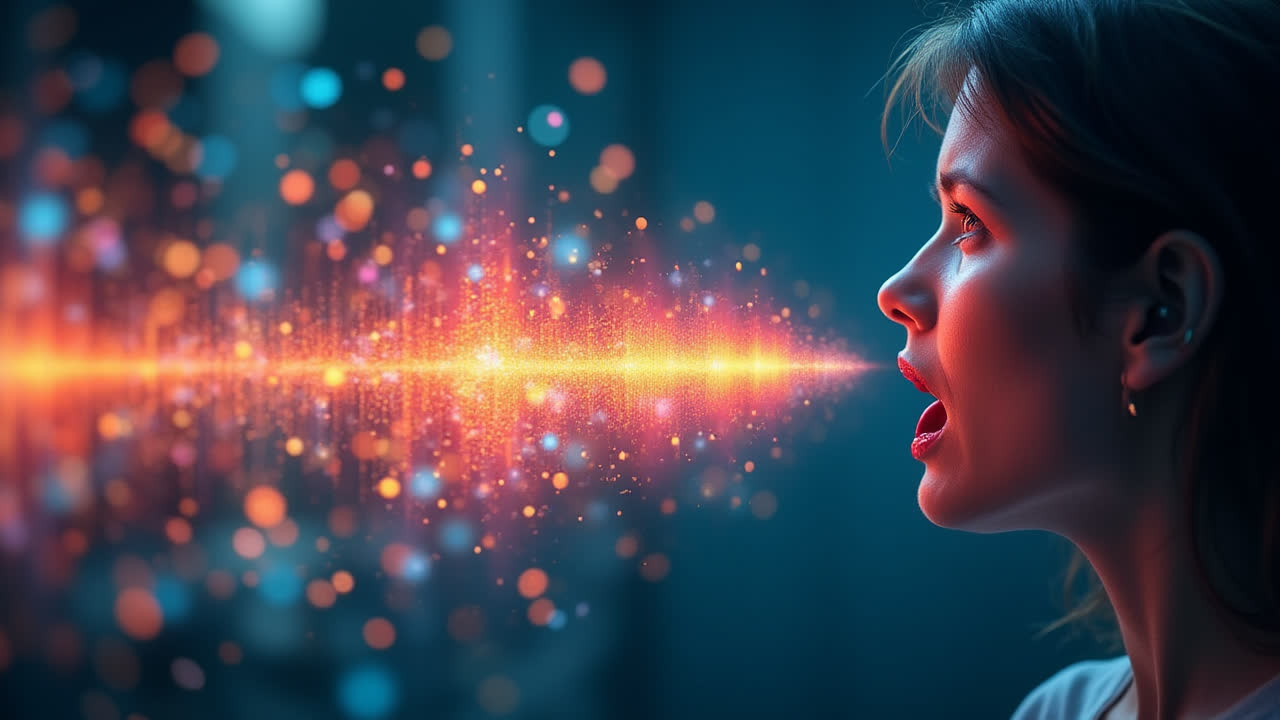
What is Sound? Definition and Characteristics
Sound is essentially vibrations that travel through a medium—whether air, water, or solid materials—that can be detected when they reach a person's ear. These vibrations create waves of energy that our auditory system interprets as sound. Think about the last time you heard leaves rustling in the wind or the splash of water in a stream. Those everyday experiences are perfect examples of sound in our environment.
The physics behind sound is fascinating. When an object vibrates, it disturbs the air molecules around it, creating a chain reaction of compressions and rarefactions that propagate as sound waves. These waves travel at approximately 343 meters per second in air at room temperature, though this speed varies depending on the medium. In water, for instance, sound travels about four times faster!
Sound surrounds us constantly, from the subtle buzz of electronics to the dramatic crash of ocean waves. Both living creatures and inanimate objects can produce sound, making it one of the most ubiquitous phenomena in our universe. The richness of our sonic environment adds depth to our perception of the world, providing crucial information about our surroundings even when we can't see them. Have you ever noticed how differently the world feels when it's completely silent? That rare absence of sound can be just as impactful as sound itself.
The intensity of sound is measured in decibels (dB), with typical conversation hovering around 60 dB and a jet engine producing upwards of 120 dB. Our ears are remarkably sensitive instruments, capable of detecting sounds across a wide range of frequencies and volumes. However, this sensitivity also makes them vulnerable to damage from extremely loud sounds, which is why hearing protection is so important in noisy environments.
Understanding Voice: A Special Kind of Sound
Voice is a specialized form of sound that is exclusively produced by humans. When we speak, sing, shout, or even whisper, we're creating voice. The human voice begins with air from our lungs passing through the vocal cords (or vocal folds) in our larynx. As these folds vibrate, they create sound waves that are then shaped by our throat, mouth, tongue, and lips to form the complex sounds of speech and other vocalizations.
The uniqueness of each person's voice comes from the specific physical characteristics of their vocal apparatus. Just as no two people have identical fingerprints, no two people have exactly the same vocal tract configuration or vocal fold structure. This is why we can often identify familiar people by their voice alone, even without visual cues. I'm sure you've had that moment of recognition when answering the phone and immediately knowing who's calling before they identify themselves.
Voice production is a remarkably complex process involving multiple bodily systems working in precise coordination. The respiratory system provides the airflow, the larynx generates the basic sound, and the articulatory system (mouth, tongue, teeth, lips) shapes that sound into specific vowels and consonants. This intricate dance of muscles and airflow happens largely without conscious thought, yet allows us to produce an infinite variety of sounds to express our thoughts and emotions.
Voice has evolved to be our primary means of communication, carrying not just linguistic information but also emotional and social cues. The pitch, volume, and quality of someone's voice can convey their emotional state, age, health, and even social status. Think about how differently a person sounds when they're excited versus when they're tired or ill. These vocal signatures provide rich contextual information that enhances our understanding beyond the literal meaning of words.
Properties and Types of Sound
Sounds can be categorized in numerous ways, reflecting their diverse origins and characteristics. Natural sounds include everything from animal calls and weather phenomena to flowing water and rustling leaves. Mechanical sounds come from machines, vehicles, and tools. Musical sounds are deliberately created for aesthetic purposes, while ambient sounds form the background acoustic environment of a particular setting.
The properties of sound include:
- Pitch - determined by the frequency of sound waves, measured in Hertz (Hz)
- Volume - the loudness or softness of a sound, measured in decibels (dB)
- Timbre - the quality that distinguishes one sound from another, even when they have the same pitch and volume
- Duration - how long a sound lasts
- Direction - where a sound appears to be coming from
Our perception of sound is subjective and can be influenced by various factors, including our past experiences, cultural background, and even our mood at the moment. What sounds pleasant to one person might be irritating to another, and what's barely audible to a young person might be completely inaudible to someone with age-related hearing loss.
Sound can also be purposely designed for specific functions. Think of alarm sounds, which are intentionally attention-grabbing, or the soothing sounds used in meditation apps. The field of acoustic design explores how different sounds affect human psychology and behavior, with applications ranging from architectural acoustics to product design and marketing.
Voice Characteristics and Classifications
The human voice possesses several distinguishing characteristics that set it apart from other sounds:
Pitch is perhaps the most noticeable aspect of voice, with adult male voices typically lower in pitch than adult female voices due to differences in vocal cord size and thickness. The pitch range of human voices is remarkably wide, from the deep notes of a bass singer (around 80 Hz) to the highest notes of a soprano (up to 1,300 Hz or more).
In musical contexts, voices are traditionally classified into four main types:
- Soprano - the highest female voice type
- Alto - the lower female voice type
- Tenor - the higher male voice type
- Bass - the lowest male voice type
Beyond these basic categories, there are many subcategories and specialized classifications used in different musical traditions around the world. The rich diversity of human voices allows for incredible variety in vocal music, from opera to folk traditions to contemporary pop and beyond.
Voice quality is another crucial characteristic, encompassing aspects like breathiness, resonance, and vocal texture. Some voices are described as warm, bright, dark, husky, smooth, or raspy—each quality creating a different emotional impact on listeners. These qualities can be inherent to a person's vocal anatomy or deliberately cultivated through training and technique.
Our voices also change throughout our lives, from the high-pitched sounds of infancy to the voice breaks of adolescence and the gradual changes of aging. Voice is dynamic and responsive, adapting to our physical condition, emotional state, and social context. Haven't you noticed how your own voice sounds different when you're speaking to a close friend versus addressing a formal gathering?
Key Differences Between Sound and Voice
| Feature | Sound | Voice |
|---|---|---|
| Source | Can be produced by any object or phenomenon that causes vibrations | Exclusively produced by humans through vocal apparatus |
| Production Mechanism | Any form of vibration that creates sound waves | Air from lungs passing through and vibrating the vocal cords |
| Intentionality | Can be intentional or unintentional | Usually intentional and controllable |
| Complexity | Ranges from simple to complex | Highly complex with linguistic, emotional, and social dimensions |
| Uniqueness | Similar objects often produce similar sounds | Each person's voice has distinctive characteristics |
| Communication Purpose | May communicate information but not necessarily | Primarily evolved for communication |
| Variation Range | Unlimited range of possible sounds | Limited to what human vocal apparatus can produce |
| Recognition Value | Can be recognizable but usually less distinctive | Highly identifiable, can serve as biometric identifier |
The Science Behind Voice Production
Voice production is a fascinating biological process that involves several bodily systems working in harmony. It begins with the respiratory system, as we inhale air into our lungs. When we're ready to speak, the diaphragm and other muscles contract, pushing air up through the trachea toward the larynx, or voice box.
Within the larynx are the vocal folds (commonly called vocal cords), which are two bands of muscle tissue. When we breathe normally, these folds are relaxed and open, allowing air to pass freely. But when we speak or sing, the brain signals the vocal folds to come together, creating a narrow passage for the air to flow through. The pressure of air passing through these constricted folds causes them to vibrate rapidly—typically between 100-200 times per second in adult males and 150-300 times per second in adult females.
These vibrations create the basic sound of voice, but it's just the beginning of the process. The raw sound is then shaped as it passes through the throat, mouth, and nasal cavities, which act as resonators, emphasizing certain frequencies and dampening others. The position of the tongue, lips, jaw, and soft palate further modifies this sound, creating the specific vowels and consonants of speech.
The remarkable precision of this system allows us to produce an astonishing array of sounds with subtle variations in pitch, volume, and quality. Professional singers and voice actors develop exceptional control over these mechanisms, enabling them to manipulate their voices with extraordinary finesse. Even for everyday speakers, the voice production system is an impressive feat of biological engineering that we often take for granted until something goes wrong, like laryngitis or vocal strain.
Frequently Asked Questions About Sound and Voice
Can animals produce voices like humans do?
While many animals can produce sounds, they don't have voices in the same way humans do. Animals create sounds through various mechanisms—birds have a syrinx instead of a larynx, insects may rub body parts together, and cetaceans like dolphins use nasal air sacs. These sound-producing structures are different from human vocal cords. Although some animals (particularly primates and certain birds) have sound-producing organs that share some similarities with ours, they lack the complex vocal tract that allows for the wide range of sounds and articulations characteristic of human voice. This is one reason why even the most vocally talented animals cannot produce human speech, despite some species being able to mimic certain sounds.
Why do recorded voices sound different than how we hear ourselves?
When you speak, you hear your voice through two pathways: external air conduction (sound waves traveling through the air to your ears) and internal bone conduction (vibrations traveling through the bones of your skull directly to your inner ear). Bone conduction adds lower frequencies that others don't hear, which is why your recorded voice often sounds higher and thinner to you than your subjective experience of your own voice. This difference can be surprising or even disconcerting when people first hear recordings of themselves, as the voice they hear lacks the additional resonance provided by bone conduction. This phenomenon is universal—virtually everyone experiences this disconnect between their perceived voice and their recorded voice.
Can voice really be used as a reliable biometric identifier?
Yes, voice can indeed serve as a reliable biometric identifier, though it's not as definitive as fingerprints or DNA. Voice recognition systems analyze various aspects of voice including pitch, cadence, tone, and pronunciation patterns that are unique to individuals. Modern voice biometric systems have become increasingly sophisticated, with accuracy rates exceeding 99% in controlled conditions. However, factors like illness, aging, background noise, and recording quality can affect reliability. Voice recognition is now used in banking, customer service, and security applications, often as part of multi-factor authentication. While voice prints can be spoofed with advanced technology, the best systems incorporate "liveness detection" to determine if a voice is coming from a real person rather than a recording or synthesized voice.
Applications and Importance of Understanding Sound vs Voice
The distinction between sound and voice has significant practical applications in various fields. In medicine, understanding the mechanics of voice production helps diagnose and treat vocal disorders like nodules, polyps, and paralysis. Speech therapists work with patients to improve voice quality, pitch control, and articulation through exercises targeting specific aspects of the vocal production system.
In technology, voice recognition systems need to distinguish human voices from background sounds to function effectively. This requires sophisticated algorithms that can identify the unique characteristics of voice against the backdrop of ambient noise. The growing field of voice-activated technology—from smart speakers to car navigation systems—relies on this ability to isolate and interpret human voice commands.
For musicians and sound engineers, understanding the differences between voice and other sounds is crucial for recording, mixing, and sound design. Vocal tracks in music require different processing techniques than instrumental tracks, reflecting the unique acoustic properties of the human voice. Similarly, sound designers for film and games must create convincing vocal effects that obey the natural constraints of human voice production.
In forensic science, voice analysis can help identify speakers in recorded evidence, though with limitations. Unlike fingerprints, voices can change due to factors like stress, illness, or deliberate disguise. Nevertheless, voice "fingerprinting" remains a valuable tool in certain investigative contexts.
Even in our daily lives, the distinction between voice and other sounds shapes our perception and interaction with the world. We instinctively tune into human voices in noisy environments—a phenomenon known as the "cocktail party effect"—highlighting the special place that voice holds in our auditory attention.
Conclusion: The Unique Place of Voice in the World of Sound
As we've explored throughout this article, while all voices are sounds, not all sounds are voices. The human voice represents a specialized category of sound with unique properties, production mechanisms, and functions. From the physics of vocal fold vibration to the subtle nuances that make each person's voice distinctive, voice stands apart in both its complexity and its significance in human experience.
Voice serves as our primary tool for verbal communication, a medium for artistic expression, a marker of personal identity, and even a window into our emotional and physical state. Understanding the differences between general sounds and the specific phenomenon of voice deepens our appreciation for this remarkable capability that most of us use effortlessly every day.
In a world increasingly filled with synthetic sounds and artificial voices, perhaps there's something valuable in reflecting on the authentic human voice—with all its imperfections, variations, and expressiveness—as a uniquely powerful form of sound that connects us to one another in ways that other sounds cannot. After all, what other sound can convey not just information but wisdom, comfort, love, and the full spectrum of human emotion with such nuance and immediacy?