Stem Tubers vs Root Tubers: Key Differences and Gardening Guide
Understanding Underground Plant Structures
Plants have evolved remarkable adaptations for surviving harsh conditions like drought or winter. Underground storage organs represent one of nature's most successful survival strategies, allowing plants to store water, carbohydrates, and nutrients during favorable periods for use during challenging times. Among these specialized structures, tubers stand out as particularly efficient storage systems.
Tubers belong to a larger category of plants called geophytes—plants that survive unfavorable conditions through underground storage structures. Unlike other geophytes such as bulbs, corms, or rhizomes that produce offsets, tubers simply grow larger each year. However, not all tubers are created equal! The plant world features two distinct tuber types: those formed from modified stems and those developed from specialized roots.
Have you ever noticed how a potato left in your pantry starts sprouting from its "eyes," while a carrot top simply grows leaves? This difference in behavior reveals the fundamental distinction between these two tuber types. The unique properties of each type affect everything from how they store nutrients to how we can propagate them in our gardens.
What Are Stem Tubers?
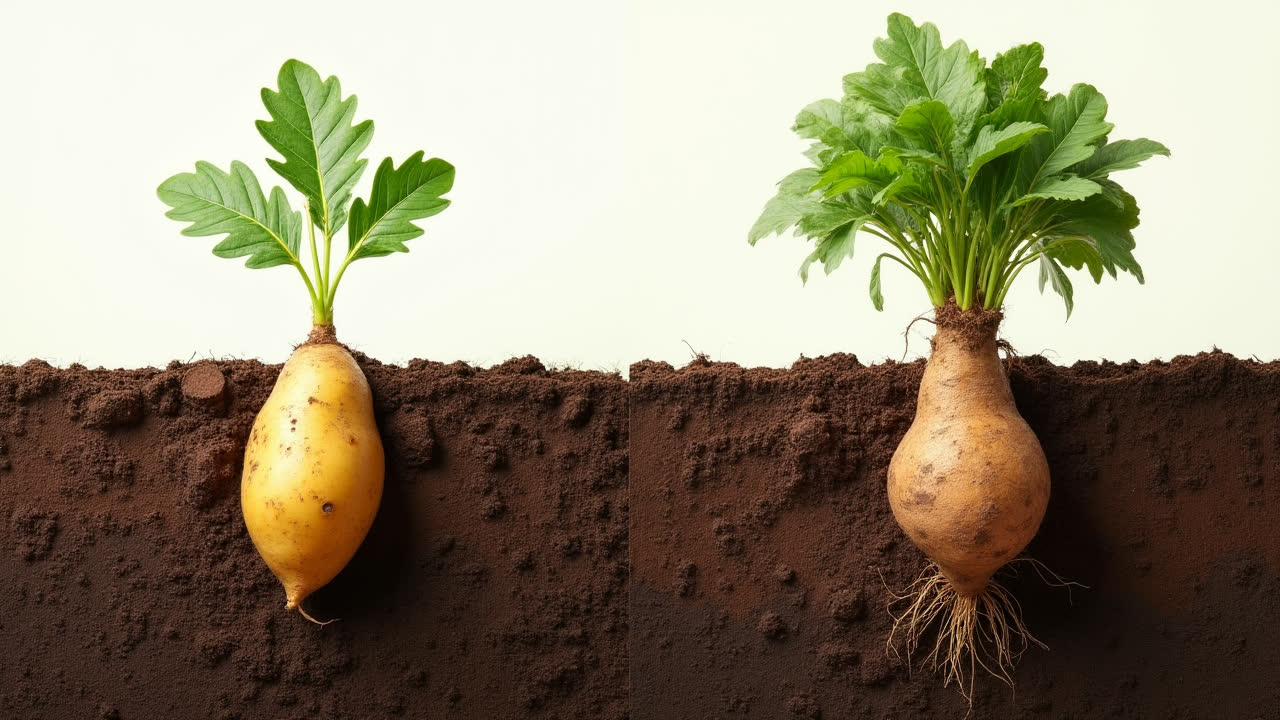
Stem tubers represent specialized underground stem structures that have evolved specifically for storage purposes. Unlike ordinary stems that grow upward seeking sunlight, stem tubers develop horizontally underground, swelling as they accumulate starches, proteins, and other nutrients. The most famous example is undoubtedly the humble potato (Solanum tuberosum), a staple food crop worldwide.
What makes stem tubers particularly fascinating is their retention of typical stem characteristics despite their modified form. Each stem tuber features nodes (commonly called "eyes" on potatoes) that contain dormant buds. These eyes represent the points where leaves would normally emerge on an above-ground stem. When conditions become favorable, these dormant buds activate and develop into new shoots, enabling the plant to regenerate. This is why a potato with multiple eyes can be cut into several pieces, with each piece capable of growing into a complete new plant as long as it contains at least one eye.
Another distinctive feature of stem tubers is their ability to produce chlorophyll when exposed to light. Have you ever forgotten potatoes in a sunny spot and discovered they've turned green? That greening represents chlorophyll production—a dead giveaway of their stem origin, as roots typically lack this ability. However, this greening also produces solanine, a potentially toxic compound, which is why green potatoes should be avoided for consumption.
Beyond potatoes, other common stem tubers include yams, Jerusalem artichokes, and some begonia varieties. These plants all share the ability to regenerate from tuber pieces containing nodes, making them relatively easy to propagate in home gardens.
What Are Root Tubers?
Root tubers, the second major tuber category, develop from modified roots rather than stems. These specialized structures fulfill the dual purpose of storing nutrients while maintaining some typical root functions like absorbing water and minerals from the soil. Common examples of root tubers include sweet potatoes, cassava, dahlias, and the familiar orange carrot.
Unlike their stem-based counterparts, root tubers lack nodes and eyes. Instead, they typically grow from a single point at the top of the tuber where it connects to the stem of the plant. This explains why carrots and similar root vegetables only sprout new growth from their crown (the top portion) rather than along their entire length. Root tubers primarily store simpler carbohydrates like glucose, compared to the complex starches found in stem tubers.
Another key distinction is that root tubers typically develop as single structures per plant, often forming from the main taproot, though some plants like dahlias produce clusters of root tubers. These structures frequently maintain fine secondary roots extending from their surface, continuing to fulfill the water absorption function typical of normal roots.
When exposed to sunlight, most root tubers don't produce chlorophyll like stem tubers do. However, they may develop tougher skin or undesirable flavors when exposed to light, which is why most root vegetables are best stored in dark conditions. For gardeners, understanding this distinction becomes important when planning for propagation, as most root tubers cannot be divided like stem tubers—they must instead be propagated through crown divisions or stem cuttings.
Key Differences Between Stem Tubers and Root Tubers
| Characteristic | Stem Tubers | Root Tubers |
|---|---|---|
| Origin | Modified underground stem | Modified storage root |
| Examples | Potato, yam, Jerusalem artichoke | Carrot, sweet potato, dahlia, cassava |
| Propagation | Can grow from pieces containing eyes/nodes | Usually cannot grow from tuber pieces |
| Buds/Eyes | Present (nodes with dormant buds) | Absent (growth only from crown) |
| Chlorophyll Production | Produces chlorophyll when exposed to light | Generally does not produce chlorophyll |
| Carbohydrate Storage | Primarily complex carbohydrates (starch) | Primarily simple carbohydrates (glucose) |
| Number per Plant | Multiple tubers typically produced | Usually single tuber per plant |
| Scaly Leaves | Present | Absent |
Growing Tubers in Your Garden
Understanding the biological differences between stem and root tubers helps gardeners make informed decisions about cultivation practices. These differences affect everything from planting methods to harvesting techniques. I've found that treating each type according to its unique characteristics leads to much better results.
For stem tubers like potatoes, planting depth and hilling practices are crucial. Since these are modified stems, they benefit from being gradually covered with soil (hilling) as they grow, which encourages more tuber production along the buried stem portions. When harvesting, it's important to dig carefully to collect all the tubers, as they spread outward from the original planting piece. For propagation, select tubers with multiple healthy eyes, and you can cut larger specimens into smaller pieces as long as each contains at least one eye.
With root tubers like sweet potatoes and dahlias, different approaches work best. These plants benefit from loose, well-draining soil that allows the roots to expand without restriction. Unlike stem tubers, most root tubers aren't propagated by cutting the tuber itself. Instead, methods like taking slips (stem cuttings that develop into new plants) work better for sweet potatoes, while dividing the crown works for perennial ornamentals like dahlias. I once tried cutting a sweet potato like a seed potato and was disappointed when it simply rotted instead of sprouting!
Both types generally prefer full sun conditions and consistent moisture, especially during the active growing season. However, excessive watering near harvest time can cause stem tubers like potatoes to crack or develop disease issues. Proper crop rotation is also essential for both types, as growing them in the same location year after year can lead to pest and disease buildup in the soil.
Frequently Asked Questions About Tubers
Can you eat all types of tubers?
Not all tubers are edible for humans. While many common tubers like potatoes, sweet potatoes, and cassava are staple food sources worldwide, some ornamental tubers like dahlia and begonia tubers can be toxic. Even edible tubers may have inedible parts—for example, potato tubers that have turned green contain solanine, which is potentially harmful. Always research before consuming unfamiliar tubers, and stick to varieties specifically cultivated for food.
What's the best way to store harvested tubers?
Proper storage varies between tuber types. For stem tubers like potatoes, store them in cool (40-50°F), dark, and moderately humid conditions to prevent sprouting and greening. Most root tubers like carrots prefer similar cool conditions but higher humidity to prevent dehydration. Curing is important for certain varieties—sweet potatoes benefit from curing at warm temperatures (80-85°F) for about a week before storage to heal wounds and improve flavor, while potatoes should be briefly cured at room temperature to harden their skins. Always remove soil gently without washing until ready to use, as moisture can promote rot during storage.
Why do some of my tubers produce flowers while others don't?
Flowering in tuber-producing plants depends on species, variety, and growing conditions. Some plants, like dahlias, are primarily grown for their ornamental flowers that develop from their root tuber system. Others, like potatoes, can produce flowers but are often harvested before flowering completes or grown from varieties that flower less vigorously. Environmental factors also play a role—adequate sunlight, proper nutrition, and optimal temperatures encourage flowering. In some cases, like with potatoes, excessive nitrogen fertilization can promote excessive foliage growth at the expense of both tuber development and flowering. For ornamental tuber plants, deadheading spent flowers often encourages more blooms.
Conclusion: Choosing the Right Tubers for Your Garden
The distinction between stem tubers and root tubers goes beyond botanical curiosity—it impacts practical gardening decisions about planting, maintenance, and propagation. By understanding whether you're working with a stem-based or root-based storage organ, you can optimize your gardening practices for better harvests or more beautiful displays.
Whether you're growing potatoes for sustenance, dahlias for ornamental purposes, or experimenting with lesser-known tubers like oca or yacon, applying the appropriate techniques for each type will dramatically improve your success. Consider your garden's conditions, available space, and growing season length when selecting which tuber types to grow.
Remember that many tuber-producing plants originated in specific climates—potatoes from the cool highlands of South America, sweet potatoes from tropical regions—and may need special accommodations in your particular growing zone. With proper understanding and care, these remarkable underground storage structures can provide beautiful flowers, nutritious harvests, and the satisfaction of working with one of nature's most efficient survival strategies.