Understanding the Vital Relationship Between Unemployment and Inflation
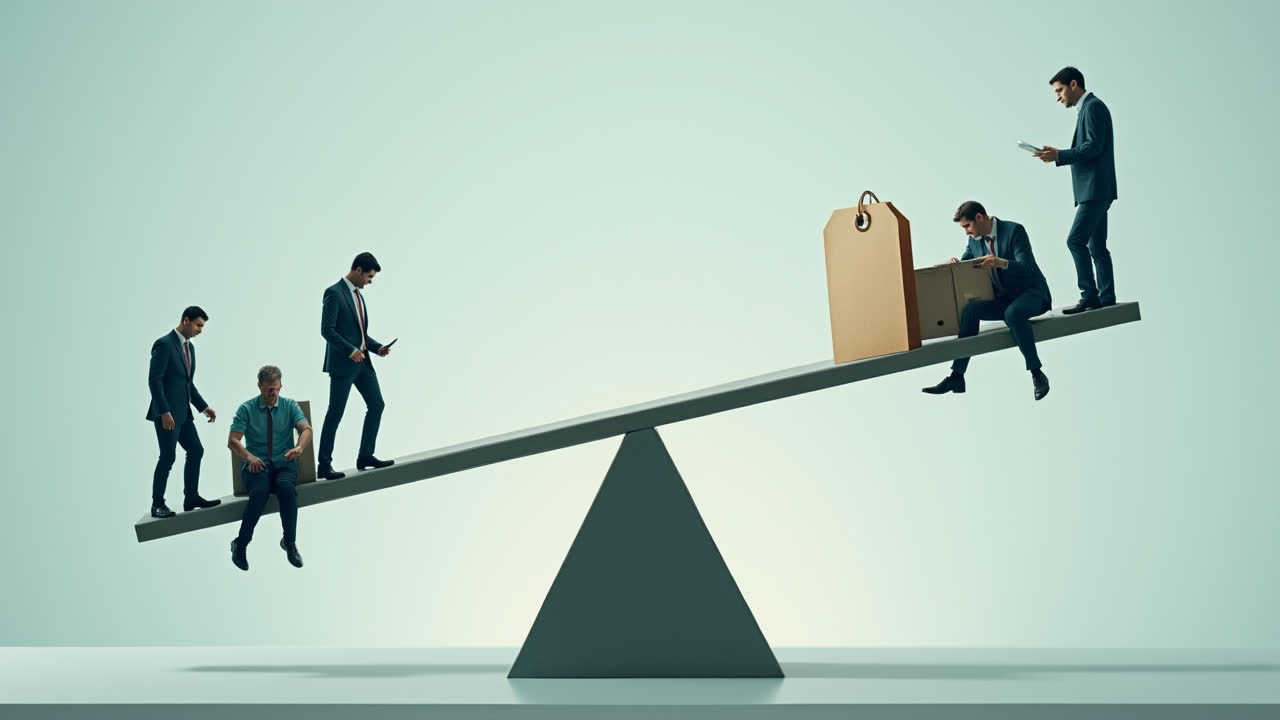
Have you ever wondered why economists obsess over those monthly unemployment and inflation numbers? It's not just number-crunching for fun. The relationship between unemployment and inflation forms one of the most critical economic balancing acts that affects everything from your grocery bills to your job security. I've spent years watching these economic forces play out, and let me tell you – it's fascinating how closely they're intertwined.
When I first started studying economics, I thought these were just abstract concepts. But honestly, they impact our daily lives in countless ways. When unemployment drops too low, prices often start creeping up. When inflation runs wild, jobs can disappear. It's like economic whack-a-mole – push down one problem, and another pops up!
In this article, we'll explore this complex economic relationship that shapes monetary policy, influences business decisions, and ultimately affects your wallet. We'll break down what these terms really mean (beyond the textbook definitions), examine their historical connection, and understand why finding the sweet spot between them keeps central bankers up at night.
What Is Unemployment? Breaking Down the Basics
Unemployment isn't just about people without jobs – it's actually much more specific than that. The unemployment rate represents the percentage of people in the workforce who are actively seeking employment but haven't found it. This doesn't count people who've given up looking or those working part-time but wanting full-time work (that's a different metric called underemployment).
The standard formula economists use is surprisingly straightforward:
Unemployment rate = Number of unemployed persons ÷ Total labor force × 100
But here's something most people don't realize – a 0% unemployment rate isn't actually desirable or even possible in a healthy economy! Some level of unemployment is natural as people transition between jobs or enter the workforce. This concept, called the "natural rate of unemployment," typically hovers around 4-5% in developed economies.
From my experience tracking these numbers, I've noticed that unemployment comes in several distinct flavors, each telling us something different about economic health:
- Structural unemployment: This happens when workers' skills don't match available jobs. I've seen this firsthand in former manufacturing towns where factories closed, leaving workers skilled in obsolete processes.
- Frictional unemployment: This represents people between jobs or new graduates seeking their first position. It's generally short-term and actually considered healthy.
- Cyclical unemployment: This occurs during economic downturns when businesses cut jobs due to decreased demand. During the 2008 recession, I watched this type skyrocket.
- Seasonal unemployment: Some industries naturally hire and fire based on predictable seasonal patterns (think retail during holidays or agriculture during harvest).
High unemployment signals economic distress - factories closing, businesses struggling, and consumer spending dropping. Low unemployment generally indicates economic expansion, though it can sometimes precede inflation concerns. What fascinates me is how dramatically unemployment can vary across different demographics and regions within the same economy.
Inflation Explained: When Your Money Buys Less
Inflation is that sneaky economic force that makes your grandmother reminisce about when bread cost a nickel. At its core, inflation represents how much prices increase over time across the economy. While we often think about it negatively, moderate inflation (around 2%) is actually considered healthy in modern economies.
The basic calculation for the inflation rate is:
Inflation rate = [(Price in current period - Price in previous period) ÷ Price in previous period] × 100
Of course, measuring inflation across an entire economy is more complex. Economists typically use indexes like the Consumer Price Index (CPI) or Personal Consumption Expenditures (PCE) that track the prices of a representative basket of goods and services. I remember analyzing these numbers during the 2021-2026 inflation surge and being shocked at how dramatically certain categories like used cars and energy were pulling up the overall average.
Not all inflation is created equal, though. The causes matter tremendously when central banks decide how to respond:
- Demand-pull inflation: This occurs when demand outpaces supply, like when everyone suddenly wanted to renovate their homes during the pandemic but supply chains couldn't keep up.
- Cost-push inflation: This happens when production costs rise, forcing businesses to raise prices. Energy price spikes often trigger this type of inflation.
- Built-in inflation: This is the self-fulfilling cycle where workers expect prices to rise, so they demand higher wages, which leads companies to raise prices further.
The effects of inflation aren't distributed equally either. Fixed-income retirees often suffer most during inflationary periods, while those with adjustable-rate debts can see their financial situations deteriorate rapidly. On the flip side, moderate inflation benefits borrowers with fixed-rate loans as they repay with less valuable dollars over time.
The Phillips Curve: The Historical Unemployment-Inflation Connection
In 1958, economist A.W. Phillips published his groundbreaking study that identified a consistent inverse relationship between unemployment rates and wage inflation in the UK. This relationship, later expanded to general price inflation, became known as the Phillips Curve – one of the most famous (and controversial) concepts in macroeconomics.
The basic premise is deceptively simple: when unemployment is low, inflation tends to rise; when unemployment is high, inflation tends to fall. This makes intuitive sense – when fewer people are looking for jobs, employers must compete for workers by offering higher wages, which eventually translates to higher prices.
The Phillips Curve suggests a tradeoff: policymakers can choose between higher inflation with lower unemployment or lower inflation with higher unemployment. But they can't have low levels of both simultaneously – at least not for long.
I've always found it fascinating how this relationship has evolved over time. The neat inverse relationship Phillips observed held remarkably well through the 1960s. Then came the 1970s stagflation crisis – high inflation AND high unemployment simultaneously – which many economists thought impossible according to the traditional Phillips Curve.
This led to refined theories from economists like Milton Friedman and Edmund Phelps, who introduced the concept of the "natural rate of unemployment" and argued that the Phillips Curve tradeoff only exists in the short run. In the long run, they suggested, the economy returns to the natural unemployment rate regardless of inflation.
Modern economists now generally accept a more nuanced view of the Phillips Curve – it exists but shifts over time based on factors like inflation expectations, global competition, and central bank credibility. I've noticed that in recent decades, the curve has appeared to flatten, with inflation remaining relatively stable despite significant changes in unemployment rates.
Why the Relationship Matters: Economic Impacts and Policy Implications
The unemployment-inflation relationship isn't just academic – it drives real-world policy decisions that affect our daily lives. Central banks like the Federal Reserve explicitly consider this tradeoff when setting interest rates. When they fear inflation is getting too high, they raise rates, which typically cools the economy and increases unemployment. When unemployment is too high, they lower rates to stimulate growth, accepting the risk of higher inflation.
This balancing act creates some genuinely difficult policy choices. I remember discussions during the 2008 financial crisis about whether aggressive monetary stimulus would trigger runaway inflation (it ultimately didn't). Similarly, after the pandemic, many debated whether massive government spending would overheat the economy (inflation did indeed spike in 2021-2026).
Beyond monetary policy, this relationship affects:
- Business planning: Companies must anticipate how inflation will affect their costs and pricing strategy, while also considering how unemployment levels might impact consumer spending.
- Wage negotiations: Unions and workers often cite inflation rates when demanding raises, while employers consider unemployment rates as an indicator of how easily they could replace workers.
- Investment strategies: Investors closely watch both metrics to predict economic cycles and adjust their portfolios accordingly.
- Government budgeting: Tax revenues and social program expenses fluctuate dramatically with unemployment rates, while inflation affects the real value of government debt.
Perhaps most importantly, this economic relationship has profound social implications. High unemployment creates genuine human suffering, with increased poverty, crime, and even health problems in affected communities. High inflation erodes purchasing power and creates economic uncertainty that can destabilize societies. Finding the right balance isn't just economically sound – it's ethically imperative.
Comparing Unemployment and Inflation: Key Differences and Similarities
| Aspect | Unemployment | Inflation |
|---|---|---|
| Definition | Percentage of workforce without jobs but actively seeking employment | Rate at which prices for goods and services increase over time |
| Measurement | Unemployment rate calculated through government surveys | CPI, PCE, or other price indices tracking a basket of goods |
| Optimal level | Low but not zero (natural rate around 4-5%) | Low but positive (typically 2% target in developed economies) |
| Primary causes | Economic downturns, structural changes, technological disruption | Excess demand, supply constraints, monetary expansion |
| Impact on individuals | Loss of income, skills degradation, psychological effects | Reduced purchasing power, uncertainty in financial planning |
| Policy response | Fiscal stimulus, job training, unemployment benefits | Interest rate hikes, reduced government spending |
| Visibility to public | Highly visible through personal experience and news reports | Less immediately visible, often noticed gradually over time |
| Recovery speed | Often slower to improve after economic shocks | Can change rapidly based on policy interventions |
Modern Challenges to the Traditional Unemployment-Inflation Relationship
While the traditional Phillips Curve framework remains influential, several modern economic developments have complicated this relationship. In my analysis of recent economic data, I've noticed that the neat inverse correlation doesn't always hold as strongly as it once did.
Globalization has fundamentally altered labor markets and price dynamics. When domestic unemployment falls, companies can often outsource production or automate rather than raise wages, dampening the inflationary pressure we'd expect from tight labor markets. I've seen this play out in manufacturing especially – even with historically low unemployment rates, wage growth remained modest due to global competition.
Technology has similarly disrupted traditional economic relationships. The rise of the gig economy and remote work has created more flexible labor markets that respond differently to economic pressures. Meanwhile, technological innovation continuously drives down prices in sectors like electronics and communications, offsetting inflationary pressures elsewhere.
Central bank policies have also evolved dramatically. Most major central banks now explicitly target inflation (typically around 2%), using sophisticated tools and forward guidance to anchor inflation expectations. This has arguably made inflation less responsive to employment fluctuations, as people expect prices to remain relatively stable regardless of unemployment levels.
The COVID-19 pandemic provided a fascinating natural experiment in this relationship. We saw extraordinary unemployment spikes followed by rapid rehiring, alongside unusual inflation patterns driven by supply chain disruptions and massive government stimulus. These events challenged conventional economic wisdom and created inflation despite significant unemployment – a combination that would have surprised economists from earlier eras.
These modern complexities don't invalidate the fundamental relationship between unemployment and inflation, but they do suggest we need more nuanced models that account for global supply chains, technological change, and evolving monetary policy frameworks. The simple Phillips Curve of the 1960s no longer fully captures our complex economic reality.
Finding Economic Balance: The Ideal Unemployment and Inflation Rates
Is there a perfect combination of unemployment and inflation rates? Economists have long debated this question, and the answer has evolved over time. Most modern central banks aim for what's called the "dual mandate" – seeking both price stability and maximum sustainable employment.
For inflation, there's remarkable consensus that around 2% is ideal. This provides enough "grease" for economic adjustment while avoiding the harms of higher inflation. I've always found it interesting that this 2% target has become nearly universal across developed economies – it's one of the few areas where economists broadly agree!
For unemployment, the target is less precise but generally centers around what economists call the "non-accelerating inflation rate of unemployment" (NAIRU) – the lowest unemployment rate that won't trigger accelerating inflation. This rate varies by country and changes over time, but typically falls between 4-6% in developed economies.
Why not aim for 0% unemployment and 0% inflation? Well, some unemployment is actually functional – it allows for labor market mobility and economic dynamism. And slight inflation provides important economic benefits, including giving central banks room to cut interest rates during recessions and helping to avoid the dangers of deflation (falling prices).
I personally believe the ideal combination in most advanced economies today is inflation around 2% and unemployment around 4-5%. This balance provides strong job opportunities for most people while maintaining price stability that allows for confident financial planning. But reasonable people can disagree, and different economic conditions might call for different targets.
What's clear is that extremes in either direction create serious problems. Hyperinflation destroys economies and societies, as we've seen in historical examples like Weimar Germany or more recently in Venezuela. Likewise, mass unemployment creates enormous social suffering and wastes productive potential. The art of economic policy lies in finding that elusive middle ground.
FAQ: Unemployment and Inflation
How does unemployment affect inflation in the short term versus the long term?
In the short term, decreasing unemployment typically leads to rising inflation as employers compete for fewer available workers by offering higher wages, which eventually translates to higher prices. This is the classic Phillips Curve relationship. However, in the long term, this relationship weakens or disappears entirely as the economy adjusts to new equilibrium levels. Factors like productivity growth, technological change, and adjusted inflation expectations allow the economy to sustain both low unemployment and low inflation simultaneously in the long run. This distinction between short-term and long-term effects forms the basis of the "expectations-augmented Phillips Curve" that most modern economists accept.
Can a country have low unemployment and low inflation at the same time?
Yes, a country can experience both low unemployment and low inflation simultaneously, though traditional economic theory suggests this combination is difficult to maintain over extended periods. This favorable economic state, sometimes called the "Goldilocks economy" (not too hot, not too cold), typically occurs when productivity growth is strong, allowing wages to rise without triggering significant price increases. The late 1990s in the United States and parts of the 2010s in several developed economies demonstrated this possibility. However, maintaining this balance requires favorable supply-side conditions, effective monetary policy, and often some degree of good fortune in avoiding external economic shocks.
Why do central banks sometimes deliberately increase unemployment to fight inflation?
Central banks may indirectly increase unemployment to combat high inflation by raising interest rates, which makes borrowing more expensive. This reduces consumer spending and business investment, cooling economic activity and slowing price increases. While central bankers don't explicitly target higher unemployment, they recognize it as a necessary side effect of bringing inflation under control in certain circumstances. This approach reflects the belief that while temporary unemployment increases cause significant hardship, unchecked inflation would ultimately create even greater economic damage across the entire population. Former Federal Reserve Chairman Paul Volcker famously took this approach in the early 1980s, triggering a recession but successfully breaking the back of persistent high inflation that had plagued the 1970s.
Conclusion: The Economic Balancing Act Continues
The relationship between unemployment and inflation represents one of economics' most fascinating and consequential dynamics. While the simple inverse relationship captured by the original Phillips Curve has evolved into something more complex in our modern global economy, the fundamental tension between these two indicators remains critically important.
Understanding this relationship isn't just academic – it affects monetary policy decisions that impact everything from mortgage rates to job creation. The ongoing challenge for policymakers is finding that elusive balance that maximizes employment while maintaining price stability.
As we move forward, new factors like artificial intelligence, climate change adaptation, and evolving global supply chains will likely continue to reshape this relationship in ways we can't fully predict. The post-pandemic economy has already demonstrated that our economic models need continuous refinement as the world changes.
What remains constant is that both unemployment and inflation have real human consequences. Behind every percentage point shift in these statistics are millions of personal stories – people searching for work, businesses adjusting to changing costs, families trying to maintain their standard of living. Finding the right balance isn't just good economics – it's essential for social welfare.
The next time you hear news about unemployment figures or inflation rates, remember that these aren't just abstract numbers. They're vital signs of economic health that influence countless policy decisions and ultimately shape our collective prosperity. The dance between these two forces will continue to fascinate economists and challenge policymakers for generations to come.