Valency vs Covalency: Understanding the Critical Differences
The Fundamentals of Atomic Structure
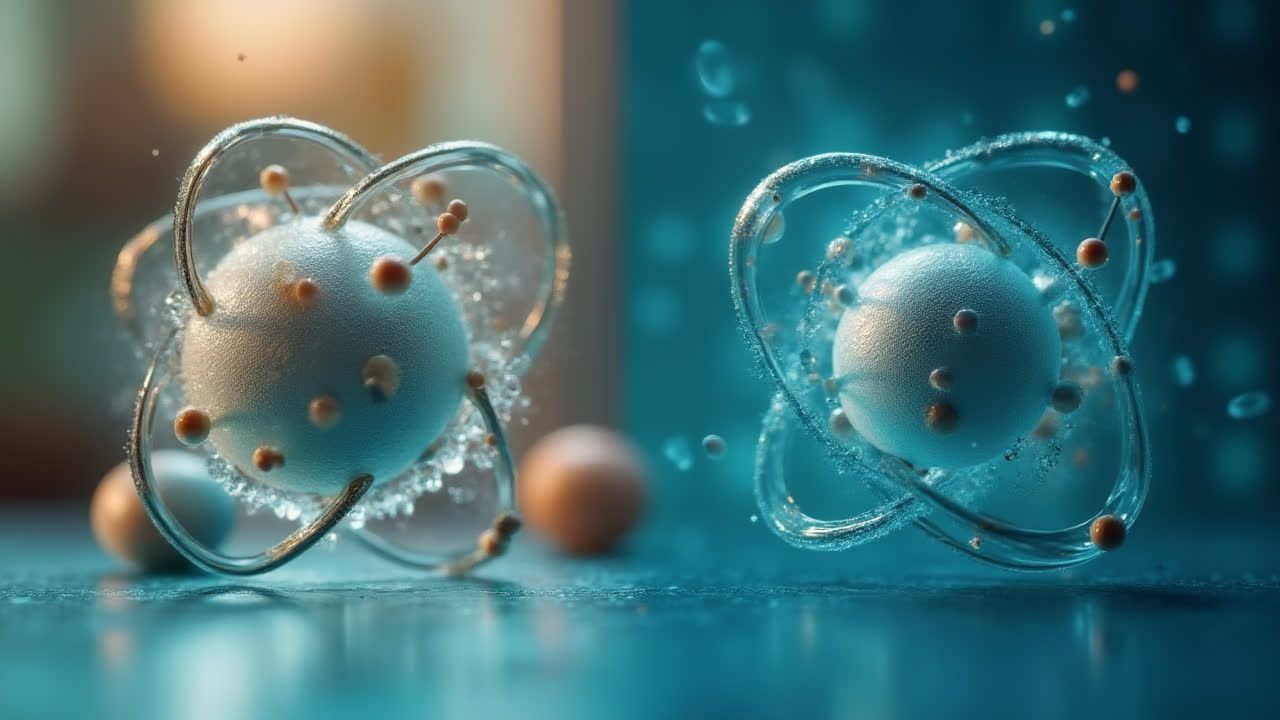
Before diving into valency and covalency, let's refresh our understanding of atomic structure. An atom consists of a nucleus (containing protons and neutrons) surrounded by an electron cloud. These electrons move in specific pathways called orbitals or shells. The arrangement of electrons, particularly those in the outermost shell (valence electrons), determines an atom's chemical behavior.
I've always found it helpful to think of electrons as little social creatures – they want to achieve stability by having a full outer shell, similar to how we seek balance in our lives. This desire for stability drives chemical bonding, where atoms share, gain, or lose electrons. The concepts of valency and covalency are directly tied to this electron behavior, though they describe different aspects of how atoms achieve stability.
When atoms combine to form molecules, their electron arrangements undergo changes. These changes follow predictable patterns based on each element's position in the periodic table. Elements in the same group typically display similar bonding behaviors because they have the same number of valence electrons – but does this mean they have the same valency and covalency? Not necessarily, and understanding why requires a deeper look at each concept.
What is Valency?
Valency refers to the number of electrons an atom will lose, gain, or share to achieve a stable electronic configuration. It essentially indicates an atom's combining capacity. For most elements, this means achieving the electron configuration of the nearest noble gas (which have completely filled outer shells and are extremely stable).
Think of valency as an atom's "sociability score" – how many connections it's willing to make to become stable. Some atoms readily give away electrons (like metals), while others eagerly accept them (like halogens). The valency of an element isn't always fixed and can vary depending on the reaction environment and which elements it's interacting with.
For example, sodium (Na) has one valence electron in its outermost shell (3s¹). By losing this electron, sodium achieves the stable configuration of neon. Therefore, the valency of sodium is 1. Similarly, chlorine has seven valence electrons and needs just one more to achieve the stability of argon, giving it a valency of 1 (although through gaining rather than losing an electron).
Practical example: When sodium and chlorine react to form sodium chloride (table salt), sodium donates its one valence electron to chlorine. This transfer satisfies both atoms' desire for stability – sodium by losing an electron and chlorine by gaining one.
Sometimes, valency equals the number of valence electrons, but this isn't always the case. The periodic table offers clues about valency – elements in Group 1 typically have a valency of 1, while those in Group 2 usually have a valency of 2. However, transition elements and some other groups can display multiple valencies depending on the specific reaction conditions.
What is Covalency?
Covalency, on the other hand, specifically refers to the maximum number of covalent bonds an atom can form using its empty orbitals. Unlike valency, which addresses electron transfer or sharing more broadly, covalency focuses exclusively on sharing electrons through covalent bonding.
I like to compare covalency to the number of handshakes one person can physically manage simultaneously. It's limited by the number of hands (or in an atom's case, available orbitals for sharing electrons). This capacity depends on the number of unpaired electrons and empty orbitals that can participate in bonding.
Carbon provides an excellent example of covalency. With an electron configuration of 1s²2s²2p², carbon has four valence electrons. Through a process called hybridization, carbon's electrons rearrange so that all four become unpaired and available for sharing. This gives carbon a covalency of 4, meaning it can form four covalent bonds – a property that makes carbon the backbone of organic chemistry and life itself.
Unlike valency, which can vary in some elements, an element's covalency tends to be more consistent across different compounds. However, it's important to note that covalency applies only to elements that can form covalent bonds (generally non-metals and some metalloids), while valency applies to elements forming either ionic or covalent bonds.
Practical example: In methane (CH₄), the carbon atom forms four covalent bonds with hydrogen atoms. Each bond consists of one shared pair of electrons, demonstrating carbon's covalency of 4.
Key Differences Between Valency and Covalency
| Comparison Aspect | Valency | Covalency |
|---|---|---|
| Definition | The number of electrons an atom will lose, gain, or share to achieve stability | The maximum number of covalent bonds an atom can form using its empty orbitals |
| Relationship with Valence Electrons | May or may not equal the number of valence electrons | Directly depends on the number of valence electrons and their arrangement |
| Type of Bonding | Applies to elements forming either ionic or covalent bonds | Applies only to elements forming covalent bonds |
| Variability | Can vary for the same element in different compounds | Generally more consistent for a given element |
| Empty Orbitals Relationship | Indicates electrons needed to fill empty orbitals | Depends on the number of available empty orbitals |
| Example Element | Sodium: Valency of 1 (loses 1 electron) | Carbon: Covalency of 4 (forms 4 covalent bonds) |
| Role in Compound Formation | Determines the general combining capacity | Determines specific covalent bond formation capability |
| Periodic Table Relationship | Often predictable from group number for main group elements | Requires understanding of electron configuration and orbital hybridization |
The Role of Electron Configuration
Both valency and covalency are deeply connected to an element's electron configuration. Understanding how electrons are distributed across different orbitals provides crucial insights into an element's bonding behavior.
For main group elements (Groups 1-2 and 13-18), valency can often be predicted from the group number or by counting valence electrons. However, transition metals (Groups 3-12) can display multiple valencies because they have access to d orbitals, which complicates their electron behavior.
Covalency, meanwhile, requires looking beyond just the number of valence electrons. We need to consider how these electrons can rearrange through hybridization – a process where atomic orbitals mix to form new hybrid orbitals. This explains why carbon, with four valence electrons, can form four equivalent bonds in different directions despite its ground state suggesting otherwise.
Have you ever wondered why some elements form such diverse compounds while others seem limited in their bonding patterns? The answer often lies in the interplay between valency, covalency, and electron configuration. Elements like carbon and nitrogen, with their ability to form multiple covalent bonds, create the backbone of biochemistry and life itself.
Practical Applications and Importance
Understanding valency and covalency isn't just academic – these concepts have profound practical applications. In chemistry education, they serve as fundamental building blocks for understanding more complex chemical phenomena. In research and industry, they guide predictions about how elements will react and what compounds they'll form.
For students learning chemistry, distinguishing between these concepts helps clarify why elements bond the way they do. It explains, for instance, why water forms as H₂O (not H₃O or HO): oxygen has a valency of 2, meaning it needs to gain 2 electrons to achieve stability, which it does by forming two bonds with hydrogen atoms.
In materials science and drug development, understanding covalency helps researchers design molecules with specific shapes and properties. The tetrahedral arrangement of carbon's four covalent bonds, for example, gives diamond its exceptional hardness and creates the three-dimensional structures of proteins that make life possible.
I've found that once you truly grasp these concepts, the periodic table transforms from a static chart to a dynamic map of chemical possibilities. Suddenly, you can predict how elements will interact and why certain compounds form while others don't – it's like having a chemical crystal ball!
Frequently Asked Questions
Can an element have different valencies but the same covalency?
Yes, this is definitely possible. Some elements, particularly transition metals, can exhibit multiple valencies depending on the reaction conditions and oxidation state, while maintaining the same covalency. For example, iron can have valencies of 2 or 3 (forming Fe²⁺ or Fe³⁺ ions), but its covalency in organometallic compounds often relates to its available d orbitals, which remains more consistent across different compounds. This variability in valency while maintaining similar covalent bonding capabilities explains the rich chemistry of transition elements.
How do valency and covalency affect the properties of compounds?
Valency and covalency profoundly influence compound properties. Valency determines the ratio of elements in a compound (like Na₂O vs. MgO) and affects properties like melting point and solubility. Covalency influences molecular geometry, polarity, and reactivity. For instance, carbon's covalency of 4 enables it to form the diverse, complex molecules required for life. The three-dimensional arrangements resulting from specific covalent bonding patterns directly impact physical properties like boiling point, solubility, and biological activity in pharmaceuticals. Understanding these concepts helps scientists design materials with targeted properties for specific applications.
Why do some elements show variable valency but fixed covalency?
This phenomenon occurs because valency can be influenced by the oxidation state of an element, which may vary across different compounds, while covalency is more directly tied to the physical arrangement of orbitals available for bonding. Elements with incomplete d or f subshells (like transition metals) often show variable valency because they can lose different numbers of electrons to achieve stability. However, their covalency remains more consistent because it depends on the number of orbitals available for overlap, which doesn't change as readily. This explains why elements like sulfur can form compounds with different valencies (H₂S vs. H₂SO₄) while maintaining similar patterns in how they form covalent bonds.
Conclusion
The distinction between valency and covalency is crucial for understanding chemical bonding and compound formation. While valency refers broadly to an atom's combining capacity through losing, gaining, or sharing electrons, covalency specifically addresses an atom's ability to form covalent bonds through electron sharing.
These concepts, though related, describe different aspects of atomic behavior. Valency tells us about an element's general tendency to react, while covalency provides insight into the specific types of covalent bonds it can form. Together, they help explain the incredible diversity of chemical compounds we observe in nature and create in laboratories.
For students of chemistry, mastering these concepts opens the door to understanding more advanced topics like molecular geometry, chemical reactivity, and material properties. For researchers and industry professionals, they provide essential guidelines for predicting and controlling chemical reactions.
As we continue to develop new materials, medicines, and technologies, the fundamental principles of valency and covalency remain as relevant as ever. They remind us that the macroscopic properties of matter ultimately derive from microscopic interactions between atoms – a beautiful connection between the visible world and the invisible dance of electrons.